Your Guide to a Clog-Free AC
An AC drain line clog is a common reason your air conditioner fails. When algae, mold, or debris builds up in this pipe, water can’t drain, leading to leaks, water damage, and even a system shutdown.
Quick Fix for a Clogged AC Drain Line:
- Turn off your AC at the thermostat and circuit breaker
- Locate the drain line (usually a PVC pipe near your outdoor unit)
- Use a wet/dry vacuum to suction out the clog from the outdoor end
- Flush with distilled vinegar through the access port near your indoor unit
- Test the flow by pouring water through the line
If these steps don’t work or water damage is already present, call a professional HVAC technician.
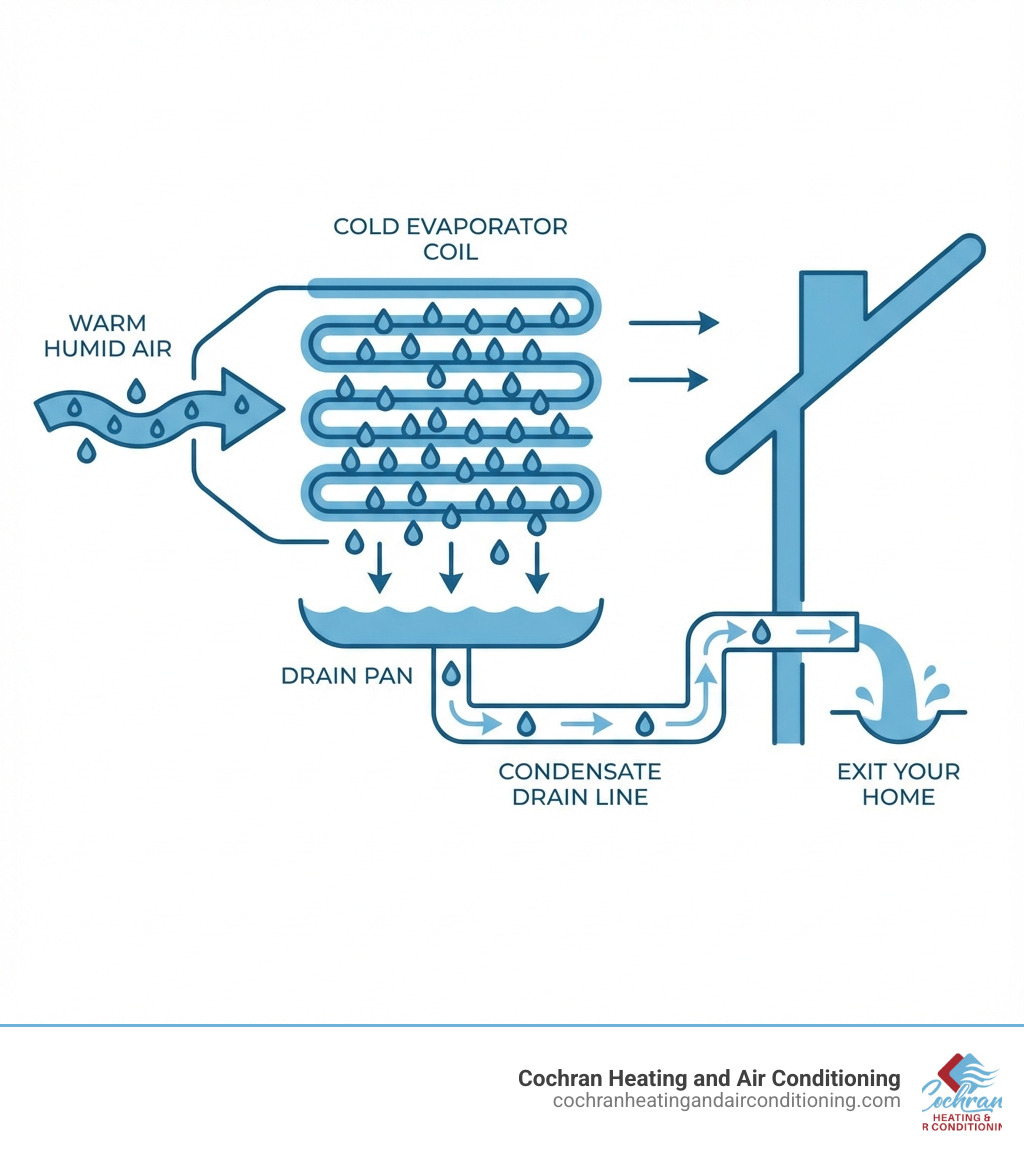
Your AC removes moisture from the air, especially in summer. This moisture, called condensate, travels through the drain line, carrying gallons of water away from your system daily. The problem is that this dark, damp pipe is a perfect breeding ground for algae and mold. This gunk builds up, creating a blockage. Water then backs up into the drain pan and can overflow into your home.
The good news? Most clogs are fixable with basic tools and about 15 minutes of your time. This guide will walk you through everything you need to know—from spotting the warning signs to clearing the clog yourself, and knowing when it’s time to call in the experts at Cochran Heating and Air Conditioning.
Is Your AC Drain Line Clogged? Key Warning Signs
Nobody wants to find a pool of water around their indoor AC unit or water stains on their ceiling. These are often the most dramatic signs of an AC drain line clog. However, your system often gives clues before a major leak occurs. Recognizing these warning signs can save you from costly repairs and keep your Joplin home cool and dry.
When an AC drain line clog prevents water from escaping, it can lead to several issues. Many modern AC units have a safety float switch in the drain pan. If water levels rise, this switch automatically shuts down the AC to prevent water damage. While this protects your home, it also means your AC stops cooling.
Some systems have a secondary drain line and pan as a backup. This line often terminates in a visible spot, like above a window, to alert you when it drips. Water dripping from a secondary line is a clear signal your primary line is clogged and needs immediate attention.
Understanding these indicators is crucial for timely intervention. For a broader look at common HVAC issues, you can always check out our guide on Signs Your Home HVAC System Needs Repair in Joplin, MO.
Common Causes of an AC drain line clog
What causes these clogs? The dark, damp environment inside the condensate drain line is a perfect breeding ground for:
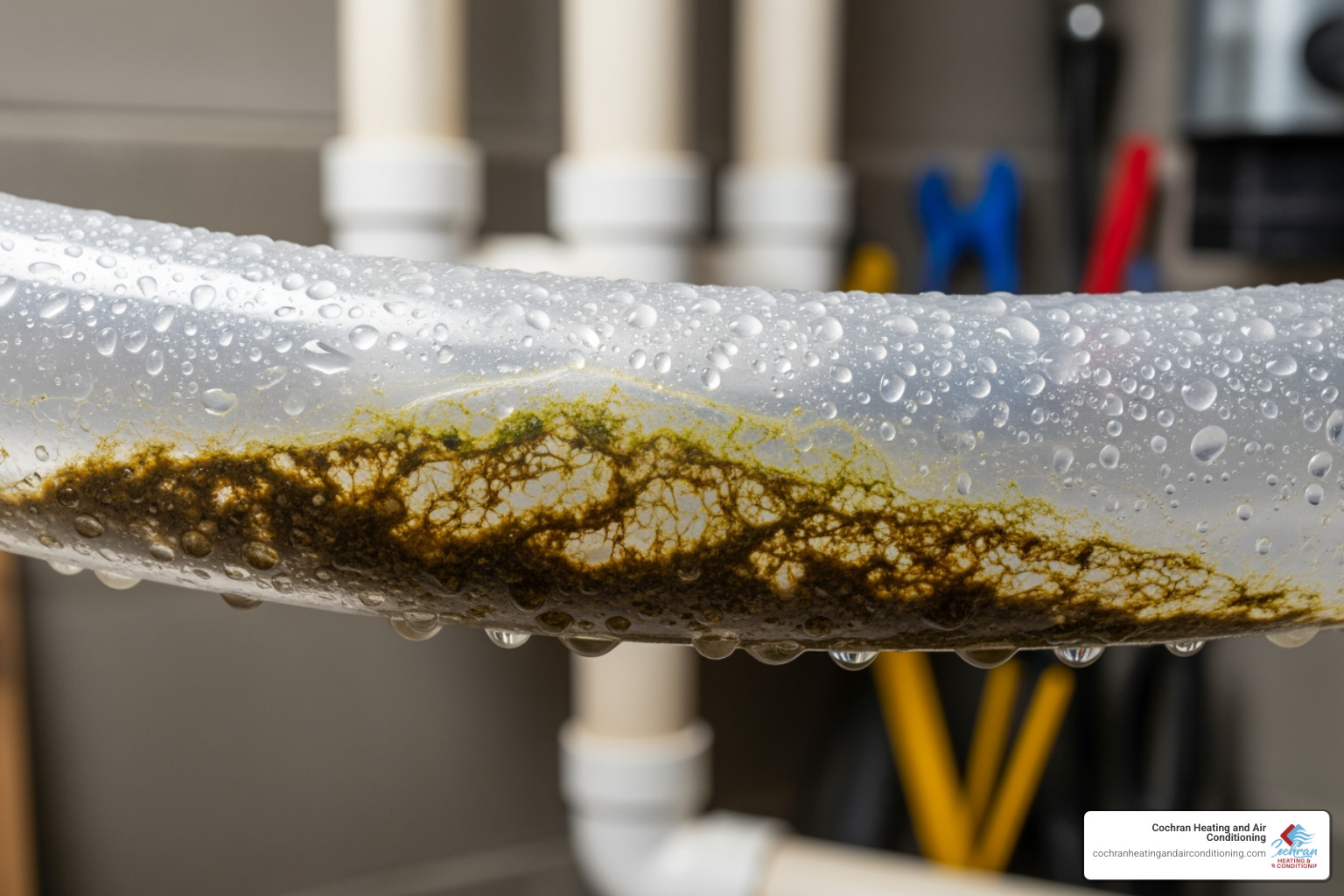
- Algae growth: The most common cause. Algae thrives in the dark, moist drain line, using the constant moisture from dehumidification to multiply and form slimy blockages, especially in humid climates.
- Mold and mildew: Like algae, mold and mildew spores flourish in the drain line’s moist conditions, creating a slimy buildup that obstructs water flow.
- Sludge buildup: Dirt, dust, and airborne particles can mix with condensate water, forming a thick sludge that settles in the drain line and causes a blockage.
- Dust and debris: Despite air filters, dust, lint, and pet hair can enter the system. When wet, they clump together in the drain line, forming a clog.
- Insects: Occasionally, small insects seeking moisture can find their way into the drain line, get trapped, and contribute to a blockage.
- Improper installation: A drain line with an incorrect slope or lacking a proper trap is more prone to clogs, as water cannot flow downward effectively.
Telltale Symptoms to Watch For
Catching an AC drain line clog early can prevent significant damage. Here are the key indicators to watch for:
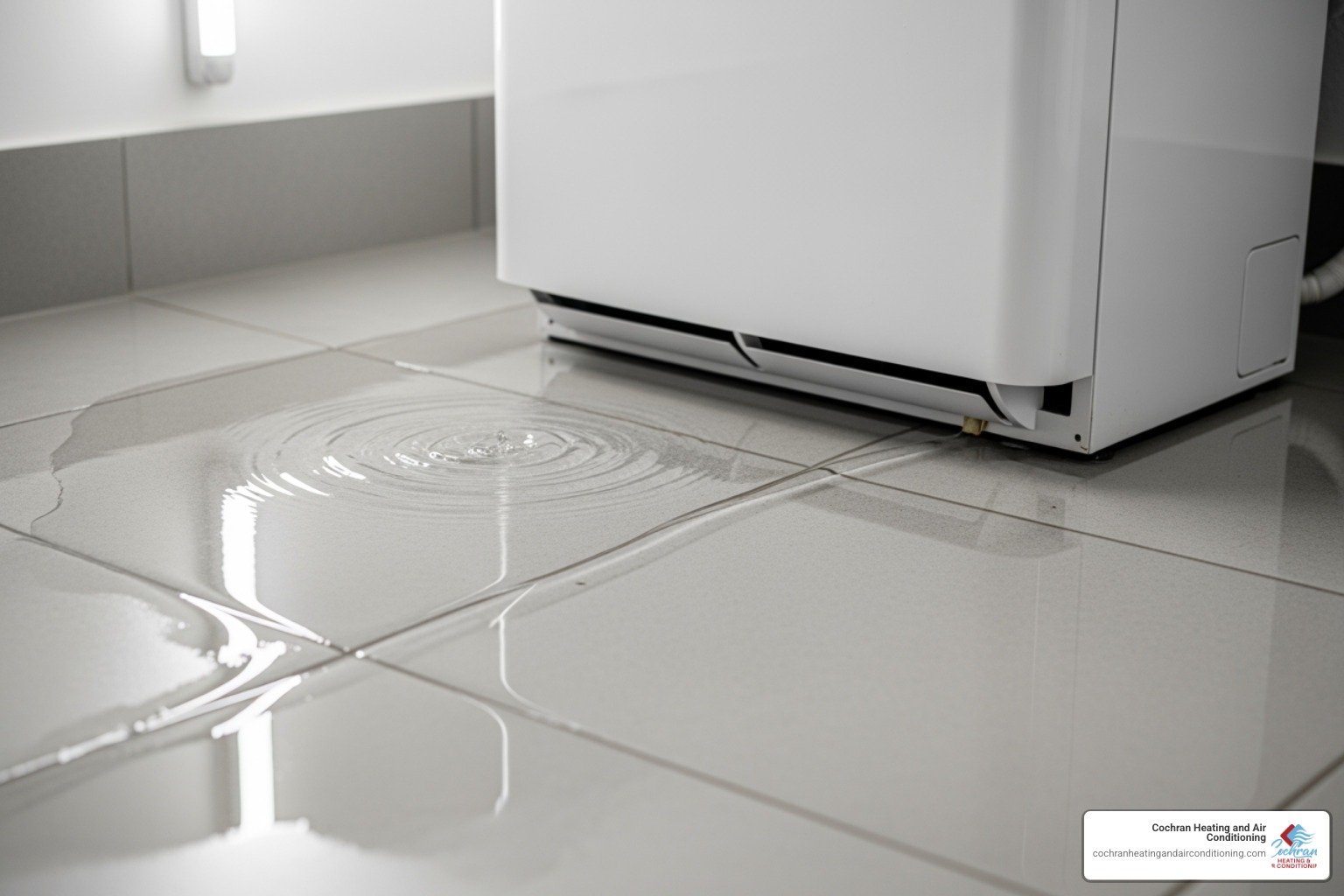
- Standing water near the indoor unit: The most obvious sign. Puddles around your indoor air handler indicate a clogged drain line and an overflowing drain pan.
- Water damage on ceilings or walls: For units in an attic or closet, an overflowing drain pan can cause water to seep through drywall, leading to stains and damage.
- A full or overflowing drain pan: The direct precursor to water damage. If the drain pan has standing water, the drain line is blocked.
- Musty or moldy odors from vents: Stagnant water in the drain line breeds mold and mildew. Their spores and odors can circulate through your ductwork, causing unpleasant smells and poor air quality.
- Your home feels humid: Your AC also dehumidifies the air. A clogged drain line prevents proper moisture removal, making your home feel clammy and humid even if the temperature is cool.
- AC system shuts off unexpectedly or won’t turn on: Many units have a safety float switch that trips when the drain pan fills, shutting down the AC to prevent water damage. The system won’t cool until the clog is cleared.
Your DIY Guide to Fixing an AC Drain Line Clog
When you suspect an AC drain line clog, acting quickly can prevent further damage and restore your home’s comfort. Many common clogs can be cleared with a few basic tools. We’re here to guide you through the process, but remember: safety first! Always turn off the power to your unit before you begin any work.
Safety First: Before touching any part of your AC system, always turn off the power. Go to your thermostat and switch your system from “COOL” to “OFF.” Then, locate your home’s main electrical panel and flip the circuit breaker that controls your AC unit to the “OFF” position. This prevents accidental startup and reduces the risk of electrical shock.
Tools and Materials Needed:
- Wet/dry vacuum (often called a shop vac)
- Duct tape or a thick rag for sealing
- Stiff wire brush (like a bottle brush)
- Small funnel
- Distilled white vinegar (or hydrogen peroxide)
- Rags and towels
- A bucket or pan to catch water
Step 1: Locate the Condensate Drain Line
To fix an AC drain line clog, you first need to find the line, which connects your indoor and outdoor AC components.
- Indoor Air Handler: The condensate drain line typically originates from the indoor air handler unit, where the evaporator coil is located. You’ll usually see a PVC pipe (or sometimes copper) extending from the drain pan. Near the air handler, there’s often a vertical section of the PVC pipe with a T-shaped fitting and a removable cap. This is your access tee, designed for cleaning and maintenance.
- Outdoor Unit: The drain line then usually runs from your indoor unit, through a wall or ceiling, and terminates outside your home, often near your outdoor condenser unit. It’s typically a small, white or gray PVC pipe sticking out of the side of your house, usually at ground level. This is where the water from your AC should be dripping out. If you see no drips on a hot, humid day when your AC is running, it’s a strong sign of a clog.
Step 2: Use a Wet/Dry Vac to Remove the Blockage
Using a wet/dry vacuum is often the most effective DIY method for clearing an AC drain line clog, as its powerful suction can pull out the blockage.
- Prepare the Outdoor End: Locate the outdoor end of the condensate drain line.
- Attach the Wet/Dry Vac: Place the hose of your wet/dry vacuum over the opening of the drain line.
- Create a Tight Seal: For effective suction, create an airtight seal between the vacuum hose and the drain pipe using duct tape or a thick, damp rag wrapped tightly around the connection.
- Power On the Vacuum: Turn on your wet/dry vacuum for about 1-2 minutes. You might hear a gurgling sound as the vacuum pulls out the clog.
- Check for Debris: Turn off the vacuum and remove the hose. Check the canister for water and slimy debris. Seeing a lot of gunk means the clog is likely gone.
- Repeat if Necessary: If you didn’t get much debris or the clog seems persistent, repeat the process.
Step 3: Flush the Line to Clear Remaining Debris
Once you’ve used the wet/dry vac, a good flush will help clear any remaining residue and ensure the line is completely open.
- Access the Indoor Line: Go back to your indoor air handler unit and locate the access tee (the T-shaped fitting with a removable cap). Remove the cap.
- Initial Flush: Carefully pour a cup or two of clean water into the access tee using a funnel. Watch to see if it drains freely from the outdoor end of the pipe. If it does, great! If not, the clog might be stubborn.
- Introduce a Cleaning Solution: To break down remaining algae or mold, pour about ¼ to ½ cup of distilled white vinegar into the access tee. Let it sit for 20-30 minutes. The mild acid dissolves organic matter without harming PVC pipes.
- A note on bleach: While some suggest bleach, we advise caution. Bleach is effective, but there’s debate about its long-term effects on PVC pipes and AC components, as some plastics can degrade with repeated exposure. You can read more on bleach’s effect on plastics. For regular maintenance, distilled white vinegar is a safer and effective choice.
- Final Flush: After the vinegar has had time to work, pour another cup or two of clean water into the access tee to flush out the vinegar and any loosened debris.
- Test the Flow (Again): Observe the outdoor drain line. You should see a steady stream of water flowing out. If the water drains freely, replace the cap on the access tee.
- Restore Power: Once you’re confident the clog is clear, replace all caps and covers, then restore power to your AC unit at the circuit breaker and turn your thermostat back to “COOL.” Monitor your system for the next few hours to ensure it’s draining properly.
The Hidden Dangers: Risks and When to Call a Pro
Ignoring an AC drain line clog might seem like a minor inconvenience, but the potential risks can be significant and costly. What starts as a simple backup can quickly escalate into serious problems for your home and your wallet.
When condensate drains are clogged, the unit may not be able to properly reduce indoor humidity, leading to discomfort and other issues. This poor performance can also lead to a loss of energy efficiency. According to Energy.gov, regular maintenance is key to keeping your AC running smoothly and efficiently.
Here’s why you don’t want to ignore a clogged drain line:
- Water damage: This is the most immediate and visible threat. An overflowing drain pan can cause water to leak into your attic, walls, ceilings, or even directly onto your floor. This can damage drywall, flooring, electrical components, and insulation, leading to expensive repairs.
- Mold growth: Stagnant water is a perfect breeding ground for mold and mildew. Once mold takes hold in damp areas like your drain pan or insulation, it can spread rapidly, compromising your indoor air quality and potentially causing health issues for your family. The musty odors are often the first sign.
- Poor indoor air quality: Beyond mold, a clogged drain line can lead to high humidity, creating an uncomfortable environment and exacerbating issues for those with allergies or respiratory conditions.
- Reduced AC performance: When your drain line is clogged, your AC system struggles to remove humidity effectively. This means your home might feel muggy, even if the temperature is set low. The unit has to work harder to achieve the desired comfort level, leading to inefficiencies.
- Higher energy bills: A struggling AC unit that’s working overtime due to a clog consumes more energy. This increased workload translates directly into higher utility bills. In fact, U.S. homeowners spend about $29 billion a year on energy costs associated with central air conditioning. An inefficient system due to a clog contributes to this.
- System failure: In severe cases, prolonged strain on your AC unit can lead to premature wear and tear on components like the compressor or fan motor. If the safety switch constantly trips, it puts stress on the electrical system. A neglected AC drain line clog can shorten the lifespan of your entire HVAC system, potentially leading to a complete breakdown and the need for an expensive replacement. That’s when you might find yourself needing Emergency HVAC services.
When DIY Isn’t Enough: Call a Professional
While we encourage homeowners to try clearing minor clogs themselves, there are times when a professional HVAC technician is the safest and most effective solution. Knowing when to call in the experts can prevent further damage and ensure your system is properly repaired.
You should definitely contact us at Cochran Heating and Air Conditioning if:
- Persistent or recurring clogs: If you’ve cleared the clog yourself, but it keeps coming back every few weeks or months, there might be a deeper underlying issue that needs professional diagnosis. This could include a persistently dirty evaporator coil or a problem with the drain line’s pitch.
- You can’t locate the drain line: Some AC units, especially in older homes or custom installations, might have less obvious drain line configurations. If you’re struggling to find the access points, it’s best not to guess and risk damaging your system.
- Signs of significant water damage: If you’re already seeing extensive water stains on your ceiling, walls, or flooring, or if there’s visible mold growth, it’s time to call a professional. We can assess the extent of the damage, clear the clog, and advise on necessary repairs to prevent future issues.
- The clog won’t clear with a vacuum: If you’ve tried the wet/dry vacuum method multiple times and flushed with vinegar, but water still isn’t draining freely, the clog might be too dense, too far down the line, or there could be a structural issue with the pipe itself.
- Your AC system has electrical issues: If your AC is tripping breakers, making strange electrical noises, or if you suspect water has come into contact with electrical components, do not attempt to fix it yourself. Electrical problems can be dangerous and should only be handled by a qualified technician.
- You’re uncomfortable with DIY: If you’re not confident in performing the steps, or if you simply prefer to leave it to the experts, that’s perfectly fine! Our team is always ready to help.
HVAC installation and complex repairs, like those involving electrical components or refrigerant, should always be left to a professional licensed HVAC dealer. When in doubt, it’s always safer to call an expert. For immediate assistance with stubborn clogs or any other AC emergencies in Joplin, we offer 24/7 Emergency HVAC Repair Services You Can Trust in Joplin.
Preventative Maintenance: How to Stop Clogs Before They Start
The best way to deal with an AC drain line clog is to prevent it from happening in the first place! A little proactive maintenance can go a long way in keeping your AC running smoothly, preventing water damage, and saving you from emergency service calls. It’s about being proactive, not reactive.
Regular maintenance isn’t just about preventing clogs; it ensures your entire AC system operates at peak efficiency for better cooling, lower energy bills, and a longer lifespan. At Cochran Heating and Air Conditioning, we believe in empowering homeowners with this knowledge. We’re always here for more comprehensive AC Maintenance.
Creating a Simple Maintenance Routine
Establishing a routine for your AC maintenance can significantly reduce the likelihood of an AC drain line clog and keep your system healthy. Here’s a simple schedule we recommend:
- Monthly: Flush with distilled vinegar. During the cooling season, pour about ¼ to ½ cup of distilled white vinegar into your drain line’s access tee once a month. Let it sit for 30 minutes, then flush with clean water. This kills organic growth before it can form a clog.
- Quarterly: Change your air filter. A dirty filter restricts airflow, making your AC work harder. Replacing a clogged filter can lower energy consumption by up to 15%. Change your filter every three months—more often if you have pets or live in a dusty area.
-
Annually: Schedule a professional AC Maintenance Tune-Up. While DIY steps are great, nothing beats a thorough inspection and cleaning by a certified HVAC technician. An annual tune-up allows us to:
- Inspect and clean your condensate drain line comprehensively.
- Check your drain pan for any damage or persistent buildup.
- Clean your evaporator and condenser coils.
- Inspect electrical connections and components.
- Check refrigerant levels and system pressures.
- Ensure all components are working efficiently.
This comprehensive check can identify potential issues before they become major problems, including hard-to-reach clogs or other system inefficiencies. Learn more about our AC Maintenance Tune-Ups: Keeping Joplin Homes Cool All Summer.
Frequently Asked Questions about AC Drain Line Clogs
We often get questions from homeowners about their AC drain lines. Here are some of the most common ones we hear, along with our expert answers:
Can I pour hot water or bleach down my AC drain line?
- Hot water: Yes, you can pour hot water (not boiling) down an AC drain line to help clear minor clogs. The heat can help dissolve and loosen any buildup in the line. However, we advise against using boiling water, as it could potentially damage the PVC pipes or fittings over time.
- Bleach: While bleach is effective at killing algae and mold, we generally recommend caution. There is conflicting information regarding its long-term effects. Some experts suggest that bleach can be corrosive to certain plastic and metal components of your AC system over time. For regular preventative maintenance, distilled white vinegar is a safer, less corrosive, and equally effective alternative. If you choose to use bleach, ensure it’s diluted (e.g., 1 part bleach to 1 part water) and use it sparingly.
How much does it cost to have a professional unclog an AC drain line?
The cost to have a professional unclog an AC drain line clog can vary significantly. Factors that influence the price include:
- Your location: Labor rates differ by region.
- Severity and location of the clog: A simple, easily accessible clog will be less expensive than one that is deep within the system or requires more extensive diagnostic work.
- Additional services: If the technician finds other issues during the visit (e.g., a dirty evaporator coil, a damaged drain pan, or a faulty safety switch), the total cost will be higher as those repairs will be added.
- Emergency vs. scheduled service: Emergency service calls outside of regular business hours typically incur higher fees.
For a precise estimate, it’s always best to contact us directly at Cochran Heating and Air Conditioning. We can provide a quote based on your specific situation.
Why is my AC drain line clogged but no water is leaking inside?
This is a common scenario and often indicates that your AC system’s safety features are working as intended! Here are a few reasons why you might not see water leaking inside, despite a clog:
- Safety Float Switch: Many modern AC units are equipped with a safety float switch in the condensate drain pan. When an AC drain line clog causes water to back up and fill the pan, this float switch is triggered. It automatically shuts down your entire AC system to prevent the pan from overflowing and causing water damage. So, while your AC isn’t cooling, it’s also not leaking inside.
- Partial Clog: The drain line might have a partial clog that significantly slows drainage but hasn’t completely stopped it. In this case, water might be draining very slowly, or only overflowing intermittently, not yet causing a noticeable leak. However, a partial clog will eventually become a full clog if not addressed.
- Secondary Drain Pan/Line: If your system has a secondary drain pan and line, it could be catching the overflow from the primary pan. The secondary line typically drains in a highly visible location (like above a window or door) to alert you to a problem. If you see water dripping from there, your primary drain line is clogged.
Regardless of whether you see a leak, if your AC isn’t cooling, or if you suspect a clog, it’s important to investigate and address the issue promptly.
Keep Your Joplin Home Cool and Dry
An AC drain line clog is a common issue, but one that can lead to significant problems if ignored. We’ve seen how a small blockage can escalate into costly water damage, mold growth, reduced AC efficiency, and even complete system failure.
The good news is that with a little knowledge and proactive effort, you can often prevent these clogs or clear them yourself. Regular preventative maintenance, like monthly vinegar flushes and timely air filter changes, is your best defense.
Don’t wait for the drip to become a flood. By understanding the signs of a clog and taking action, you can ensure your AC system runs efficiently, keeps your home comfortable, and avoids unnecessary repairs.
When DIY efforts aren’t enough, or if you prefer the peace of mind that comes with professional service, Cochran Heating and Air Conditioning is here to help. Our experienced technicians are ready to tackle any AC drain line clog and provide comprehensive maintenance to keep your system in top shape. For comprehensive service and peace of mind, explore our Air Conditioning solutions.