Why Is Your AC Unit Leaking Water? Understanding the Warning Signs
If you’ve noticed an AC unit leaking water inside your home, you’re facing a common but potentially serious problem. Here’s what you need to know right away:
Quick Diagnosis Guide:
- Puddles or water stains around your indoor unit → Likely a clogged drain line or damaged drain pan
- Ice buildup on the unit → Frozen evaporator coils from restricted airflow or low refrigerant
- Dripping from ceiling (attic units) → Overflowing drain pan or failed condensate pump
- Musty smells near the AC → Standing water breeding mold and mildew
Most Common Cause: A clogged condensate drain line accounts for the majority of AC water leaks.
Your air conditioner naturally produces water through condensation—it’s part of how the system cools and dehumidifies your air. As warm indoor air passes over the cold evaporator coil, moisture condenses into water droplets, just like a cold glass on a hot day. This water should collect in a drain pan and exit through a drain line. When something disrupts this drainage process, you get leaks.
The problem isn’t just the puddle on your floor. Water leaking from your AC can damage ceilings, walls, and flooring. If moisture sits too long, it breeds mold that’s both hazardous to your health and extremely difficult to remove. Water near electrical components also creates fire risks.
I’m David Cochran, owner of Cochran Heating and Air Conditioning, and I’ve diagnosed and repaired countless cases of AC unit leaking water for homeowners throughout the region. Most leaks are fixable with the right approach—some you can handle yourself, others require professional expertise.
Why Your AC Creates Water (And When It Becomes a Problem)
It might seem counterintuitive for an electrical appliance to produce water, but it’s a fundamental part of how your air conditioner works. We often say air conditioners “cool” your home, but they also “dehumidify” it, and that’s where the water comes in.
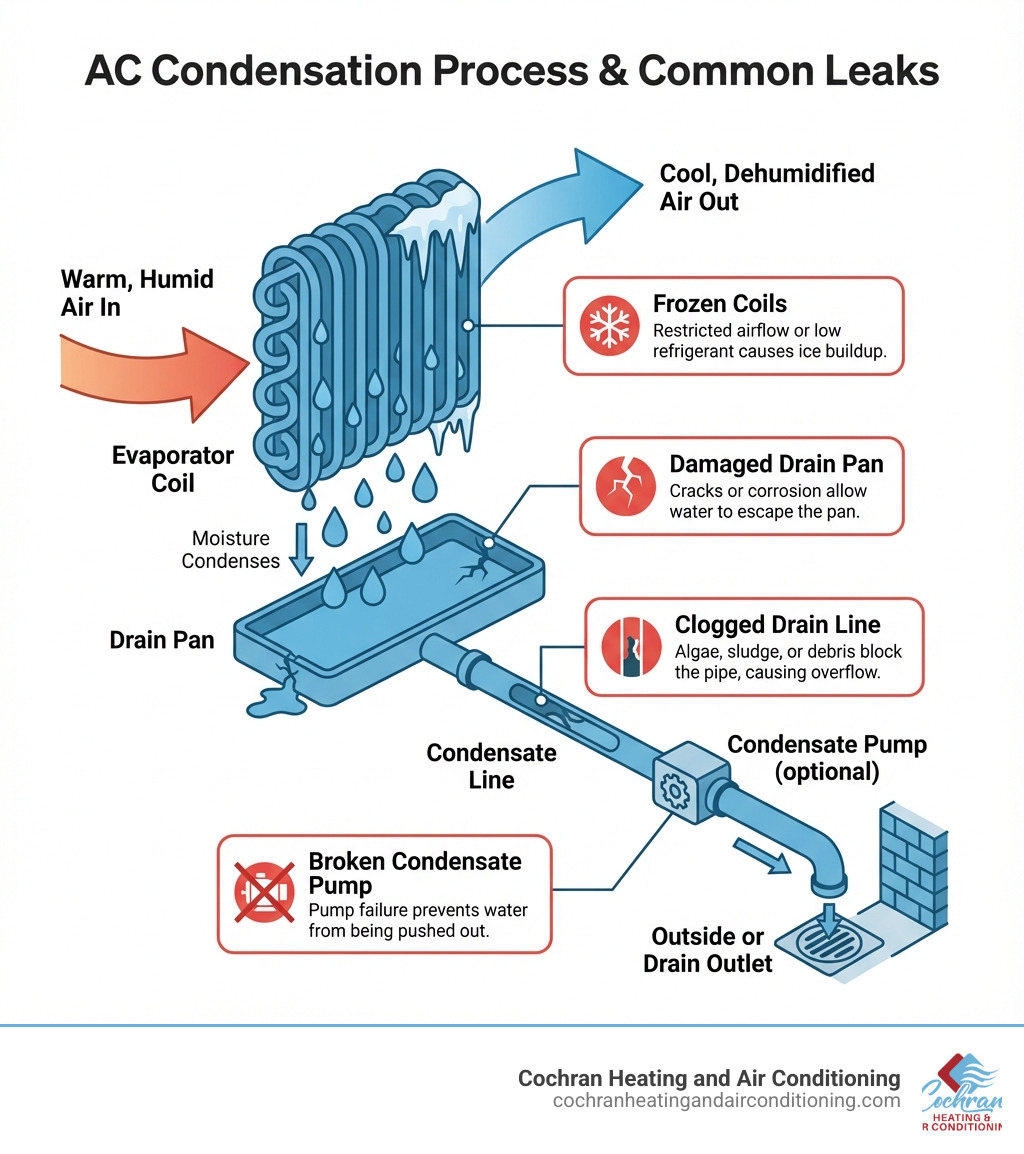
When your AC unit is running, it pulls warm, humid air from your home over a cold component called the evaporator coil. Think of it like a refreshing glass of iced tea on a hot day – moisture from the air condenses on the cold surface. This condensation is exactly what happens on your AC’s evaporator coil. As warm air blows over the coil, its moisture condenses into water droplets. This process is how your AC removes humidity from the air, making your home feel cooler and more comfortable.
This condensed water then drips into a specialized component known as the condensate drain pan. From there, it’s designed to flow out of your home through a condensate drain line. For most central AC units, this line carries the water outside or to a household drain. For window units, it typically drips out the back. Portable ACs collect water in an internal tank that needs periodic emptying. Mini-split systems also have drain lines, often leading outside.
So, a small amount of water being produced by your AC is perfectly normal. In fact, a little water dripping from the outdoor part of your AC system is often a sign it’s working efficiently! However, any water leaking inside your home, pooling around the indoor unit, or dripping from your ceiling, is a sign that something has gone awry in this carefully managed process. This is when a normal operation turns into an AC unit leaking water problem. For more details on how ACs work, you can explore resources like this one.
The 7 Most Common Causes for an AC Unit Leaking Water
When your AC starts to weep, it’s usually trying to tell you something. We’ve seen a range of issues that cause an AC unit leaking water, from simple fixes to more complex mechanical failures. Here are the most common culprits we encounter:
A Clogged Condensate Drain Line
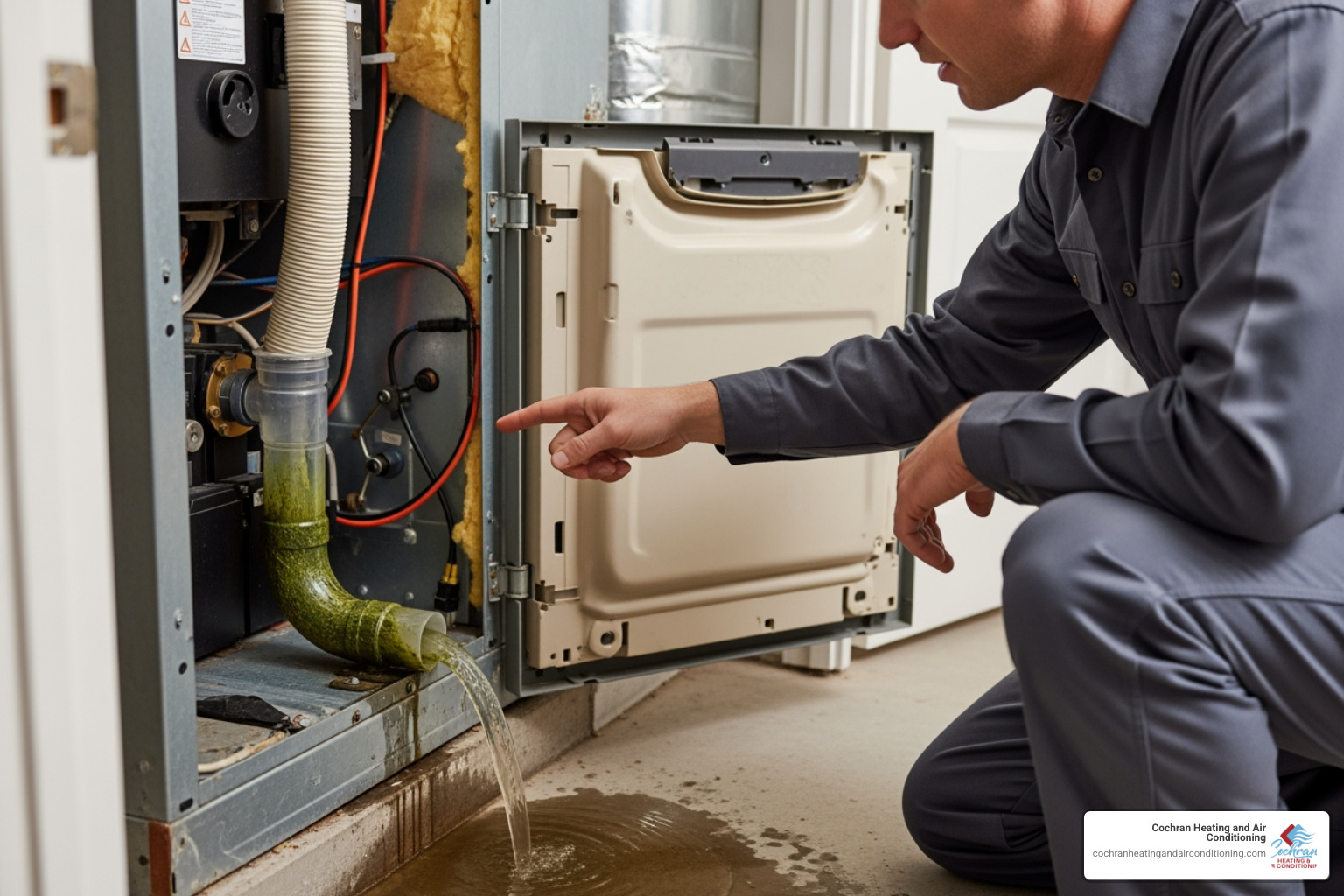
This is hands-down the most frequent reason for an AC unit leaking water. The condensate drain line is typically a PVC pipe that carries the water away from your indoor unit. Over time, this line can become a breeding ground for algae, mold, dirt, and sludge. These contaminants build up, creating a blockage. When the drain line is clogged, the water has nowhere to go but back up into the drain pan, which then overflows, causing water to spill into your home. This can be especially problematic for AC units located in attics, where an overflowing drain pan can lead to water dripping through your ceiling.
Frozen Evaporator Coils
Another common cause for an AC unit leaking water is when the evaporator coils freeze solid. Instead of cool water condensing and dripping, you get a block of ice. When this ice eventually thaws, it produces a large amount of water that the drain pan and drain line might not be able to handle, leading to an overflow.
What causes the coils to freeze? Often, it’s restricted airflow, which can be due to a dirty air filter or blocked return vents. Low refrigerant levels can also cause the coils to get too cold and freeze over. When we see frozen coils, we know there’s an underlying issue that needs to be addressed.
A Dirty Air Filter
Yes, something as simple as a dirty air filter can lead to your AC unit leaking water! A dirty air filter restricts the airflow over the evaporator coil. With less warm air passing over it, the coil gets too cold and freezes over. When this ice melts, it can overwhelm the drain pan, leading to leaks. A dirty filter also makes your system work harder, reducing efficiency and potentially causing further damage. We recommend changing your air filter every 30 days, especially during peak usage.
Damaged or Rusted Drain Pan
The drain pan beneath your evaporator coil is designed to catch all that condensation. However, these pans aren’t invincible. In older AC units, particularly those between 12 and 15 years old, the drain pan can start to show its age. Metal pans can rust through, creating small holes, while plastic pans can crack over time. If the pan itself is compromised, water will simply fall right through it, bypassing the drain line entirely and causing a leak.
A Broken Condensate Pump
Not all AC units rely solely on gravity to drain water. If your indoor unit is located in a basement or an attic where gravity can’t effectively move the water outside, it likely uses a condensate pump. This pump collects the water and actively pushes it through the drain line. If this pump breaks down, gets clogged, or its float switch malfunctions (which is designed to shut off the unit if water levels get too high), the water will have nowhere to go and will overflow, leading to a leak.
Improper AC Installation
Sometimes, the problem isn’t a faulty component but the initial setup. If your AC unit wasn’t installed correctly or isn’t perfectly level, the condensate pan might not be positioned to catch all the water effectively. Even a slight tilt in the wrong direction can cause water to spill over the edge of the pan instead of flowing into the drain line. This is particularly crucial for central AC systems where precise leveling is key.
Low Refrigerant Levels
Refrigerant is the lifeblood of your AC system, responsible for absorbing and releasing heat. If your refrigerant levels are low, often due to a leak in the system, it causes the pressure inside the AC to drop. This can make the evaporator coil become excessively cold, leading to it freezing over, much like a dirty air filter would. When this frozen coil eventually thaws, you get a watery mess. Low refrigerant is a serious issue that requires professional attention, as it indicates a leak in the sealed system.
The Dangers of a Leaking AC: More Than Just a Puddle
While an AC unit leaking water might seem like a minor annoyance, ignoring it can lead to a cascade of problems that are far more serious and costly than the initial drip. We’ve seen how quickly a small leak can escalate into a major headache for homeowners.
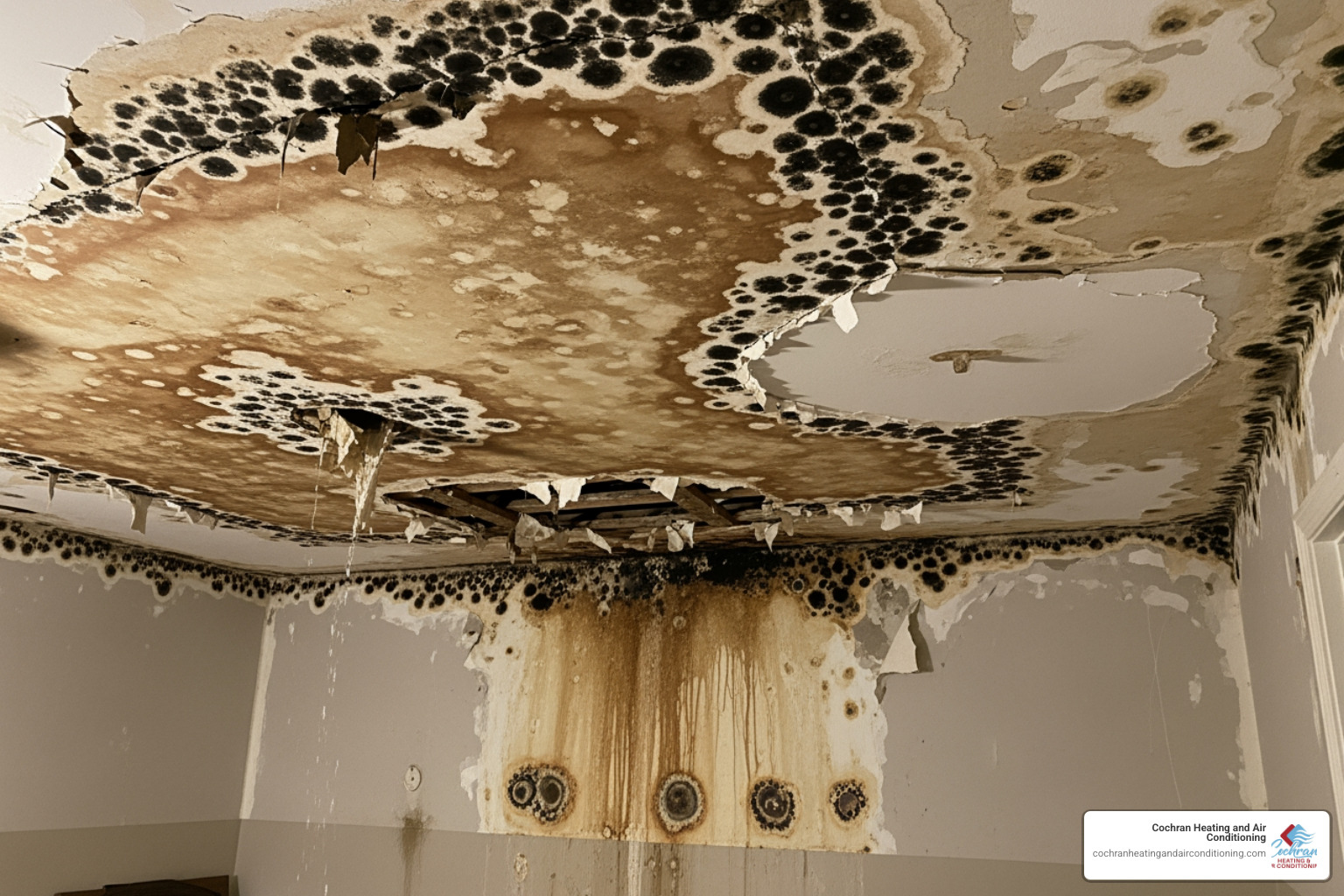
One of the most immediate concerns is water damage. Continuous dripping can soak through ceilings, walls, and flooring, leading to unsightly stains, peeling paint, and structural rot. If your AC unit is in the attic, water can drip down through your ceiling and walls, creating extensive damage that is expensive and time-consuming to repair. We’ve seen cases where entire sections of drywall needed replacement!
Then there’s the unwelcome guest: mold and mildew. Water that sits too long in walls, insulation, or carpets creates the perfect breeding ground for mold. This can lead to musty smells throughout your home and, more importantly, pose significant health risks. Mold can trigger allergies, asthma attacks, and other respiratory issues. Getting rid of mold, once it takes hold, is a difficult and costly process. For more on the health risks, the EPA provides valuable information here.
Beyond structural and health hazards, an AC unit leaking water can also create electrical dangers. Water and electricity are a dangerous combination. If water from your leak comes into contact with electrical components, it could lead to short circuits, system failure, or even a fire hazard.
Finally, a leaking AC often means an inefficient AC. When your system is struggling due to a clog, a frozen coil, or low refrigerant, it has to work much harder to cool your home. This overwork directly translates to higher energy bills. In areas with already skyrocketing electricity costs, this inefficiency can significantly impact your wallet. Addressing the leak promptly not only prevents damage but can also save you money on utility costs.
Your Action Plan: DIY Fixes for a Leaking AC
Alright, so your AC unit is leaking water. Before you panic, there are several things you can check and potentially fix yourself. We always advocate for homeowner empowerment, but remember, safety first!
Step 1: Turn Off the Power
This is non-negotiable. Before you touch anything, always switch off your AC unit at the thermostat and, crucially, at the circuit breaker that controls your HVAC system. This prevents any electrical hazards while you’re inspecting the unit. We want you to stay safe!
Step 2: Check and Change the Air Filter
This is often the easiest and most overlooked step. A dirty air filter is a common culprit for frozen coils, which then lead to leaks. Locate your air filter (usually in the return air vent or within the indoor air handler). If it’s caked with dust and debris, it’s time for a replacement. We recommend changing your filter every 30 days during heavy use, or at least every 1-3 months. A clean filter ensures proper airflow and can often resolve a freezing issue.
Step 3: Inspect and Clear the Condensate Drain Line
If your filter is clean, the next most likely suspect for an AC unit leaking water is a clogged drain line.
- Locate the Drain Line: This is typically a PVC pipe, often white, extending from your indoor unit. It might lead outside or to a utility drain.
- Look for Clogs: Check the visible sections of the pipe for any obvious blockages or kinks.
- Use a Wet/Dry Vacuum: If you suspect a clog, you can try to clear it with a wet/dry vacuum. Attach the hose of the vacuum to the end of the drain line (where it exits your home) and seal it tightly with duct tape or your hand. Run the vacuum for 20-30 seconds to suck out any debris. You might be surprised at what comes out!
- Flush with Vinegar: After vacuuming, we recommend pouring a cup of distilled white vinegar into the access port of the drain line (usually a T-shaped vent near the indoor unit). Let it sit for about 30 minutes to kill any algae or mold, then flush it with a cup or two of water. This helps prevent future clogs.
Step 4: Examine the Drain Pan and Pump
With the power still off, take a look at the condensate drain pan directly beneath the evaporator coils.
- Check for Damage: Look for any visible cracks, holes, or rust spots. If the pan is damaged, it will need to be replaced.
- Remove Standing Water/Debris: If there’s standing water in the pan and the drain line isn’t clogged, manually remove the water with a wet/dry vac or towels. Clear any debris you find.
- Inspect the Condensate Pump: If your unit has a condensate pump, check if it’s operating. Ensure it’s plugged in and that the float switch isn’t stuck. If the pump is humming but not moving water, or if it’s completely silent, it might be broken.
After performing these DIY steps, turn your AC back on and monitor it closely for the next few hours. If the leak stops, congratulations, you’ve likely fixed the problem!
When to Call a Professional vs. DIY
We understand the satisfaction of a good DIY fix. Many homeowners can successfully tackle a dirty filter or a simple drain line clog. However, there are times when an AC unit leaking water signals a more serious issue that requires the expertise and specialized tools of a professional HVAC technician. Knowing when to call us can save you time, money, and prevent further damage.
| DIY Tasks (Homeowner) | Professional Tasks (HVAC Technician) |
|---|---|
| Check/Change Air Filter | Diagnose/Repair Refrigerant Leaks |
| Clear Minor Drain Line Clogs (Wet/Dry Vac) | Recharge Refrigerant (EPA Certified) |
| Clean Visible Debris from Drain Pan | Replace Damaged Evaporator Coils |
| Check for Obvious Unit Level Issues | Repair/Replace Condensate Pump |
| Reset Float Switch on Condensate Pump | Diagnose/Repair Electrical Problems |
| Monitor for Ice on Coils (and thaw) | Repair/Replace Rusted/Cracked Drain Pans |
| Visually Inspect Drain Line for Kinks | Correct Improper AC Installation & Leveling |
Signs You Need an HVAC Technician for an AC unit leaking water
It’s time to call in the pros if you notice any of the following:
- Persistent Leaking: You’ve tried the DIY fixes, but the AC unit is still leaking water. This indicates a deeper problem.
- Visible Ice on Coils: While you can thaw them, recurring frozen coils point to underlying issues like low refrigerant or severe airflow problems that need professional diagnosis.
- Suspected Refrigerant Leak: If you hear hissing or bubbling sounds, notice a lack of cooling, or constantly have frozen coils, you likely have a refrigerant leak. Handling refrigerant requires special EPA certification and tools.
- Electrical Problems: Any flickering lights, strange odors, or circuits tripping when the AC runs means you have an electrical issue. Do NOT attempt to fix these yourself; water and electricity are a dangerous combination.
- Damaged Components: If the drain pan is cracked, the condensate pump is clearly broken, or you suspect internal damage, these parts need proper replacement.
- Improper Installation: If your unit was never level, or you suspect issues with the ductwork or how the system was initially set up, a professional can assess and correct this.
Why a professional is necessary for certain AC unit leaking water issues
We often compare DIY HVAC work to DIY dental work—it’s usually best left to the experts! Here’s why a professional is crucial for certain AC unit leaking water problems:
- Safety First: HVAC systems involve high voltage electricity and sometimes natural gas lines. Attempting complex repairs without proper training can lead to serious injury or even fire. We’ve seen the “shocking consequences” when homeowners work with electrical components, with electrical problems accounting for thousands of home fires annually.
- EPA Certification for Refrigerant: Refrigerant is a regulated substance. Only EPA-certified technicians are legally allowed to handle, recover, and recharge refrigerant. This isn’t just about legality; it’s about protecting the environment and ensuring the system operates safely and efficiently.
- Specialized Tools and Knowledge: We use diagnostic tools to pinpoint problems that aren’t visible to the naked eye. Our technicians have years of training and experience, allowing us to accurately diagnose complex issues like refrigerant leaks or hidden clogs.
- Warranty Protection: Attempting DIY repairs on certain components can void your manufacturer’s warranty, leaving you responsible for costly future repairs. Professional service ensures your warranty remains intact.
- Complex Diagnostics: An AC unit leaking water can sometimes be a symptom of a larger, more complex issue within the system’s delicate balance of equipment, airflow, and mechanics. We have the expertise to get to the root cause, not just treat the symptom. For example, replacing a frozen evaporator coil can cost upwards of $2,400 if the underlying issue isn’t properly diagnosed and fixed.
When in doubt, it’s always best to seek professional help for AC repairs. Our team at Cochran Heating and Air Conditioning is equipped to handle all types of AC leaks and ensure your system is running safely and efficiently.
How to Prevent Future AC Water Leaks
An ounce of prevention is worth a pound of cure, especially when it comes to preventing an AC unit leaking water. Proactive maintenance is the best way to keep your system running smoothly and prevent those unwelcome puddles.
- Regular Maintenance and Annual Tune-Ups: Just like your car needs regular oil changes, your AC system benefits from professional tune-ups. We recommend scheduling annual maintenance with us. During these visits, our technicians will thoroughly inspect your system, clean the evaporator coils, check refrigerant levels, and ensure all components are functioning correctly. This often catches potential issues before they become major leaks. The Department of Energy emphasizes the importance of AC maintenance for longevity and efficiency.
- Consistent Filter Changes: We can’t stress this enough! Regularly changing your air filter is one of the simplest and most effective ways to prevent frozen coils and maintain good airflow. Depending on your home and usage, we recommend checking filters monthly and replacing them every 30-90 days. A dirty filter can restrict airflow by up to 15%, forcing your unit to work harder and increasing the risk of leaks.
- Drain Line Cleaning: Even with regular filter changes, algae and mold can still grow in the moist environment of your condensate drain line. We recommend a simple DIY flush with distilled white vinegar every few months to keep it clear. Pour a cup into the drain line’s access port, let it sit for 30 minutes, then flush with water. This helps prevent the sludge buildup that leads to clogs. For central AC units in Joplin, MO, this is especially important during our humid summers.
- Ensure Proper Installation and Leveling: If you’re getting a new AC unit, ensure it’s installed by a qualified professional. Proper leveling is critical for the drain pan to function correctly. This is particularly relevant for window or portable units, where a slight tilt in the wrong direction can cause leaks inside your home. A window AC unit’s back should be about half an inch lower than the front to ensure proper drainage.
- Monitor Humidity Levels: In extremely humid conditions, your AC unit might produce more condensation than it can handle. If you live in an area with high humidity, consider running a dehumidifier in conjunction with your AC to reduce the load on the system and minimize condensation buildup.
By following these preventative measures, you can significantly reduce the chances of an AC unit leaking water, keeping your home dry and your system efficient.
Conclusion: Keep Your Cool and Your Floors Dry
Finding an AC unit leaking water can certainly be alarming, but as we’ve explored, many common causes are easily identifiable and some can even be addressed with a bit of DIY elbow grease. From a simple dirty air filter to a clogged condensate drain line, understanding why your AC is “crying” is the first step toward a solution.
We’ve covered the critical role of the condensate drain line, drain pan, and condensate pump in managing the water your AC naturally produces. We’ve also highlighted how issues like frozen evaporator coils and dirty air filters directly contribute to these frustrating leaks. More importantly, we’ve emphasized the potential dangers of ignoring a leak, from costly water damage and hazardous mold growth to electrical risks and inflated energy bills.
While some basic troubleshooting steps are within your grasp, certain issues, particularly those involving refrigerant, electrical components, or complex system failures, are best left to the certified professionals. Your safety and the long-term health of your HVAC system are paramount.
The good news is that with regular maintenance, including routine filter changes and annual tune-ups, you can significantly reduce the likelihood of experiencing an AC unit leaking water in the future.
At Cochran Heating and Air Conditioning, we’re here to help Joplin homeowners keep their cool and their floors dry. Whether you’re looking for routine AC Maintenance, need a speedy AC Repair for a persistent leak, or want to explore efficient Residential Heating & Cooling Solutions, our team of experts is ready to provide reliable and professional service. Don’t let a leaky AC dampen your comfort – reach out to us today!