Why Your Air Conditioner Problems Need Immediate Attention
Air conditioner problems can turn your home into an unbearable heat trap, especially during the hottest months of the year. Whether it’s blowing warm air, making strange noises, or refusing to turn on altogether, a malfunctioning AC unit demands quick action.
Common air conditioner problems include:
- Dirty or clogged air filters – Restricts airflow, reduces cooling, increases energy bills by up to 15%
- Thermostat issues – Wrong settings, dead batteries, or poor placement
- Refrigerant leaks – Causes ineffective cooling, hissing sounds, and ice buildup
- Frozen evaporator coils – Results from poor airflow or low refrigerant
- Water leaks – Indicates clogged drain lines or cracked drain pans
- Electrical problems – Tripped breakers, faulty capacitors, or worn wiring
- Strange noises – Hissing, banging, buzzing, or screeching sounds signal component failure
- Blocked vents – Can require up to 25% more energy to distribute air
- Dirty condenser coils – Prevents heat release and reduces efficiency
- Aging system – Units over 10-15 years old often need replacement
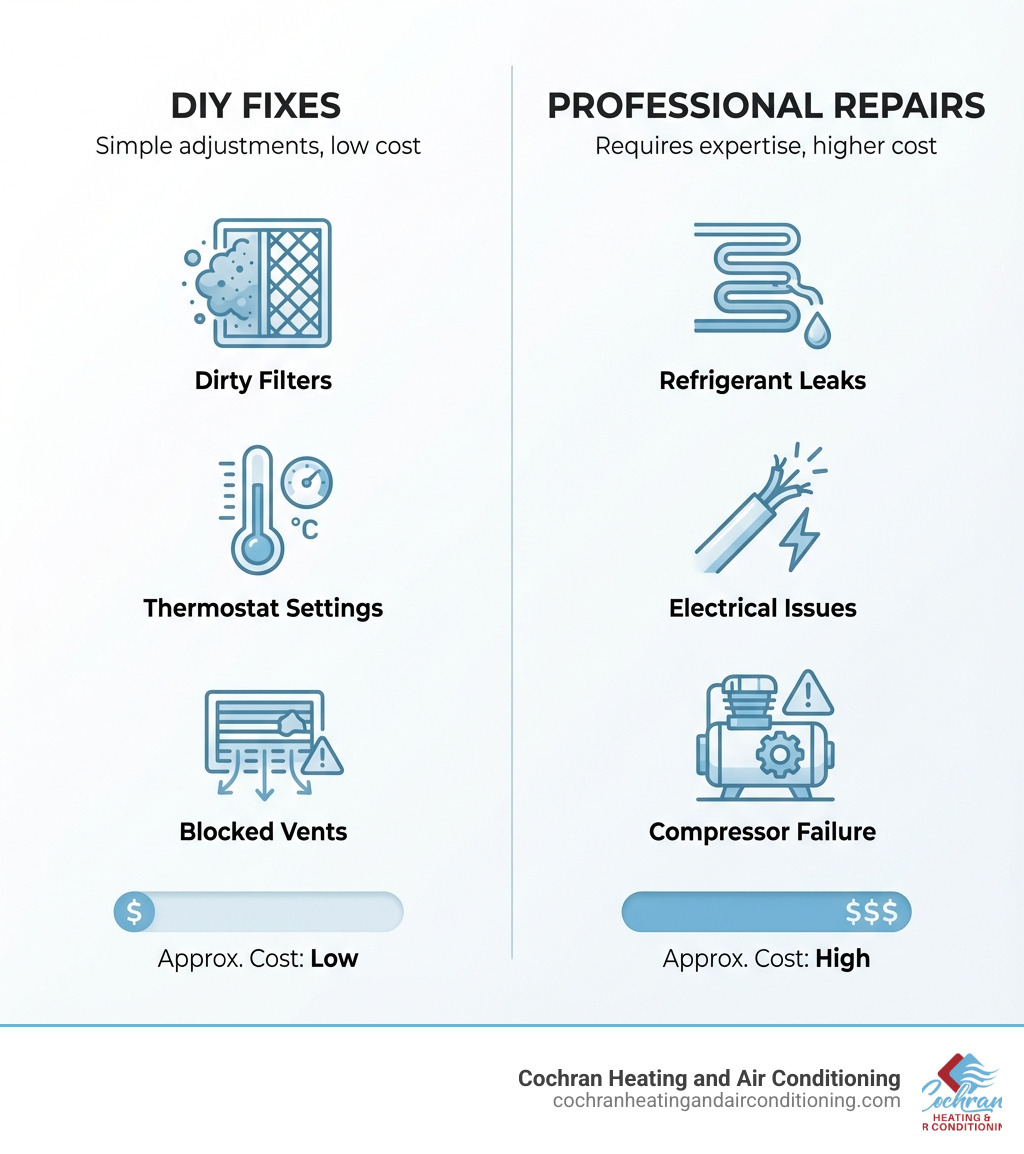
The good news? Many AC issues can be diagnosed with simple troubleshooting steps. Some problems—like changing a dirty filter or adjusting thermostat settings—you can fix yourself in minutes. Others, like refrigerant leaks or electrical faults, require a certified HVAC technician.
Understanding the difference between DIY fixes and professional repairs saves you time, money, and prevents further damage to your system. Nine out of ten service calls for central air units are due to dirty filters—a problem you can solve yourself. But attempting to fix complex issues like refrigerant leaks without proper training can be dangerous and illegal.
The First Checkpoints: Simple Fixes You Can Do in Minutes
Before you panic or reach for the phone to call a technician, let’s walk through some initial checks. Many common air conditioner problems have surprisingly simple solutions that you can handle yourself. Think of it as being your own AC detective!
Dirty Air Filter: The #1 Culprit
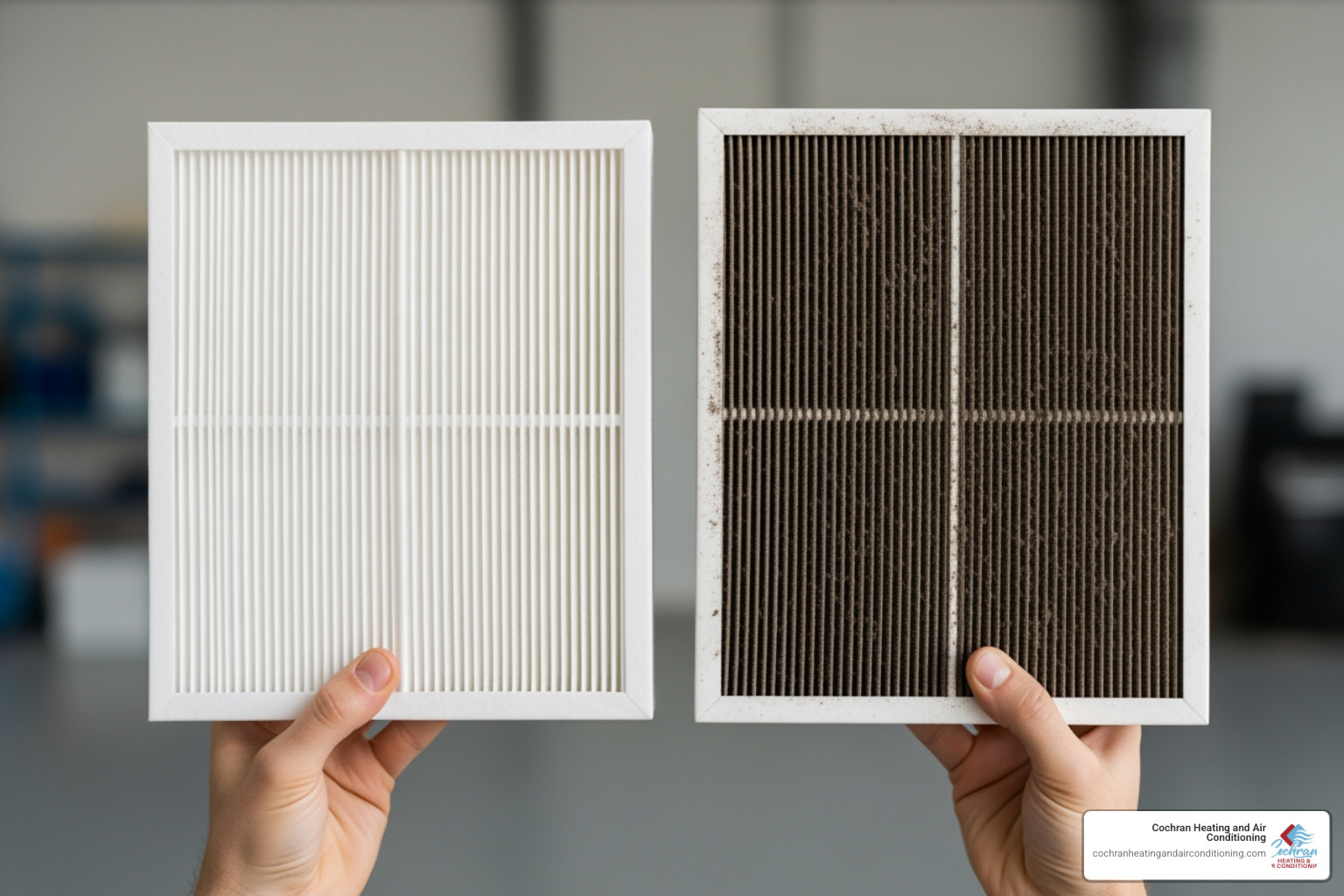
If your AC isn’t cooling effectively, blowing warm air, or you’ve noticed a musty smell, the first place we look is almost always the air filter. A dirty air filter is, without a doubt, the most common reason an air conditioner stops working or malfunctions. In fact, experts like Stewart Unsdorfer, founder of Wilson Heating & Air Conditioning, state that “nine times out of 10 it’s because of a dirty filter.”
A clogged filter restricts airflow, forcing your AC unit to work much harder to pull air through, which leads to several issues:
- Poor airflow and reduced cooling: The system can’t circulate air efficiently, meaning less cool air reaches your living spaces.
- Musty smells: A dirty filter can harbor mold and mildew, leading to unpleasant odors.
- Increased energy bills: Your AC has to run longer and harder, consuming more electricity. Dirty filters can increase energy usage by up to 15%, according to some reports.
- Overheating and freezing: Restricted airflow can cause the evaporator coil to freeze up (we’ll dive into this later) or the unit to overheat.
How to fix it: Checking and replacing your air filter is a simple, yet incredibly effective, preventative measure. Most filters should be replaced every 1-3 months, but if you have pets, allergies, or live in a dusty environment, you might need to change it monthly. It’s a quick task: switch off the unit, open the front panel, remove the old filter, wash it with room temperature water (if reusable) or replace it, dry it completely, and reinsert. This simple step is a cornerstone of routine maintenance that can maximize efficiency and prevent many common air conditioner problems.
Thermostat Malfunctions
Your thermostat is the brain of your AC system, and sometimes, the brain just needs a little adjustment or a fresh set of batteries. Incorrect thermostat settings or malfunctions are frequent culprits behind AC woes.
Here’s what to check:
- Incorrect settings: Ensure your thermostat is set to “Cool” mode and the desired temperature is lower than the current room temperature. A common oversight is having the fan set to “ON” instead of “AUTO.” When set to “ON,” the fan runs continuously, even when the compressor isn’t cooling, which can make it feel like your AC is blowing warm air or just circulating unconditioned air.
- Dead batteries: If your digital thermostat screen is blank or unresponsive, dead batteries are a likely cause. It’s an easy fix that many homeowners overlook due to the “set it and forget it” nature of modern thermostats.
- Wrong location: Is your thermostat in direct sunlight? If so, it might be reading an artificially high temperature, causing your AC to run unnecessarily or incorrectly. Similarly, drafts or proximity to heat sources can skew readings.
- Calibration issues: Sometimes, thermostats lose their calibration over time, leading to inaccurate temperature readings. While a professional might be needed for recalibration, checking the first three points can often solve the problem.
Smart thermostats can offer benefits like programmable schedules and remote control, helping you avoid some of these manual errors and potentially saving energy.
Blocked Vents and Ductwork
Imagine trying to breathe through a pinched straw – that’s what your AC unit feels like when its vents or ductwork are blocked. Blocked vents or ductwork significantly impact AC efficiency and airflow, leading to uneven cooling and wasted energy.
- Obstructed supply vents: These are the vents blowing cool air into your rooms. Furniture, curtains, or even children’s toys can easily block them, preventing cool air from circulating properly.
- Blocked return vents: These are larger vents that pull warm air from your home back into the AC system for conditioning. If these are blocked, your system struggles to draw in enough air, reducing its overall effectiveness.
- Furniture placement: Ensure there’s at least 10 inches of space between vents and any large furniture items. As Pacific Gas and Electric Company reported, blocked vents require up to 25% more energy to distribute air, making this a simple yet impactful fix.
- Deteriorating ductwork: Beyond blocked vents, leaky or constricted ductwork can also be a major issue. Leaky ducts can waste up to 30% of cooled air before it even reaches your rooms, according to industry data. While fixing ductwork often requires a professional, you can visually inspect accessible ducts (in attics or crawl spaces) for obvious damage or disconnections.
Regularly checking that all supply and return vents are open and unobstructed is a free and easy way to improve your AC’s performance and save on energy bills.
Diagnosing Common Air Conditioner Problems
Once you’ve checked the basics, it’s time to dig deeper into other common air conditioner problems that might be plaguing your system. These issues often manifest with more distinct symptoms like unusual noises, strange smells, or visible signs of malfunction.
Why Isn’t My AC Blowing Cold Air?
This is perhaps the most frustrating air conditioner problem – the unit is running, but you’re getting warm air, or simply not enough cold air. We touched on dirty filters, but here are other potential culprits:
- Dirty condenser coils: Located in your outdoor unit, these coils are responsible for releasing the heat absorbed from your home. If they’re covered in dirt, leaves, or debris, they can’t effectively dissipate heat, leading to poor cooling. You can often see this build-up on the fins of the outdoor unit.
- Low refrigerant: Refrigerant (often called Freon, though that’s a brand name) is the lifeblood of your AC system; it’s the chemical that absorbs heat from inside and releases it outside. If the refrigerant levels are low, usually due to a leak, your system simply can’t cool efficiently. Signs include weak cooling, hissing sounds, or ice on the refrigerant lines.
- Compressor issues: The compressor is the heart of your AC, pumping refrigerant through the system. If it’s failing or broken, your unit won’t be able to cool. This is a more serious issue that often requires professional diagnosis and repair.
If your AC isn’t blowing cold air, and you’ve checked your filters and thermostat, it’s a good idea to consult our signs your HVAC system needs repair in Joplin guide.
What Causes an AC Unit to Freeze Up?
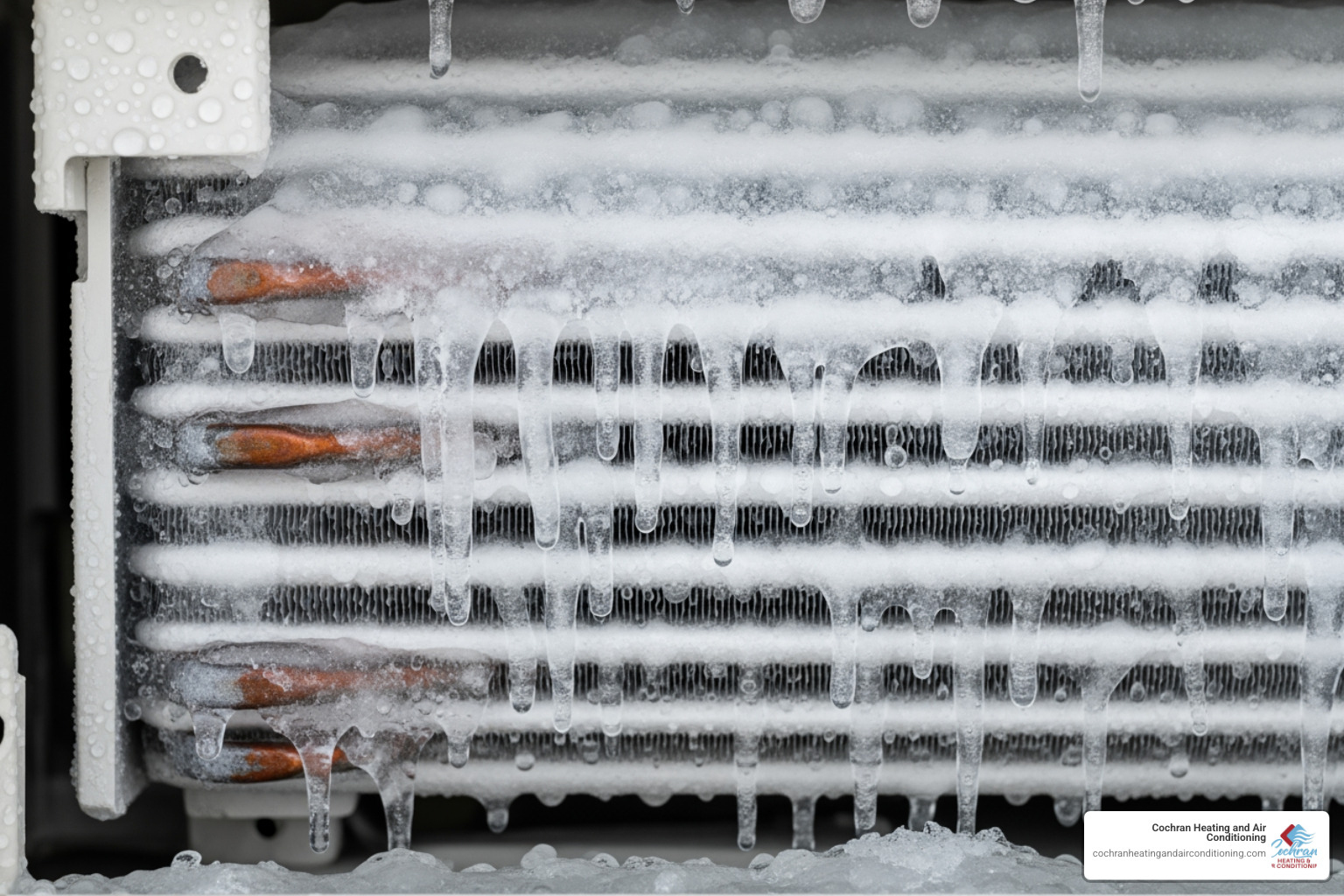
Finding ice on your indoor evaporator coil or even the outdoor refrigerant lines can be alarming. When an AC unit freezes up, it’s usually a symptom of another underlying problem, not the problem itself.
The most common causes include:
- Restricted airflow: This is often due to a dirty air filter (the #1 culprit again!), blocked return air ducts, or closed supply vents. When not enough warm air passes over the evaporator coil, the coil gets too cold and moisture in the air freezes on its surface.
- Low refrigerant levels: If your system is low on refrigerant, the pressure drops, causing the evaporator coil to get excessively cold, leading to ice formation. This typically points to a leak.
- Blower motor problems: A malfunctioning blower motor can’t move enough air across the evaporator coil, leading to the same freezing issue as a dirty filter.
How to safely thaw the unit: If you notice your AC is frozen, the immediate step is to turn off the AC unit (or set it to “fan only” mode) and let the ice melt naturally. This can take several hours, sometimes up to 24 hours. While it thaws, check and replace your air filter and ensure all vents are open. Once thawed, if the problem recurs, it’s time to call a professional to check for refrigerant leaks or other mechanical issues. Running a frozen unit can cause further, more expensive damage, especially to the compressor.
Puddles and Water Leaks
Seeing water pooling around your indoor AC unit or dripping from the ceiling is definitely a cause for concern. While some condensation is normal, persistent puddles indicate a problem with your AC’s drainage system.
Common causes of water leaks from an AC unit include:
- Clogged condensate drain line: As your AC cools, it removes humidity from the air, producing condensation. This water collects in a drain pan and flows out through a condensate drain line. Over time, algae, mold, or debris can clog this line, causing water to back up and overflow the pan. This is the most frequent cause of AC water leaks.
- Cracked drain pan: If the drain pan itself is old or damaged, it can crack, allowing water to escape.
- Broken condensate pump: In some systems, especially those in basements or attics where gravity can’t assist drainage, a condensate pump is used to push the water out. If this pump fails, water will accumulate and overflow.
How to fix them: For a clogged drain line, you might be able to clear it yourself. Turn off the AC, locate the drain line (often a PVC pipe), and try to clear the blockage with a wet/dry vacuum or by pouring a cup of distilled vinegar mixed with water down the access point (usually a T-shaped vent in the line). For cracked pans or broken pumps, professional replacement is necessary.
Decoding Unusual Noises and Foul Odors
Your AC unit should generally operate with a quiet hum. So, when it starts making strange sounds or emitting foul odors, it’s trying to tell you something! Ignoring these signals can lead to more severe air conditioner problems.
Here’s a guide to what those unusual noises and smells might mean:
Unusual Noises:
- Hissing: Often indicates a refrigerant leak, especially if heard from the outdoor unit.
- Banging or Thumping: Could signal a loose or broken part inside the blower motor, compressor, or outdoor fan. Turn off the unit immediately if you hear this to prevent further damage.
- Buzzing: May point to electrical issues, such as a failing capacitor, loose wiring, or a fan motor problem.
- Screeching or Squealing: Typically indicates a problem with a motor’s bearings (like the blower motor or outdoor fan motor) or a worn fan belt.
- Clicking: While normal at startup and shutdown, persistent clicking might suggest a faulty relay or thermostat issue.
- Rattling: Loose panels, debris inside the unit, or a failing fan blade can cause rattling.
Foul Odors:
- Musty or Mildewy: This smell often indicates mold or mildew growth within the AC system, usually in the condensate drain pan, drain line, or evaporator coil due to excess moisture. A dirty air filter can also contribute.
- Burning Smell: A burning odor (like plastic or electrical wiring) is serious and suggests an electrical component is overheating or failing. Turn off your AC immediately and call a professional.
- Rotten Egg Smell: This is extremely serious! It indicates a natural gas leak. If you smell rotten eggs, evacuate your home immediately and call your gas company from a safe location. Do not use any electrical switches or phones inside.
- Dead Animal Smell: Unfortunately, small animals can sometimes get into ductwork or units and die, leading to a very unpleasant odor.
We advise noting down the specific sound or smell and where it seems to be coming from. This information will be invaluable if you need to call us for a diagnosis.
Serious Issues That Require a Professional
While some air conditioner problems are DIY-friendly, others demand the expertise and specialized tools of a professional HVAC technician. Attempting to fix these complex issues yourself can be dangerous, ineffective, and may even void your warranty.
Signs of a Refrigerant Leak
A refrigerant leak is one of the most serious air conditioner problems you can face. It’s not just about losing cooling capacity; it’s an environmental and safety concern.
Key signs of a refrigerant leak include:
- Hissing or bubbling sounds: These noises, particularly from the indoor or outdoor unit, can indicate refrigerant escaping the system.
- Ineffective cooling: Your AC will struggle to cool your home, running longer cycles without reaching the desired temperature.
- Ice on refrigerant lines or evaporator coil: Low refrigerant pressure causes the coil to get excessively cold, leading to ice formation.
- Increased energy bills: Because your system is working harder to cool, it consumes more energy.
- Health risks: Exposure to refrigerants can be hazardous. According to the U.S. Environmental Protection Agency, exposure can lead to dizziness, headaches, nausea, loss of consciousness, and asphyxiation.
Why it’s a professional job: Refrigerant is a hazardous chemical, and handling it requires specialized training and equipment. The Environmental Protection Agency (EPA) mandates that only a certified technician can recharge your home’s HVAC unit and repair refrigerant leaks. Simply adding more refrigerant without fixing the leak is a temporary and wasteful solution that harms the environment and your wallet. Our technicians are certified to safely locate and repair leaks, then recharge your system properly.
Identifying Potential Electrical Issues
Electrical issues are another category of air conditioner problems that should always be handled by a qualified professional due to safety risks.
Watch out for these signs:
- Frequently tripped breakers: If your AC unit repeatedly trips its circuit breaker, it’s a sign of an electrical overload. This could be due to a short circuit, an overworked motor, or other component failures. While resetting the breaker might temporarily restore power, it doesn’t address the root cause.
- Faulty capacitors or contactors: These components are crucial for starting and running your AC’s motors (compressor, fan motors). If they fail, your unit might hum but not start, or only certain parts might operate.
- Worn or frayed wiring: Old or damaged wiring can cause shorts, power fluctuations, and in severe cases, fire hazards.
- Burnt smell: As mentioned earlier, any burning smell from your AC is a strong indicator of an electrical problem. Turn off the unit immediately!
Attempting to diagnose or fix electrical components without proper training can lead to electric shock, fire, or further damage to your system. When dealing with electrical air conditioner problems, it’s always best to call for emergency HVAC help.
Outdoor Unit (Condenser) Problems
The outdoor unit, or condenser, is a workhorse that needs clear space and proper functioning to cool your home. Many air conditioner problems can originate here.
- Debris and blockages: The condenser coils need to release heat efficiently. If the unit is surrounded by overgrown shrubs, leaves, grass clippings, or other debris, airflow is restricted, and heat can’t escape. This forces the unit to work harder, reducing efficiency and potentially leading to overheating or breakdown. We recommend at least 2-3 feet of clearance around the unit and 5 feet above it for optimal performance.
- Damaged fan blades: The fan inside the outdoor unit draws air over the condenser coils. If its blades are bent, broken, or obstructed, it won’t move air effectively. This can cause the compressor to overheat or the unit to shut down due to high pressure. You might hear rattling or scraping noises if blades are hitting something.
- Compressor failure: This is often the most expensive repair. The compressor is vital for the refrigeration cycle. Signs of compressor failure include the unit not cooling, making loud grinding or banging noises, or failing to start. Compressor failure can sometimes be a domino effect from other issues like low refrigerant or dirty coils causing it to overwork.
While you can clear debris from around the unit yourself, any internal issues like damaged fan blades or compressor problems require professional assessment and repair.
AC Lifespan and Proactive Care
Understanding the typical lifespan of your AC unit and embracing proactive care are key to preventing major air conditioner problems and ensuring your home stays comfortable for years to come.
Is It Time for a Replacement?
Even with the best maintenance, all good things come to an end. Recognizing the signs that your AC unit is nearing the end of its lifespan can save you from unexpected breakdowns and costly repairs. Most air conditioners have a lifespan of 10 to 15 years, depending on the model, brand, and how well it’s been maintained.
Here are the signs that your AC might be waving its white flag:
- Age: If your unit is 10-15 years old or older, it’s definitely worth considering replacement, especially if repairs are becoming frequent.
- Frequent expensive repairs: Are you constantly calling for service? If repair costs are piling up, or if a single repair is more than 50% of the cost of a new unit, replacement often makes more financial sense.
- Rising energy bills: An aging, less efficient AC unit will work harder to cool your home, leading to noticeable spikes in your utility bills. Modern high-SEER units can cut cooling costs by up to 40%.
- R-22 refrigerant phase-out: If your older unit uses R-22 refrigerant, you’ll find that it’s increasingly expensive and difficult to find as it’s been phased out due to environmental concerns. This makes repairing leaks in R-22 systems particularly costly.
- Decreased comfort: If your home isn’t cooling evenly, or you’re constantly adjusting the thermostat without achieving comfort, your AC might be losing its capacity.
The Power of Regular Maintenance
We can’t stress this enough: regular maintenance is your best defense against air conditioner problems. It’s like taking your car in for oil changes – essential for longevity and performance.
The benefits of scheduling professional AC tune-ups are immense:
- Preventing breakdowns: Technicians can spot minor issues before they escalate into major, expensive repairs.
- Maximizing efficiency: A well-maintained unit runs more efficiently, keeping your energy bills lower.
- Extending lifespan: Regular care helps your AC unit last longer, getting the most out of your investment.
- Improving air quality: Clean filters and coils mean cleaner air circulating in your home.
We offer comprehensive AC maintenance tune-ups designed to keep Joplin homes cool all summer. These tune-ups typically include cleaning coils, checking refrigerant levels, inspecting electrical components, lubricating moving parts, and ensuring overall system health.
Seasonal AC Checks
Seasonal changes can significantly impact AC performance, and a little proactive checking can go a long way in preventing air conditioner problems.
- Spring startup checklist: Before the summer heat hits, ensure your outdoor unit is clear of winter debris. Change your air filter, check thermostat batteries, and ensure all vents are open. Turn on your AC for the first time in spring to ensure it’s cooling properly before you truly need it.
- End-of-season shutdown: As temperatures cool, you might consider cleaning the outdoor unit one last time before covering it (if recommended by the manufacturer) to protect it from winter weather.
- Preparing for weather changes: During milder seasons, consider using your AC’s fan-only mode to circulate air without cooling, or simply opening windows to enjoy natural ventilation. This reduces wear and tear on your cooling system.
By being mindful of these seasonal checks, you can help your AC unit transition smoothly between seasons and reduce the likelihood of unexpected malfunctions.
Conclusion: Keeping Your Cool All Year Round
We’ve covered a lot of ground, from simple fixes like changing a dirty air filter to serious air conditioner problems like refrigerant leaks and compressor failures. Understanding these common issues empowers you to troubleshoot effectively, know when to roll up your sleeves for a DIY fix, and, crucially, when to call in the professionals.
Routine maintenance is your best friend in the fight against AC breakdowns. It not only extends the life of your unit and maximizes efficiency but also helps prevent those frustrating moments when your AC just isn’t cooperating.
When faced with complex issues, unusual noises, foul odors, or persistent problems, don’t hesitate to reach out to us. Our team at Cochran Heating and Air Conditioning is here to help diagnose and resolve any air conditioner problems you might encounter, ensuring your home remains a cool, comfortable oasis.
Ready to ensure your AC is in top shape? Explore our residential cooling services in Joplin today!