
Why Air Quality Detection Matters for Your Home
Air quality detection is the process of using sensors and monitors to measure pollutants and environmental factors in the air around you. It helps you understand what you’re breathing and when to take action to protect your health.
Quick Answer: Understanding Air Quality Detection
- What it measures: PM2.5, PM10, CO2, VOCs, formaldehyde, radon, temperature, and humidity
- How it works: Sensors use laser technology, infrared detection, and electrochemical methods to count particles and detect gases
- Why it matters: Indoor air can be 2-5 times more polluted than outdoor air, according to EPA research
- What you can do: Monitor levels, identify pollution sources, and improve ventilation or filtration when needed
Most people assume the air inside their home is clean. But research shows indoor pollution is often worse than what’s outside. Heavy industrial areas, cooking smoke, cleaning products, and even your furniture can release harmful particles and gases into your home.
According to the World Health Organization, air pollution is one of the leading causes of health problems worldwide. You can’t control what’s happening outside, but you can take charge of your indoor environment.
The good news? Air quality detection technology has become affordable and easy to use. Modern monitors track multiple pollutants at once, send alerts to your phone, and help you spot problems before they affect your health.
Whether you’re experiencing unexplained headaches, worried about allergens, or just want peace of mind, understanding your air quality is the first step to breathing easier.
Understanding Air Quality and Its Health Impacts
The air we breathe, both indoors and outdoors, profoundly impacts our well-being. Poor air quality isn’t just an abstract environmental concern; it has tangible health implications that can range from irritating to life-threatening. We’ve all experienced days when the air feels heavy or smells off, and our bodies often react with immediate short-term effects like dizziness, headaches, and fatigue.
However, the long-term health risks are far more concerning. Continuous exposure to polluted air can contribute to severe conditions, including respiratory diseases, various forms of cancer, and heart disease. This is why understanding the main pollutant categories and how they are measured is crucial for protecting ourselves and our loved ones.
What is the Air Quality Index (AQI)?
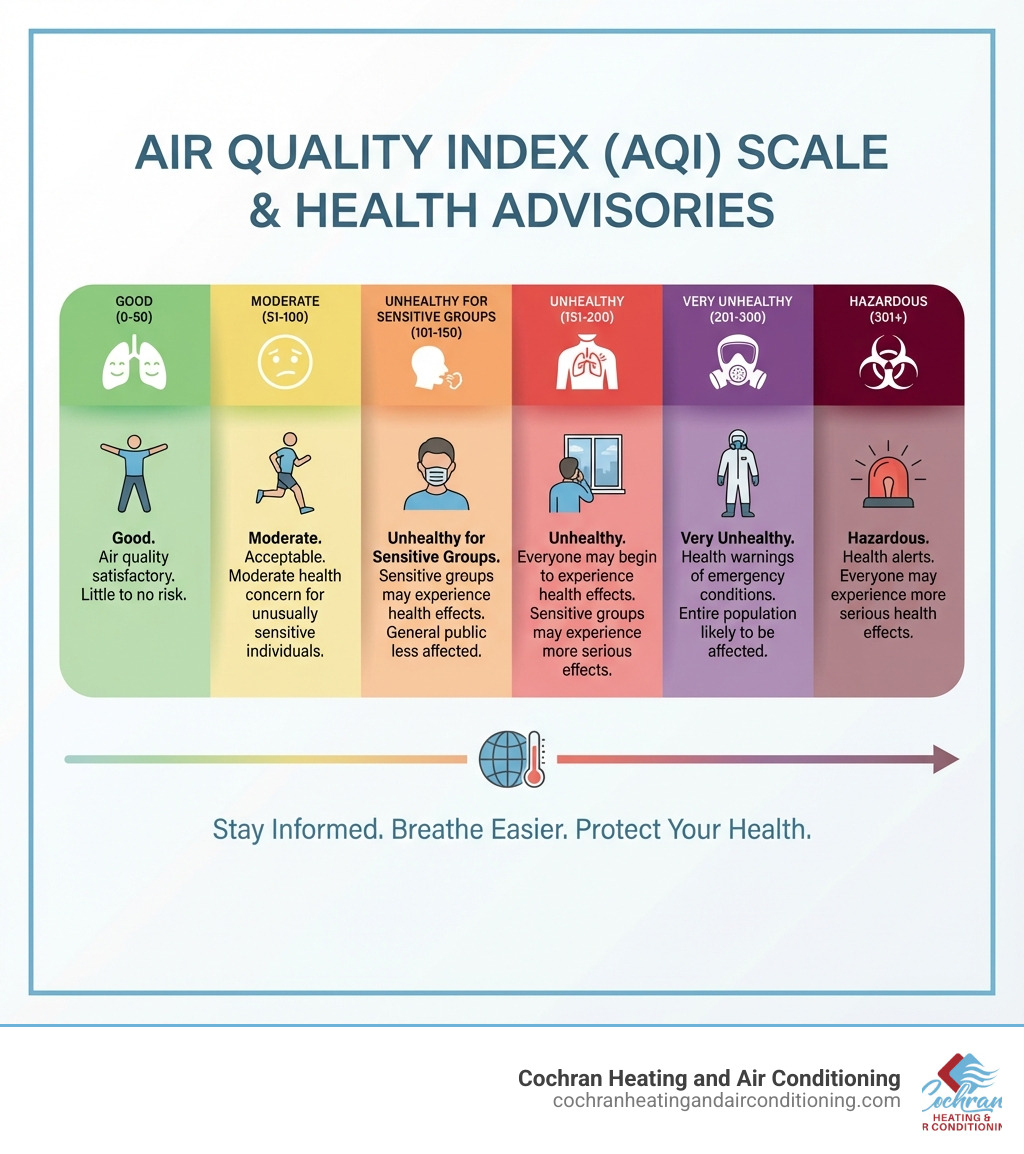
To help us understand air quality, environmental agencies use a standardized tool called the Air Quality Index (AQI). The AQI is a simple way to report how clean or polluted the air is and what associated health effects might be a concern. It takes complex air pollution data and converts it into a single number and a color-coded system that corresponds to different levels of health concern.
The U.S. Environmental Protection Agency (EPA) uses six distinct categories for the AQI, each with its own color and health advisory:
- Good (Green): AQI 0-50. Air quality is considered satisfactory, and air pollution poses little or no risk.
- Moderate (Yellow): AQI 51-100. Air quality is acceptable; however, there may be a moderate health concern for a very small number of people who are unusually sensitive to air pollution.
- Unhealthy for Sensitive Groups (Orange): AQI 101-150. Members of sensitive groups may experience health effects. The general public is less likely to be affected.
- Unhealthy (Red): AQI 151-200. Everyone may begin to experience health effects; members of sensitive groups may experience more serious health effects.
- Very Unhealthy (Purple): AQI 201-300. Health warnings of emergency conditions. The entire population is likely to be affected.
- Hazardous (Maroon): AQI 301+. Health alerts: everyone may experience more serious health effects.
The AQI is determined by measuring concentrations of five major air pollutants: ground-level ozone, particulate matter (PM2.5 and PM10), carbon monoxide, sulfur dioxide, and nitrogen dioxide. Once measured, these concentrations are converted into an AQI value for each pollutant, and the highest value becomes the official AQI for that area.
For a deeper dive into how this system works, you can learn AQI basics from the EPA. Knowing your local AQI can help you make informed decisions about outdoor activities, especially if you or someone in your household belongs to a sensitive group.
Key Pollutants in Your Home and Their Sources
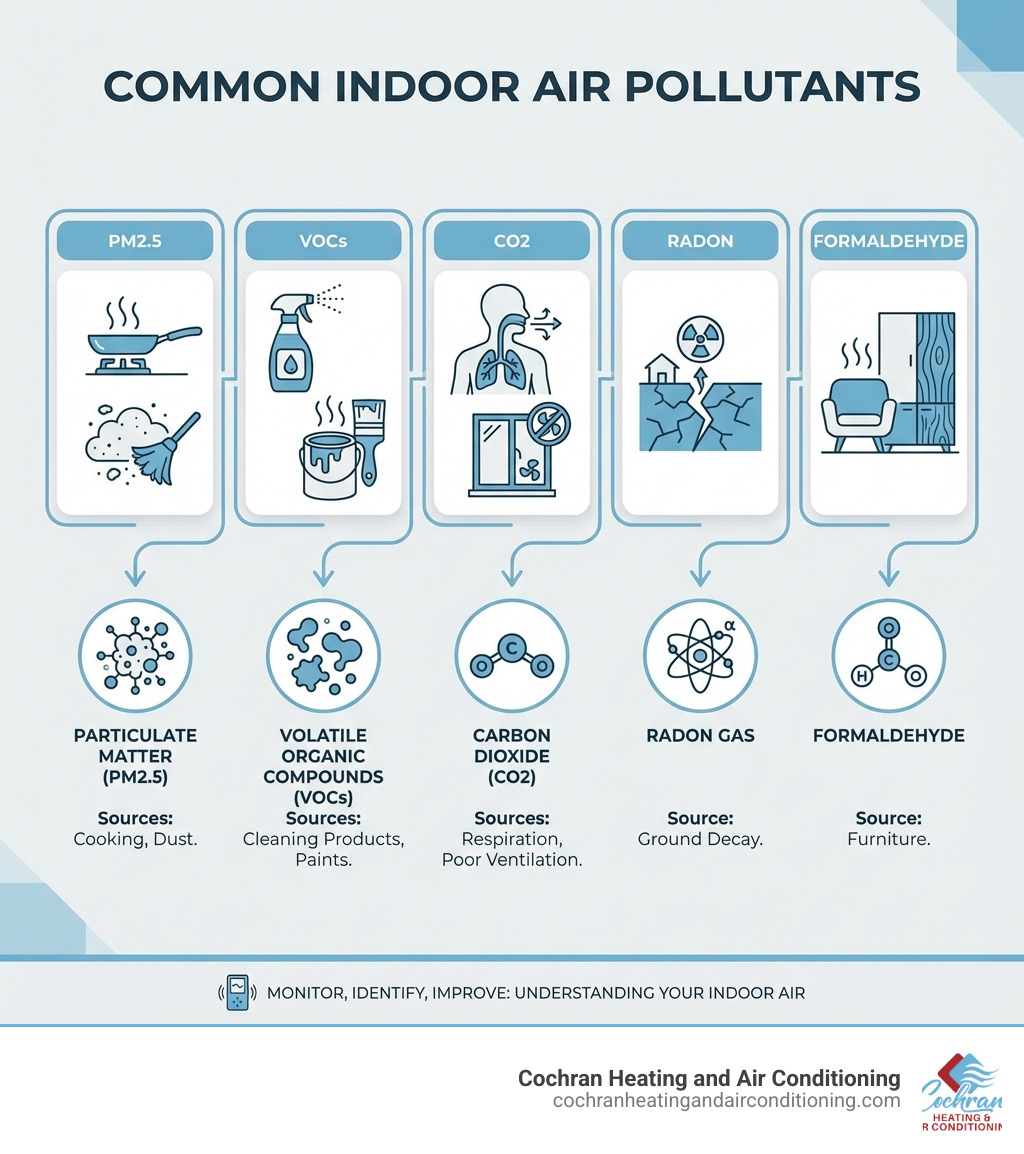
While outdoor air quality often gets the spotlight, the air inside our homes can be significantly more polluted. This is because indoor spaces can trap pollutants from both outdoor sources that infiltrate our homes and indoor activities. Let’s look at some of the most common culprits:
- Particulate Matter (PM2.5 & PM10): These are tiny solid or liquid particles suspended in the air. PM10 refers to particles with a diameter of 10 micrometers or less, while PM2.5 are fine particles with a diameter of 2.5 micrometers or less. To put that in perspective, a human hair is typically 50-70 micrometers thick!
- Sources: Common indoor sources include cooking (especially frying and grilling), burning candles or fireplaces, dust stirred up from cleaning, pet dander, and outdoor pollutants like pollen, mold spores, and vehicle exhaust that seep inside.
- Volatile Organic Compounds (VOCs): These are carbon-based chemicals that easily evaporate at room temperature. They are a broad classification, not specific compounds, and many have a low odor threshold.
- Sources: A wide array of household products release VOCs, including paints, varnishes, cleaning supplies, air fresheners, new furniture, carpeting, and even certain craft materials.
- Carbon Dioxide (CO2): While naturally present in the atmosphere, liftd CO2 levels indoors are primarily an indicator of poor ventilation.
- Sources: We produce CO2 simply by breathing (respiration). In tightly sealed homes, especially with multiple occupants or during prolonged periods, CO2 can build up, leading to symptoms like drowsiness, poor concentration, and headaches. High CO2 levels have even been linked to impaired decision-making and slower reaction times. A study from 2021 also showed that high CO2 levels can reflect risks of airborne disease transmission.
- Radon: This is a naturally occurring radioactive gas that is colorless, odorless, and tasteless, making it impossible to detect without specialized equipment.
- Sources: Radon forms from the natural decay of uranium in soil, rock, and water. It can seep into homes through cracks in foundations, floor drains, and other openings. The EPA’s action level for radon is 4 pCi/L, and if your monitor detects levels above this, professional consultation is highly recommended.
- Formaldehyde (HCHO): A pungent, colorless gas that is a common indoor air pollutant.
- Sources: It’s often found in pressed-wood products (like plywood, particleboard, and fiberboard) used in furniture and building materials, as well as in some glues, paints, fabrics, and disinfectants.
Understanding these pollutants and their origins is the first step in taking control of your home’s air quality.
The Essentials of Air Quality Detection Technology
Now that we know what we’re looking for, how do we actually find it? This is where air quality detection technology comes in. Modern air quality monitors are sophisticated devices that use various sensor technologies to provide real-time data about the air around us. Many also integrate with smart home systems, allowing for seamless monitoring and even automated responses to improve your environment.

Different Types of Air Quality Monitors
The market for air quality monitors has expanded significantly, offering a range of devices custom to different needs and budgets. We can broadly categorize them based on their intended use and capabilities:
- Indoor Monitors: These are designed to continuously track the air quality within your home, office, or school. They often measure a combination of pollutants like PM2.5, CO2, VOCs, temperature, and humidity. Examples include devices from brands like Temtop, Airthings, Aranet4, and Qingping. Many offer app connectivity, allowing you to view data and trends on your smartphone.
- Outdoor Monitors: While public agencies like the EPA operate extensive outdoor monitoring networks, consumer-grade outdoor monitors are also available. These are built to withstand outdoor elements and provide hyper-local, real-time data for your immediate surroundings. They can be invaluable for understanding how outdoor pollution impacts your indoor air.
- Portable Devices: Compact and battery-powered, these monitors allow you to check air quality on the go. Whether you’re traveling, visiting a friend’s house, or want to pinpoint a specific pollution source in different rooms, portable options offer flexibility. Some, like the PurpleAir PIXEL, are small enough to carry around easily.
- Single-Pollutant Detectors: These monitors specialize in detecting one specific pollutant. For instance, a dedicated CO2 monitor (like the Aranet4 HOME) is excellent for assessing ventilation, while a radon detector (like the Airthings View Plus) focuses solely on radioactive gas. While less comprehensive, they can be highly accurate for their specific target.
- Multi-Pollutant Monitors: These are the workhorses of consumer air quality monitoring, capable of detecting several pollutants simultaneously. Many devices on the market can measure PM2.5, PM10, CO2, VOCs, temperature, and humidity all from one unit, providing a more holistic picture of your air quality. The Qingping Pro (Gen 2) and AirGradient ONE are good examples of versatile multi-pollutant monitors.
- Smart Monitors & Connectivity: The latest generation of monitors often feature Wi-Fi or Bluetooth connectivity, allowing them to integrate with smartphone apps and smart home ecosystems like Alexa. This enables real-time alerts, historical data logging, and sometimes even automated control of other smart devices like air purifiers or ventilation systems.
How Air Quality Detection Sensors Work
The magic behind these devices lies in their specialized sensors, each designed to detect specific types of pollutants:
- Laser Particle Sensors: These are commonly used for detecting particulate matter (PM2.5 and PM10). The sensor works by drawing air into a chamber where particles pass through a laser beam. When a particle intersects the beam, it scatters the light. A photodetector measures this scattered light, and based on the changes in light intensity, the device can count the number and estimate the size of the particles. This method is highly effective for fine dust, smoke, and pollen.
- Nondispersive Infrared (NDIR) Sensors: For accurate CO2 measurement, NDIR sensors are the gold standard in consumer devices. They work by emitting infrared light through a sample of air. CO2 molecules absorb specific wavelengths of infrared light. By measuring how much light is absorbed, the sensor can determine the concentration of CO2 in the air. High-quality NDIR sensors, like those in the Aranet4 HOME, offer excellent accuracy.
- Electrochemical Sensors: These sensors are typically used for detecting gaseous pollutants like carbon monoxide (CO) and some volatile organic compounds (VOCs). They contain a chemical electrolyte that reacts with the target gas, producing an electrical signal proportional to the gas concentration.
- Photoionization Detectors (PIDs): While less common in entry-level consumer monitors, PIDs are highly sensitive to a wide range of VOCs. They use ultraviolet (UV) light to ionize gas molecules, creating a current that can be measured.
The accuracy of these sensors can vary, especially with lower-cost options. Environmental factors like temperature and humidity can impact their performance, and some require regular calibration to maintain accuracy.
What to Look for When Choosing a Monitor
Selecting the right air quality monitor can feel overwhelming with so many options available. Here’s what we recommend considering to ensure you get a device that truly meets your needs:
- Accuracy: This is paramount. Look for monitors that use reliable sensor technologies (e.g., NDIR for CO2, laser for PM2.5). While the EPA doesn’t certify low-cost indoor monitors, some organizations, like the South Coast Air Quality Management District’s (AQMD) AQ SPEC Program and Lawrence Berkeley National Laboratories, conduct evaluations of certain sensors. Their reports can offer insights into device performance.
- Calibration: All sensors can drift over time. Some monitors offer automatic calibration, while others require manual calibration. Regular calibration is key to getting the most accurate results possible.
- Pollutants Measured: Decide which pollutants are most important to you. Do you need a general overview (PM2.5, CO2, VOCs), or are you concerned about a specific issue like radon or formaldehyde? Multi-pollutant monitors offer a comprehensive view, but sometimes a dedicated single-pollutant monitor provides superior accuracy for that specific gas.
- Portability & Battery Life: If you plan to move the monitor between rooms or take it with you, portability and a long battery life are essential. Some devices offer dual operating modes, like the Temtop M2000C, with an ECO Mode for extended monitoring (e.g., 70-day standby for CO2) and an A Mode for real-time, instant data.
- Connectivity & Data Logging: Wi-Fi or Bluetooth connectivity allows for app integration, real-time alerts, and remote monitoring. Data logging is crucial for understanding trends over time and identifying intermittent pollution sources. Some monitors, like the Temtop M2000C, even offer data export functions for deeper analysis.
- Display & User Interface: A clear, easy-to-read display is important. Many monitors use color-coded indicators (similar to the AQI) for at-a-glance understanding. App interfaces should be intuitive and provide historical data visualization.
- Price: Air quality monitors range from under $50 to several hundred dollars. While budget is a factor, cheaper models can sometimes act as “random number machines” with unreliable sensors. Balance cost with sensor quality and the features you need.
Using Data to Create a Healthier Environment
Once you’ve chosen and set up your air quality monitor, the real work begins: interpreting the data and using it to make informed decisions. This is where air quality detection truly empowers you to take control of your environment.
Interpreting Your Air Quality Detection Data
Understanding the numbers your monitor provides is key to improving your air. It’s not just about seeing a number; it’s about what that number means in context:
- Understanding Baseline Levels: First, get a sense of what your “normal” air quality looks like. Let your monitor run for a few days without any unusual activities. This establishes your baseline for each pollutant.
- Identifying Spikes and Sources: When you see a sudden increase in a particular pollutant, try to correlate it with an activity. Did PM2.5 levels spike after you cooked dinner or lit a candle? Did VOCs rise after cleaning with certain products? This helps pinpoint specific pollution sources in your home. For example, if your particulate matter monitor indicates increased levels during cooking, we might suggest increasing your exhaust ventilation by turning on a range hood or opening a window.
- Tracking Changes Over Time: Use your monitor’s data logging or app features to track trends. Are CO2 levels consistently high in your bedroom overnight? This suggests poor ventilation. Are VOCs liftd after a new piece of furniture arrived? Historical data helps you understand patterns and the effectiveness of any changes you implement.
- Using Historical Data for Informed Decisions: Over time, your data becomes a powerful tool. It can help you decide if you need to invest in an air purifier, upgrade your HVAC filters, or adjust your daily habits. For instance, if you notice persistent high PM2.5 during wildfire season, you might prioritize keeping windows closed and running a HEPA air purifier.
- Setting Alerts: Many smart monitors allow you to set custom alerts for when pollutant levels exceed a certain threshold. This means you don’t have to constantly check the display; your monitor will notify you when action is needed.
Combining Indoor and Outdoor Monitoring
To get the most comprehensive picture of your air quality, we advocate for a holistic approach that combines both indoor and outdoor monitoring. This allows us to assess the overall air quality and, importantly, understand how well your building protects you from external pollution.
- Assessing Building Protection: Your home acts as a barrier against outdoor elements, including pollution. By comparing indoor and outdoor PM2.5 levels, for example, you can see how effective your home’s envelope (windows, doors, insulation) and HVAC system are at filtering out external contaminants. A significant difference indicates good protection, while similar levels might suggest leaks or inadequate filtration.
- Comparing Indoor Data with Public Outdoor Data: You don’t necessarily need two separate monitors. You can use free apps to get outdoor air quality data for your area and compare it with your indoor monitor’s readings. For those in the U.S., the EPA has an app called AirNow, and even Google Maps now provides air quality data. For those outside the U.S., the IQAir AirVisual app is a straightforward and free option. You can also specifically check your local outdoor air quality here and find monitors near you.
- Understanding Ventilation Effectiveness: This comparison is particularly useful for evaluating your ventilation strategy. If outdoor air quality is good, opening windows can rapidly improve indoor CO2 and VOC levels. If outdoor air is poor, relying solely on natural ventilation might bring more pollutants inside. This knowledge helps us make smart decisions about when to open windows, when to run an air purifier, or when to rely on your HVAC system’s filtration. If you’re looking to optimize your home’s airflow, we offer more info about ductwork & ventilation services right here in Joplin.
Taking Action to Improve Your Air
Knowing your air quality is the first step, but the real benefit comes from taking action. With the insights from your air quality detection efforts, you can make targeted improvements that lead to a healthier living environment.
Simple Fixes for Better Indoor Air
Many indoor air quality issues can be addressed with straightforward changes to your habits and home maintenance:
- Increase Ventilation: This is often the quickest way to reduce indoor pollutants like CO2 and VOCs. Open windows and doors, especially when outdoor air quality is good.
- Use Exhaust Fans: Always use exhaust fans in bathrooms to remove moisture and in the kitchen when cooking to vent particulate matter and odors.
- Choose Low-VOC Products: When buying paints, cleaning supplies, or new furniture, look for “low-VOC” or “no-VOC” labels. This significantly reduces chemical off-gassing.
- Clean Regularly: Dusting, vacuuming (with a HEPA filter vacuum), and washing bedding helps remove particulate matter, allergens, and pet dander.
- Maintain HVAC Systems: Your heating and cooling system plays a crucial role in air filtration and circulation. Regularly changing your HVAC filter is one of the most effective steps you can take. Replacing a clogged filter with a clean one can help lower your air conditioner’s energy consumption by up to 15%. Make sure your system is well-maintained with regular tune-ups. For residents in Joplin, our AC Maintenance Tune-Ups: Keeping Joplin Homes Cool All Summer service can help ensure your system is performing optimally.
When to Consider Professional Solutions
While many issues can be resolved with simple fixes, some air quality problems require expert intervention. Knowing when to call in the professionals can save you time, money, and ensure a truly healthy home.
- Persistent Poor Readings: If your monitor consistently shows high levels of pollutants despite your best efforts with ventilation and source control, it’s time to investigate further. There might be a hidden source or a systemic issue.
- High Radon Levels: Radon is a serious health risk that requires professional mitigation. If your radon monitor indicates liftd levels (above the EPA’s action level of 4 pCi/L), a certified radon professional should be contacted immediately to assess and resolve the issue.
- Unidentified Pollutant Sources: Sometimes, even with monitoring, you can’t pinpoint the source of a specific pollutant. Professionals have advanced equipment and expertise to identify elusive contaminants and recommend targeted solutions.
- HVAC System Upgrades: Your HVAC system is the lungs of your home. If your current system isn’t adequately filtering air, providing sufficient ventilation, or distributing conditioned air effectively, an upgrade or modification might be necessary. This could involve installing higher-MERV filters, adding UV lights, or improving ductwork. For comprehensive solutions, our residential heating & cooling services in Joplin can help evaluate your current system and recommend appropriate upgrades to improve your indoor air quality.
Conclusion
Understanding and monitoring the air we breathe has never been more accessible or important. Through effective air quality detection, we gain valuable insights into our indoor and outdoor environments, empowering us to make informed decisions for our health and comfort. From recognizing common pollutants and interpreting AQI values to choosing the right monitor and taking actionable steps, we can transform our living spaces into havens of fresh, clean air.
Taking charge of your air quality is a proactive step towards a healthier life. It’s about more than just numbers on a screen; it’s about peace of mind and well-being for you and your family. If you’re ready to take the next step in ensuring your home’s air quality, professional help is available. For more information on how we can help you achieve optimal indoor air quality in your Joplin home, please visit our indoor air quality services page.