Why Your HVAC System Deserves Annual Attention
An Annual HVAC inspection is a professional evaluation of your home’s heating and cooling system that ensures it’s running efficiently, safely, and reliably. Most homeowners only think about their HVAC when something breaks—usually on the hottest or coldest day of the year. But a yearly check-up by a certified technician can prevent those emergency calls and save you money in the long run.
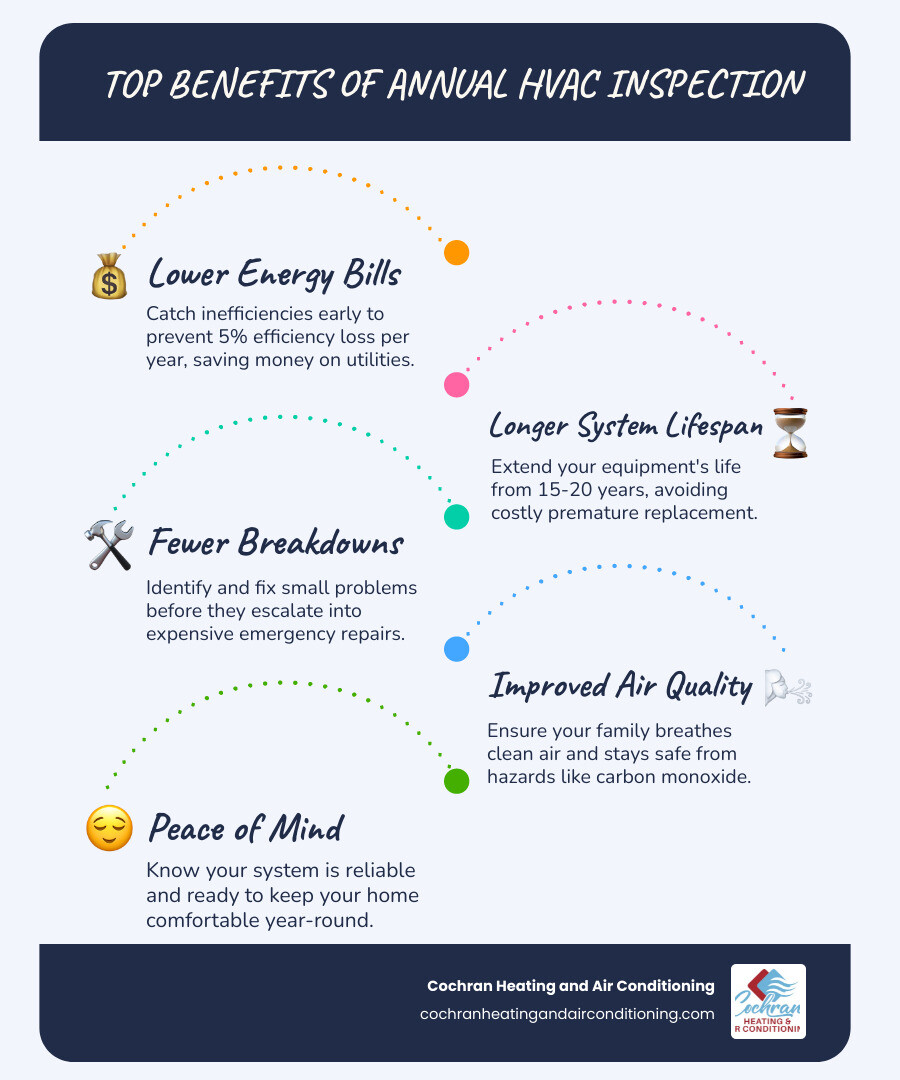
Here’s what an annual HVAC inspection delivers:
- Lower energy bills – Catch inefficiencies early before they drain your wallet
- Longer system lifespan – Extend your equipment’s life from 15-20 years instead of replacing it prematurely
- Fewer breakdowns – Identify small problems before they become expensive emergencies
- Improved air quality – Ensure your family breathes clean air and stays safe from carbon monoxide
- Peace of mind – Know your system is ready for extreme weather when you need it most
Nearly 50% of your home’s energy use comes from heating and cooling. Without regular maintenance, your system loses about 5% efficiency per year and its lifespan can be cut in half. That’s a costly hit to both your comfort and your budget.
Think of it like changing the oil in your car. You wouldn’t wait for your engine to seize before getting an oil change. Your HVAC system deserves the same proactive care. A well-maintained system runs more efficiently, breaks down less often, and keeps your family comfortable year-round.
What Is an Annual HVAC Inspection and Why Is It Crucial?
At its core, an Annual HVAC inspection is a comprehensive health check for your home’s heating, ventilation, and air conditioning system. Our professional technicians carefully evaluate every component to ensure it’s performing optimally. This isn’t just about fixing things when they break; it’s about proactive maintenance, identifying potential issues before they escalate into costly problems. We assess everything from basic function and cleanliness to safety mechanisms and overall system condition.
Why is this so crucial for homeowners? Because your HVAC system works incredibly hard year-round, especially in climates with fluctuating temperatures. It’s responsible for nearly 50% of your home’s energy use. Without regular care, an unserviced system can lose about 5% efficiency per year, leading to higher utility bills and reducing its lifespan by as much as 50%. A well-maintained unit can last 15 to 20 years, but neglect can shorten that significantly, forcing you into an inconvenient and expensive early replacement.
Signs Your HVAC System Needs Attention
Your HVAC system often gives subtle hints when it’s not feeling 100%. Ignoring these can lead to bigger headaches down the road. Here are some common signs that it might be time for an inspection or maintenance:
- Unusual Noises: Squealing, grinding, banging, or persistent rattling sounds are rarely a good sign. They can indicate worn-out parts, loose components, or issues with the motor or fan.
- Strange Odors: A burning smell might signal an electrical issue, while a musty smell could point to mold or mildew in the ductwork or evaporator coil. Gas furnaces can sometimes emit a sulfur-like smell if there’s a leak, which is a serious safety concern.
- Weak Airflow: If air isn’t blowing strongly from your vents, or if some rooms are consistently colder or hotter than others, it could be due to clogged filters, duct leaks, or a struggling blower.
- Higher Energy Bills: A sudden spike in your monthly utility costs without a change in usage often means your HVAC system is working harder than it should to maintain desired temperatures.
- Inconsistent Temperatures: Hot and cold spots throughout your home or an inability to reach the thermostat setting comfortably points to inefficiency or a system malfunction.
- Frequent Cycling: If your system is constantly turning on and off (short cycling), it’s a red flag. This puts undue stress on components and can indicate a problem with the thermostat, refrigerant levels, or system sizing.
If you’re noticing any of these issues, it’s wise to get a professional evaluation. For more detailed information on common issues, you can check out our guide on Signs Your Home HVAC System Needs Repair in Joplin, MO.
HVAC Inspection vs. General Home Inspection
When you’re buying or selling a home, a general home inspection is standard. This inspection covers many aspects of the property, including a basic look at the HVAC system. However, it’s important to understand that an HVAC inspection differs significantly from a general home inspection.
A general home inspector will typically check that the HVAC system turns on, blows air, and appears functional. They might note the age of the unit and any obvious visual defects. But their assessment is broad.
An Annual HVAC inspection, especially one conducted by a specialized technician, goes much deeper. We use specialized tools and our extensive expertise to perform an in-depth analysis. This includes checking refrigerant levels (which a general inspector won’t do), testing electrical components for safety, inspecting burner combustion, evaluating the heat exchanger for cracks (a potential carbon monoxide hazard), and assessing ductwork for leaks. During the home buying process, we strongly recommend a separate, specialist HVAC inspection in addition to the general home inspection. This ensures you have a true understanding of the system’s condition, potential issues, and remaining lifespan, which can be valuable for negotiation or planning future maintenance.
The Main Benefits of Scheduling Your Yearly Check-Up
Investing in an Annual HVAC inspection might seem like an extra expense, but it’s truly an investment in your home’s comfort, safety, and your wallet. The peace of mind that comes from knowing your system is ready for any weather is invaluable.

One of the biggest advantages is preventing unexpected breakdowns. Imagine your AC failing on the hottest day of summer or your furnace giving out during a winter freeze – these emergency repairs are often more expensive and inconvenient. Regular inspections catch minor issues before they become major disasters. Furthermore, many HVAC warranties mandate annual servicing to remain valid. Neglecting maintenance can void your warranty, leaving you to pay full price for repairs that would have been covered. These check-ups contribute significantly to your system’s longevity, helping you avoid premature and costly replacements.
Boost Energy Efficiency and Lower Utility Bills
Your HVAC system is a powerhouse, but like any machine, it can lose efficiency over time, especially without regular care. Dirty coils, clogged filters, and airflow problems are common culprits that force your system to work harder, consuming more energy and driving up your utility bills.
For instance, a dirty evaporator or condenser coil can significantly reduce your system’s ability to cool or heat, causing it to run longer and increasing energy costs. Similarly, a clogged air filter restricts airflow, which can reduce your system’s efficiency by up to 15 percent. Our technicians clean these vital components and ensure optimal airflow, helping your system operate at peak efficiency. This proactive approach can lead to substantial savings on your energy bills, potentially reducing HVAC energy costs by 5 to 40 percent. We’re committed to improving energy efficiency for our clients, helping you keep your home comfortable year-round while saving money. Learn more about How to Keep Your Joplin Home Comfortable Year-Round with Efficient HVAC.
Extend System Lifespan and Prevent Costly Repairs
HVAC systems are built to last, with well-maintained units typically serving homes for 15 to 20 years. However, wear and tear are inevitable. Small issues, if left unaddressed, can quickly escalate into major, expensive repairs. An Annual HVAC inspection allows us to identify these minor problems—like loose electrical connections, low refrigerant levels, or a slightly corroded part—and address them before they cause a complete system breakdown.
Think of it this way: a small crack in your car’s windshield is easier and cheaper to repair than replacing the entire windshield after it spreads. The same principle applies to your HVAC. By catching issues early, we prevent premature system failure and extend the functional life of your equipment. This means you get more years out of your significant investment and avoid the stress and financial burden of an unexpected Emergency HVAC Services in Joplin, MO call and potential system replacement.
Improve Indoor Air Quality and Ensure Family Safety
Your HVAC system does more than just heat and cool; it plays a critical role in your home’s indoor air quality and overall safety. Dirty air filters can become breeding grounds for dust, allergens, pet dander, and mold spores, circulating these contaminants throughout your home and potentially exacerbating allergies or respiratory issues. Our inspections include checking and, if necessary, replacing these filters to ensure cleaner, healthier air for your family. For comprehensive solutions, explore our Indoor Air Quality Services in Joplin, MO.
Beyond comfort, safety is paramount. Faulty electrical connections can pose fire hazards, and improperly operating gas connections in furnaces can lead to gas leaks or, worse, carbon monoxide buildup. Carbon monoxide is an invisible, odorless gas that can be deadly. Our technicians carefully inspect gas connections, burner combustion, and heat exchangers for cracks that could allow this dangerous gas into your living space. We also check safety controls to ensure they are functioning correctly, giving you peace of mind that your home environment is both comfortable and secure.
What’s Included in a Professional HVAC Inspection?
When we perform an Annual HVAC inspection, we don’t just glance at your system; we conduct a thorough, multi-point check to ensure every component is in top working order. Our goal is to assess its overall performance, efficiency, and safety.
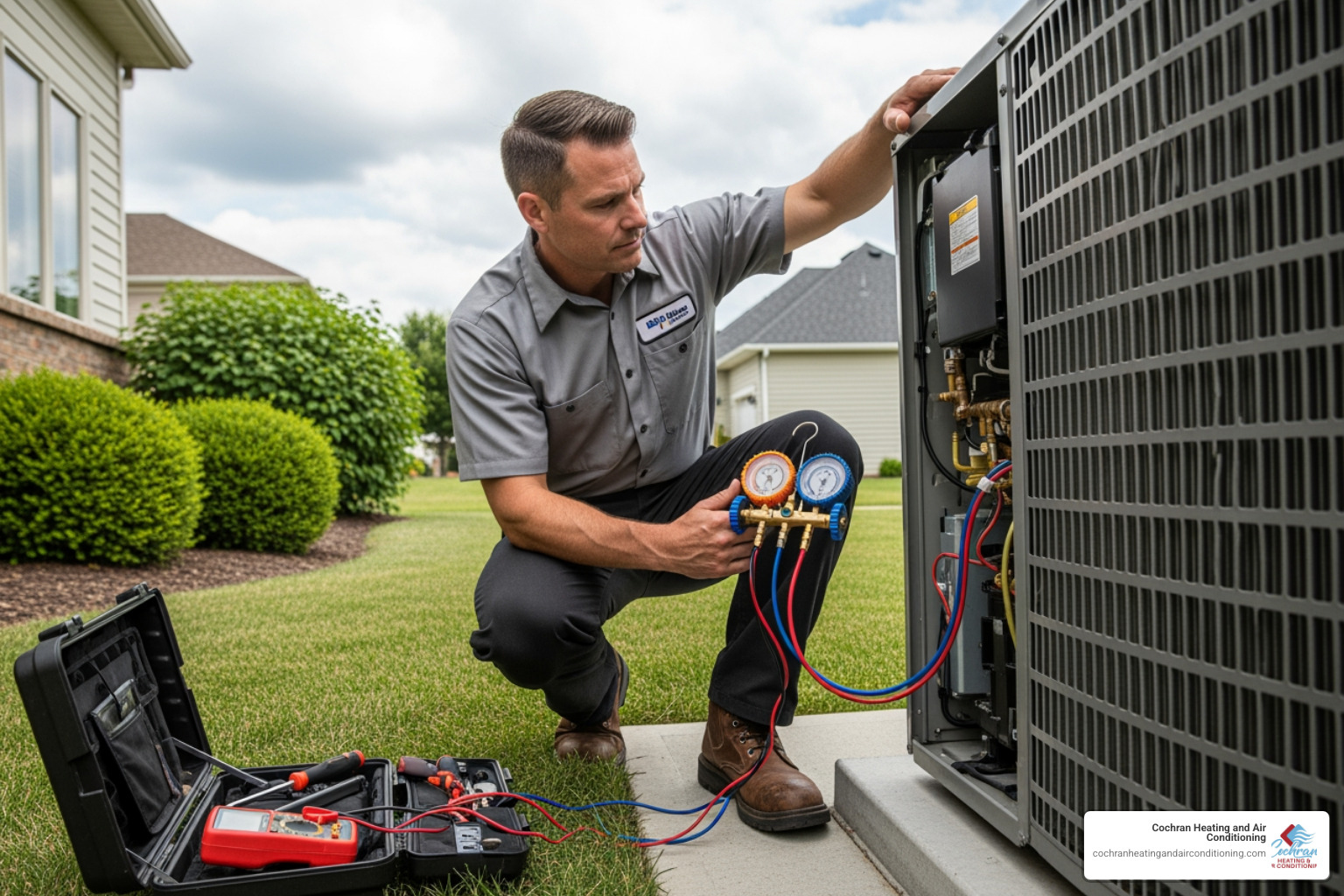
A typical inspection includes:
- Thermostat Calibration: Ensuring your thermostat is accurate and communicating correctly with your system.
- Electrical Connections: Inspecting and tightening all electrical connections to prevent hazards and ensure consistent power flow.
- Refrigerant Levels: Checking for proper refrigerant levels and inspecting for leaks (for AC units).
- Condensate Drain: Cleaning and inspecting the condensate drain to prevent clogs, water damage, and excessive humidity.
- Blower Components: Inspecting and cleaning the blower motor and fan to ensure proper airflow.
- Heat Exchanger: A critical safety check, especially for furnaces, to look for cracks that could leak carbon monoxide.
- System Controls: Testing all system controls for proper and safe operation.
- Lubrication: Lubricating all moving parts to reduce friction and wear.
- Air Filters: Inspecting, cleaning, or replacing air filters.
Cooling System Checklist (Spring/Summer)
As the warmer months approach, your air conditioning system gears up for heavy use. Our cooling system inspection focuses on ensuring it’s ready to handle the heat:
- Evaporator Coils: Cleaning these indoor coils is crucial as dirt buildup can significantly reduce cooling efficiency.
- Condenser Coils: We clean the outdoor coils, which are vital for heat dissipation. Dirty coils force the compressor to work harder.
- Refrigerant Pressure: We check the system’s refrigerant levels and pressure. Low refrigerant often indicates a leak, which we can identify and repair.
- Blower Motor & Fan Blades: We inspect and clean the blower motor and fan blades to ensure optimal airflow throughout your home.
- Compressor Amperage: We measure the compressor’s electrical current to ensure it’s operating within safe parameters.
- Temperature Differential: We measure the temperature drop across the indoor coil to confirm proper cooling performance.
For all your cooling needs, including maintenance and repairs, we offer comprehensive Air Conditioning Services in Joplin, MO.
Heating System Checklist (Fall/Winter)
Before the cold weather sets in, our heating system inspection ensures your furnace or heat pump is ready to keep your family warm and safe:
- Burner Combustion: For gas furnaces, we inspect the burner flame for proper combustion. A bright blue flame is ideal; a yellow flame or excessive soot can indicate issues.
- Gas Pressure: We check gas pressure settings to ensure safe and efficient operation.
- Ignition System: We test the igniter or pilot light to ensure reliable startup.
- Safety Controls: All safety controls, such as limit switches and flame sensors, are checked to ensure they function correctly and prevent overheating or gas leaks.
- Venting: We inspect the flue and venting system to ensure proper exhaust of combustion gases.
- Heat Exchanger: This is a critical check for gas furnaces. We inspect the heat exchanger for any cracks or damage that could lead to dangerous carbon monoxide leaks.
If your furnace needs attention, our team is ready to provide expert Furnace Repair & Installation in Joplin, MO.
Ductwork and Ventilation
Often overlooked, your home’s ductwork and ventilation system are integral to HVAC efficiency and indoor air quality. During an Annual HVAC inspection, we pay close attention to:
- Airflow Measurement: We test airflow at various points to ensure consistent and adequate distribution of conditioned air throughout your home.
- Duct Leaks: Leaky air ducts can be a major source of energy waste, allowing conditioned air to escape into unconditioned spaces like attics or crawl spaces. A typical U.S. home can lose 20%-30% of its duct system air due to leaks, holes, and poorly connected ducts. We inspect ductwork for leaks at connections and joints.
- Register Inspection: We ensure all registers and return air grilles are clear of obstructions and properly secured.
- Ductwork Condition: We assess the overall condition of your ducts, looking for proper support, tight bends, and signs of deterioration, especially in older flexible ductwork.
Sealing leaky ducts is a simple yet effective way to improve efficiency and comfort. You can learn more about the importance of duct sealing and explore our comprehensive Ductwork & Ventilation Services in Joplin, MO.
DIY Maintenance vs. Professional Inspection
It’s tempting to tackle home projects yourself, and some basic HVAC tasks are certainly within a homeowner’s ability. However, when it comes to an Annual HVAC inspection, there’s a clear distinction between what you can safely and effectively do and what absolutely requires professional expertise.
While we encourage homeowners to be proactive with simple maintenance, a professional inspection goes beyond the superficial. We have specialized equipment, diagnostic tools, and the training to identify complex issues that might be invisible to the untrained eye. Attempting advanced repairs or diagnostics without proper knowledge can be dangerous and costly.
Simple DIY Tasks for Homeowners
Empowering homeowners with basic maintenance knowledge is part of our commitment to home comfort. Here are a few simple tasks you can perform between professional inspections:
- Changing Air Filters: This is arguably the most important DIY task. We recommend checking your filters monthly and replacing them every 1-3 months, or more frequently if you have pets or allergies. A clean filter ensures good airflow and better air quality.
- Cleaning Registers: Regularly dust or vacuum your indoor vents and return air grilles to ensure unobstructed airflow.
- Clearing Debris from Outdoor Unit: Keep the area around your outdoor condenser unit clear of leaves, grass clippings, and other debris. Ensure there’s at least two feet of clearance around the unit and five feet above it for optimal operation.
- Checking Thermostat Batteries: If your programmable thermostat has batteries, replace them when the low battery indicator appears to prevent unexpected system shutdowns.
- Cleaning Condensate Drain Line: You can pour a cup of a 50/50 bleach and water solution into the condensate drain line opening a couple of times a year to prevent algae and clogs.
These simple steps can significantly contribute to your system’s efficiency. For a more detailed guide, check out A simple maintenance checklist.
Why You Need a Professional for an Annual HVAC Inspection
While DIY maintenance is helpful, it has limitations. Professional expertise is non-negotiable for a thorough Annual HVAC inspection:
- Refrigerant Handling: Refrigerant is a hazardous chemical that requires specific EPA 608 Certification for handling. Improper handling can harm the environment and is illegal. Only a certified professional can accurately check levels and repair leaks.
- Electrical Components: HVAC systems contain complex wiring and high-voltage components. Mishandling these can lead to serious injury, fire hazards, or damage to your system. The National Fire Protection Agency reported that electrical problems cause tens of thousands of home structure fires annually. For safety, leave this to a trained electrician or skilled technician. You can learn more about the Risks of DIY electrical work.
- Gas Line Inspection: For gas furnaces, inspecting gas lines, pressure, and the heat exchanger for cracks (which can leak carbon monoxide) requires specialized knowledge and tools. This is a critical safety check that only a professional can perform accurately.
- Complex Diagnostics: Our technicians are trained to interpret subtle signs of wear, diagnose underlying problems, and perform precise calculations (like airflow, temperatures, and pressures) that are crucial for system balance and efficiency.
- Voiding Warranties: Many HVAC manufacturers require annual professional maintenance to keep your warranty valid. DIY attempts at complex repairs can void your coverage, leaving you responsible for expensive repairs.
While you can handle some basic upkeep, the intricate nature, safety concerns, and specialized knowledge required for a comprehensive Annual HVAC inspection make professional intervention essential.
Frequently Asked Questions about HVAC Inspections
We understand you likely have questions about scheduling and the specifics of an Annual HVAC inspection. Here are answers to some of the most common inquiries we receive:
How often should I schedule an HVAC inspection?
We generally recommend scheduling an Annual HVAC inspection twice a year: once in the spring for your cooling system and once in the fall for your heating system. This ensures each part of your system is prepared for its peak season of use. If biannual maintenance isn’t possible, an annual inspection is the absolute minimum we advise.
For older systems (those 10+ years old) or systems with heavy usage, biannual inspections are particularly beneficial. They help catch issues before they become critical and extend the system’s life. Think of it as a biannual check-up with your doctor – more frequent visits can be beneficial as you age or have specific needs!
What is the average cost of an HVAC inspection?
The average cost of an HVAC inspection can vary. A simpler annual check-up or “tune-up” often runs between $80 and $150. This typically includes a basic examination and cleaning of key components. For a more thorough, comprehensive inspection, especially during a home buying process, prices can range from $200 to $450. Factors like the size of your home, the number of HVAC units you have, and the complexity of your system can affect the final price.
While there’s an upfront cost, an inspection can save you money in the long run. By boosting energy efficiency, preventing costly emergency repairs, and extending your system’s lifespan, an inspection often pays for itself many times over.
How long does an HVAC inspection take?
A typical Annual HVAC inspection takes one to three hours to complete. The exact duration can depend on several factors:
- System Complexity: More advanced or integrated HVAC systems might require more time.
- Home Size: Larger homes often have more extensive ductwork or multiple zones, increasing inspection time.
- Number of Units: If you have separate AC and furnace units, or multiple systems for different areas of your home, the inspection will naturally take longer.
- System Condition: If our technician finds significant issues that require immediate attention or deeper investigation, the inspection might extend beyond the average timeframe.
We pride ourselves on being thorough, ensuring we don’t rush through any critical checks, so you get the most comprehensive assessment possible.
Conclusion: Protect Your Investment and Comfort
Your HVAC system is a cornerstone of your home’s comfort and a significant investment. Neglecting its care can lead to uncomfortable surprises, sky-high utility bills, and premature replacement. By prioritizing an Annual HVAC inspection, you’re not just performing routine maintenance; you’re actively protecting your investment, enhancing your family’s safety, and ensuring consistent, efficient comfort year-round.
Proactive care is always more cost-effective and less stressful than reactive repairs. Don’t wait for your system to break down when you need it most. Our team at Cochran Heating and Air Conditioning is dedicated to providing Joplin homeowners with reliable, expert service.
Ready to give your HVAC system the attention it deserves and enjoy uninterrupted comfort? Schedule your professional HVAC Repair & Maintenance today. We’re here to help you breathe easy and live comfortably.