
Why Understanding Commercial HVAC Installation Cost Matters for Your Business
Commercial HVAC installation cost typically ranges from $5,000 to over $100,000, depending on your system type, building size, and specific needs. Here’s what you can expect to pay for common commercial systems:
| System Type | Average Cost Range | Best For |
|---|---|---|
| Packaged Rooftop Units (RTUs) | $5,000 – $25,000+ | Retail stores, small offices |
| Ductless Mini-Split Systems | $5,000 – $20,000 | Small offices, individual zones |
| Variable Refrigerant Flow (VRF) | $10,000 – $50,000+ | Hotels, medical facilities, multi-zone buildings |
| Chilled Water Systems | $20,000 – $100,000+ | Large manufacturing, high-rises |
| Commercial Boilers | $15,000 – $25,000+ | Large facilities requiring heating |
Running a business means juggling countless responsibilities. But one factor you can’t afford to overlook is maintaining a comfortable indoor environment for your employees and customers.
A malfunctioning or outdated HVAC system doesn’t just create discomfort—it directly impacts employee productivity, customer satisfaction, and your bottom line. When temperatures are uncomfortable, employees work less efficiently, and customers may choose to take their business elsewhere.
Installing a new commercial HVAC system represents a significant business investment. Unlike residential systems, commercial installations involve larger capacities, more complex configurations, and stricter building codes. The total project cost varies widely based on factors like your building size, the system type you choose, energy efficiency ratings, and local labor rates in your area.
This guide breaks down the key variables that influence commercial HVAC installation cost. You’ll learn what affects pricing, how to budget effectively, and strategies for maximizing your long-term return on investment. Whether you’re replacing an aging system or planning for new construction, understanding these costs helps you make informed decisions that protect your business operations and financial health.
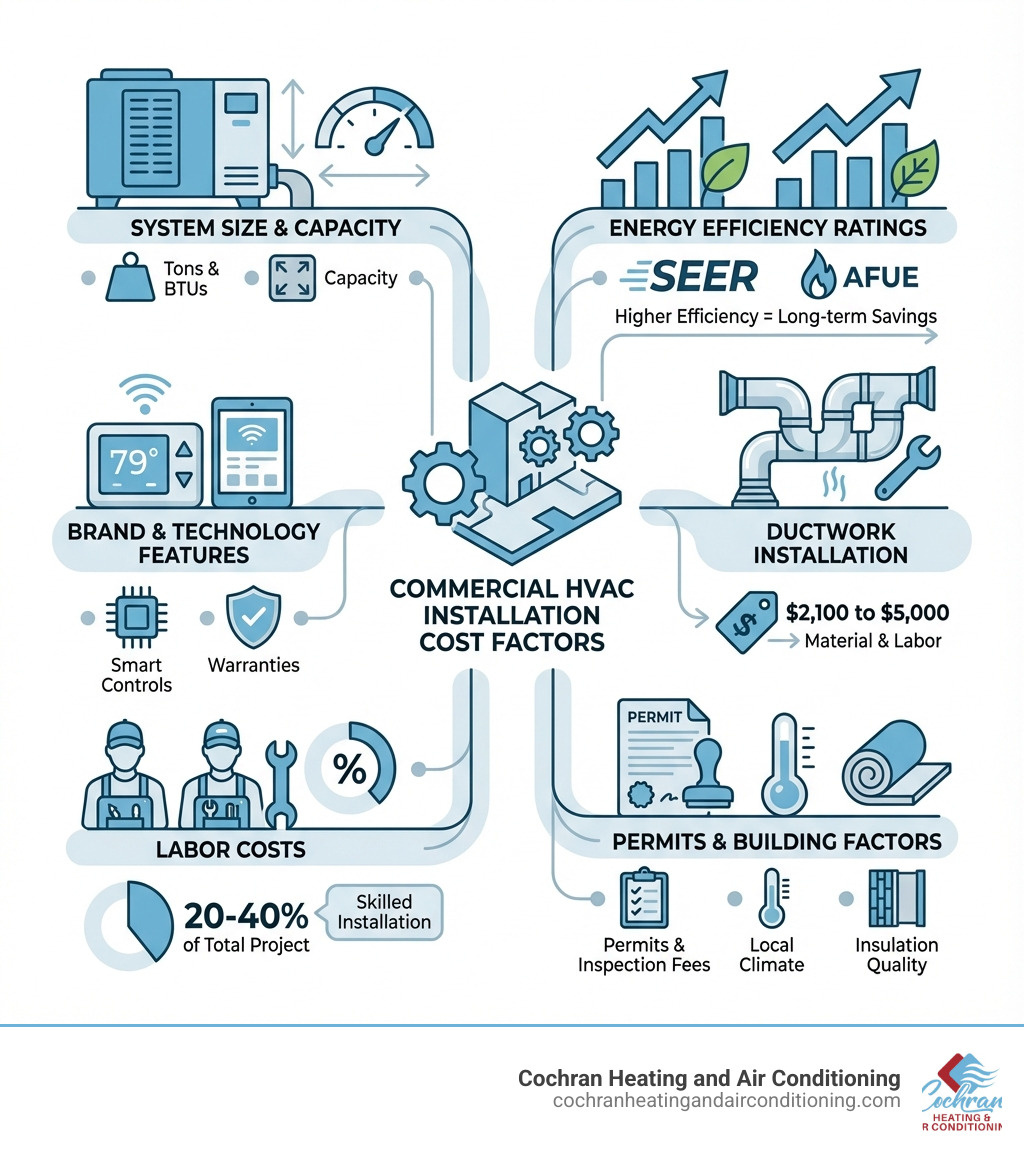
Key Factors Influencing Commercial HVAC Installation Cost
Understanding the core elements that drive the commercial HVAC installation cost is the first step toward smart budgeting. It’s not just about the unit itself; a multitude of factors come into play.
System Size & Capacity
The size and capacity of your commercial HVAC system are paramount. Commercial HVAC capacity is measured in tons (for cooling) and BTUs (British thermal units) (for heating). One ton of cooling capacity equals 12,000 BTUs per hour. A system that’s too small won’t adequately cool or heat your space, leading to constant running and premature wear. Conversely, an oversized system will cycle on and off too frequently, wasting energy and creating uncomfortable temperature swings.
To estimate your building’s heating and cooling needs, you can roughly divide its square footage by 500, then multiply this number by 12,000 to figure out how many BTUs are needed. However, this is a basic estimate. Factors like ceiling height, the number of occupants, heat-generating equipment, and window exposure significantly influence the actual load. For example, a small office might need a 5-ton air conditioner, while a large warehouse could require a 50-ton rooftop unit. The larger and more powerful the system, the more it will cost.
The type of building also plays a crucial role. Office buildings, retail spaces, and industrial facilities each have unique heating and cooling demands. A busy retail store, for instance, will have different occupancy loads and door openings than a quiet office.
Energy Efficiency Ratings
Energy efficiency ratings directly impact both your upfront commercial HVAC installation cost and your long-term operating expenses. Key ratings include:
- [SEER (Seasonal Energy Efficiency Ratio)](https://www.sciencedirect.com/topics/engineering/seasonal-energy-efficiency-ratio#:~:text=The%20SEER%20is%20the%20ratio%20of%20output%20cooling%20energy%20(in,where%20the%20outdoor%20temperature%20fluctuates.&text=HSPF%20is%20a%20measure%20of,to%20that%20of%20the%20SEER.): Measures cooling efficiency over an entire cooling season. Higher SEER ratings indicate systems that consume less power.
- EER (Energy Efficiency Ratio): Measures cooling efficiency at a specific outdoor temperature (95°F), often used for commercial units.
- AFUE (Annual Fuel Utilization Efficiency): Measures heating efficiency, particularly for furnaces and boilers.
High-efficiency HVAC models with higher SEER or AFUE ratings are typically more expensive upfront. However, they provide substantial long-term energy savings. Investing in an Energy Star certified system, for instance, means you’re choosing a unit that meets strict energy efficiency guidelines. While tempting to opt for a cheaper, less efficient model, the long-term benefits of reduced energy bills and improved property value often outweigh the initial higher costs.
Brand & Technology
The brand and technological sophistication of your chosen HVAC system significantly influence its price. Reputable brands often come with better warranties, a longer lifespan, and advanced features. While some well-known brands might have higher price tags, they often offer superior performance and reliability.
Modern commercial HVAC systems can include smart controls, variable-speed compressors, and integration with building management systems (BMS). Features like those found in Smarter Buildings offer improved control, energy monitoring, and remote access, contributing to operational efficiency. These advanced technologies add to the initial cost but can lead to greater comfort, lower energy bills, and easier system management over time.
Building & Climate Specifics
Your building’s unique characteristics and the local climate in Joplin, Missouri, are critical cost drivers.
- Climate: Joplin experiences hot, humid summers and cold winters. This means your HVAC system needs robust heating and cooling capabilities. A system sized for a mild climate simply won’t cut it here, potentially leading to discomfort and system failure.
- Building Age & Construction: Older buildings may have poorer insulation, outdated windows, and less efficient building envelopes, requiring a larger capacity HVAC system. Newer, well-insulated buildings with energy-efficient windows will demand less from their HVAC system, potentially allowing for a smaller, less costly unit.
- Regional Labor Rates: Labor costs vary by geographic location. In Joplin, our local labor rates will impact the overall installation expense. Complex installations that require specialized skills or extended timelines will naturally incur higher labor costs.
Average Costs for Different Commercial HVAC Systems
The landscape of commercial HVAC systems is diverse, with each type designed for specific applications and offering varying levels of performance and cost. Here’s a look at some common systems and their typical cost ranges:
To summarize the table from our introduction:
| System Type | Average Cost Range | Best For | Pros | Cons |
|---|---|---|---|---|
| Packaged Rooftop Units (RTUs) | $5,000 – $25,000+ | Retail stores, small offices | All-in-one, easy maintenance access, space-saving | Less efficient for zoning, visible on roof |
| Variable Refrigerant Flow (VRF) | $10,000 – $50,000+ | Hotels, medical facilities, multi-zone buildings | High efficiency, precise zoning, simultaneous heating/cooling | High upfront cost, complex installation |
| Split Systems | $5,000 – $20,000 (Ductless Mini-Split) | Small offices, individual zones | Flexible, quiet, no ductwork needed (mini-splits) | Limited capacity, multiple outdoor units for many zones |
| Chilled Water Systems | $20,000 – $100,000+ | Large manufacturing, high-rises | Very large capacity, centralized control | High upfront cost, complex installation, requires significant space |
| Commercial Boilers | $15,000 – $25,000+ | Large facilities requiring heating | Efficient heating, long lifespan | Heating only, requires separate cooling system |
Packaged Rooftop Units (RTUs)
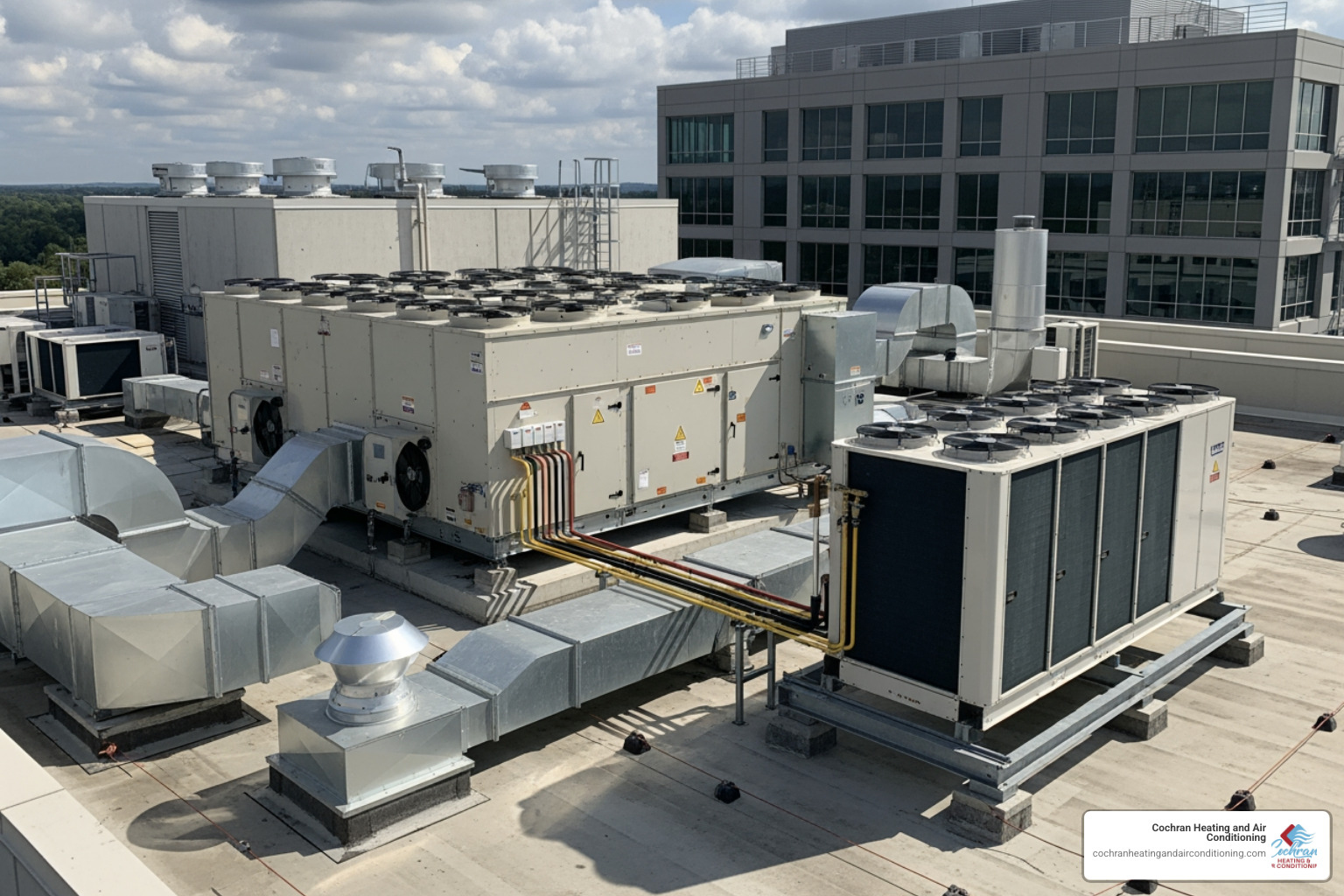
Packaged Rooftop Units (RTUs) are all-in-one heating and cooling systems installed on the roof of a commercial building. They are a popular choice due to their simplicity, space-saving design (freeing up indoor real estate), and relatively easy maintenance access. RTUs are ideal for retail stores, small to medium-sized offices, and restaurants. A typical commercial rooftop air conditioning unit starts around $4,000, but depending on size and efficiency, the cost can range from $5,000 to $25,000 or more. New commercial rooftop HVAC systems can easily cost $15,000 – $25,000 and up, plus installation.
Variable Refrigerant Flow (VRF/VRV) Systems
Variable Refrigerant Flow (VRF), sometimes called Variable Refrigerant Volume (VRV), systems offer highly efficient, zoned heating and cooling. They use refrigerant to provide precise temperature control to different zones or rooms within a building. VRF systems are ideal for businesses with multiple zones, such as hotels, medical facilities, and large office buildings, where individual comfort is paramount. While they have higher initial installation costs, typically ranging from $10,000 to $50,000 or more, VRF systems can lead to substantial energy savings over their lifespan due to their ability to adjust refrigerant volume based on demand.
Split Systems
Commercial split systems come in two main configurations:
- Ductless Mini-Split Systems: These systems consist of individual indoor air handlers connected to a single outdoor compressor. They are excellent for small offices, storefronts, or buildings with multiple rooms where individual temperature control is desired without extensive ductwork. Ductless mini-split systems can range from $5,000 to $20,000, depending on the number of indoor units needed. Energy Star notes that ductless mini-split systems can significantly cut energy costs for heating and cooling by avoiding the energy losses associated with traditional ductwork.
- Ducted Split Systems: Similar to residential systems but larger, these have an outdoor condenser and an indoor air handler, distributing conditioned air through ductwork. The costs for these systems vary widely based on capacity and ductwork requirements.
Chilled Water Systems & Boilers
For very large commercial spaces, manufacturing facilities, and high-rise buildings, chilled water systems and commercial boilers are often the preferred choice.
- Chilled Water Systems: These systems cool water in a central chiller and then circulate it throughout the building to provide cooling. They are complex and powerful, with costs ranging from $20,000 to over $100,000.
- Commercial Boilers: Used primarily for heating, commercial boilers typically cost between $15,000 and $25,000 or more for the unit and installation. They are common in facilities requiring robust and consistent heating.
Deconstructing the Total Project Price: What Are You Paying For?
When considering the commercial HVAC installation cost, it’s crucial to look beyond the equipment price tag. The total project involves several components, each contributing to the overall expense.
A Typical Breakdown of Commercial HVAC Installation Cost
While exact percentages can vary, a general breakdown of commercial HVAC installation costs includes:
- Equipment Costs: This typically accounts for 40-60% of the total project. This covers the HVAC units themselves (rooftop units, VRF systems, chillers, etc.).
- Labor Costs: Expect labor to be 20-40% of the total. This includes the highly skilled technicians, engineers, and installers required for commercial projects.
- Materials & Supplies: Ductwork, piping, wiring, insulation, and other necessary components usually make up 10-20% of the cost.
- Permits & Fees: These can range from 5-10% and cover necessary inspections and compliance with local regulations.
Ductwork Design and Installation
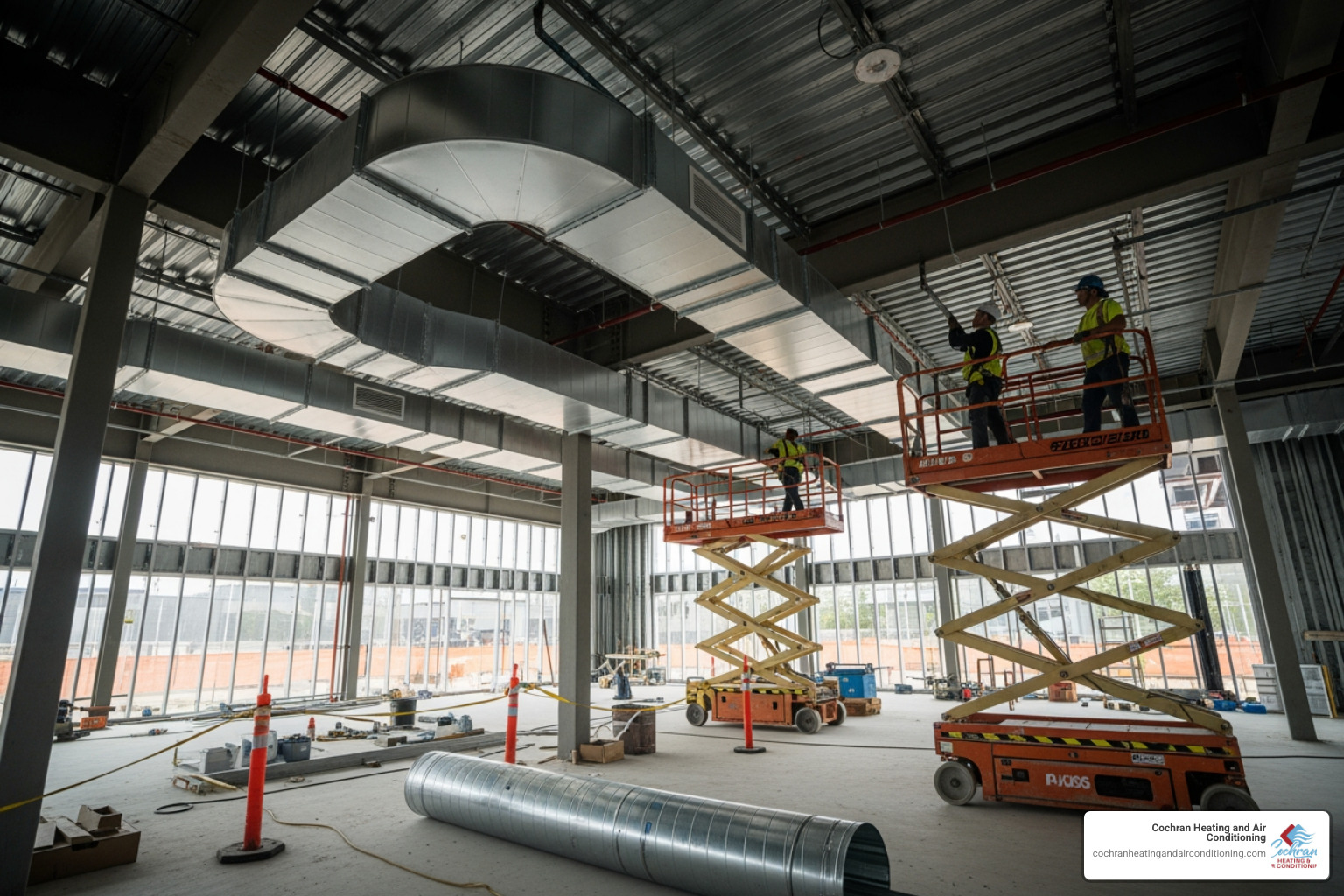
Ductwork is the circulatory system of your commercial HVAC. Its design and installation complexity heavily influence the total project cost. Whether you’re installing new ductwork or modifying existing systems, this component requires careful planning.
- New vs. Existing Ductwork: If your building requires entirely new ductwork, costs will be significantly higher than if you can use or adapt existing ducts. Ductwork can cost anywhere from $1,000 to $5,000, depending on the amount and type needed. Ductwork replacement can add $2,100 to $4,000 to your project cost.
- Design Complexity: Buildings with multiple zones, unique architectural features, or specific airflow requirements will need specialized ductwork designs to ensure optimal air quality, energy efficiency, and temperature control.
- Material Choice: Flexible ductwork is often more cost-effective but less durable. Rigid ductwork (like sheet metal) provides better airflow and longevity. Semi-rigid options offer a balance. The lifespan of ductwork is generally 10 to 20 years, so considering its condition is vital during an HVAC upgrade.
For more details on how ductwork impacts efficiency and our comprehensive commercial services, please visit our page on More info about our commercial services.
Potential Additional Costs and Upgrades
Beyond the basic installation, several other factors can add to your commercial HVAC installation cost:
- Permits and Inspections: Commercial HVAC installations require local permits and inspections to ensure compliance with building codes and safety standards. These fees are mandatory and vary by jurisdiction. While the National Energy Code of Canada for Buildings might be specific to Canada, the principle of adhering to energy codes and regulations is universal for commercial projects, including those in Joplin.
- Structural Modifications: Installing heavy rooftop units or large chillers may necessitate structural reinforcements to your building, especially in older constructions. This can be a significant additional expense.
- Asbestos Removal: For buildings constructed before 1986, asbestos removal might be required if it’s present in existing ductwork or insulation, adding considerable cost and complexity.
- Smart Thermostats & Zoning Systems: While these improve control and energy efficiency, they are additional costs. Zoning systems allow different areas of your building to be heated or cooled independently, optimizing comfort and reducing energy waste.
- Ventilation & IAQ Upgrades: Indoor Air Quality (IAQ) is increasingly important. Upgrades like UV lights, advanced filtration systems (e.g., HEPA filters), and improved ventilation can significantly improve air quality but add to the cost. The recent focus on indoor air quality, partly driven by events like the COVID-19 pandemic, has led many businesses to invest in these improvements.
Achieving Cost Efficiency: Budgeting and Long-Term Savings
A smart commercial HVAC installation cost strategy looks beyond the initial price tag to consider long-term efficiency and operational savings.
Repair vs. Replace: Making the Right Financial Decision
Deciding whether to repair an existing commercial HVAC unit or replace it is a common dilemma for businesses in Joplin. A good rule of thumb is the “50% rule”: if the repair cost is 50% or more of the cost of a new replacement, it’s generally more cost-effective to replace.
Several factors influence this decision:
- System Age: Most commercial HVAC systems have a lifespan of 15 to 20 years. If your system is older than 10-15 years, it might be a candidate for an upgrade, as efficiency declines significantly with age.
- Frequency of Breakdowns: If your system is constantly breaking down, the cumulative repair costs and business interruptions can quickly outweigh the cost of a new, reliable system.
- Efficiency Losses: Older systems are far less energy-efficient than modern units, leading to higher utility bills. A new, high-efficiency system can offer significant energy savings.
- Tax Implications: Replacing an HVAC system might offer tax deductions or depreciation benefits that repair often doesn’t.
For more insights into common issues that might prompt this decision, you can review Common Commercial HVAC Problems Faced by Joplin Businesses.
How to Reduce Your Overall Commercial HVAC Installation Cost
While the initial investment can be substantial, several strategies can help reduce your overall commercial HVAC installation cost:
- Federal Tax Credits: Businesses may be eligible for federal tax credits (like Section 179 deductions) for energy-efficient equipment.
- Local Utility Rebates: Check with local energy providers in the Joplin area for available rebates on high-efficiency HVAC installations.
- Manufacturer Incentives: HVAC manufacturers often offer promotions or rebates on specific models.
- Financing Options: Exploring financing options, such as leasing or commercial loans, can help spread the cost over time. Some HVAC companies or financial institutions offer specialized programs for businesses. You can learn more about general financing considerations at Financing options for commercial HVAC purchases.
These incentives can significantly impact the total cost, making energy-efficient upgrades more accessible.
Lifecycle Costs: Beyond the Initial Price Tag
The true cost of your commercial HVAC system isn’t just the installation price; it’s the lifecycle cost, which includes ongoing operation, maintenance, and potential repairs over its entire lifespan.
- Maintenance Plans: Regular maintenance is crucial for maximizing your system’s lifespan, enhancing performance, and preventing costly breakdowns. Maintenance service contracts generally cost between $150 and $500 per year for commercial systems, but they can save you thousands in avoided repairs and energy waste.
- Warranty Coverage: Understand the warranty terms for your equipment. Warranties for furnaces can last 10 to 20 years for heat exchangers, while parts for air conditioners and heat pumps typically range from one to 10 years. Compressors often have five to 10-year warranties. Generally, the more you pay for a commercial HVAC unit, the better the warranty coverage.
- Energy Consumption: An energy-efficient system, though more expensive upfront, will consume less power over its operational life, leading to lower monthly utility bills. The long-term benefits of investing in energy-efficient HVAC systems often outweigh the initial higher costs, offering substantial returns.
How to Choose the Right Commercial HVAC Installer
Selecting the right commercial HVAC installer is as crucial as choosing the system itself. A professional, experienced installer ensures your investment performs optimally and lasts for years.
Vetting Potential Contractors
When looking for a commercial HVAC partner in Joplin, consider these key criteria:
- Licensing and Insurance: Always verify that the contractor is fully licensed and insured. This protects your business from liability in case of accidents or faulty work. Commercial HVAC technicians often require higher-level certifications than residential ones due to the complexity of the systems.
- Experience with Commercial Projects: Ensure they have a proven track record specifically with commercial installations and systems similar to yours. Ask for a portfolio of their commercial work.
- Certifications: Look for technicians with industry certifications, demonstrating their expertise and commitment to quality.
- Local Reputation: Check their reputation within the Joplin business community. Online reviews and testimonials can provide valuable insights into their reliability and customer service.
Comparing Quotes and Negotiating Contracts
Don’t settle for the first quote you receive. Obtain multiple written quotes from different qualified contractors.
- Itemized Breakdowns: Insist on detailed, itemized quotes that clearly separate equipment, labor, materials, and any additional costs. This allows you to compare “apples-to-apples” and understand exactly what you’re paying for. A higher but more inclusive quote might be a better deal than a lower price with hidden fees.
- Negotiating Warranty Terms: Review the warranty terms for both the equipment and the installation labor. A good warranty provides peace of mind and protection for your investment.
- Payment Schedules: Understand the payment schedule. Reputable contractors typically require a deposit, with installments tied to project milestones, and final payment upon completion and satisfaction.
The Importance of References and Reviews
Before making a final decision, ask for references from other commercial clients. Speak with these businesses about their experience with the contractor, paying attention to:
- Project Management: Was the project completed on time and within budget?
- Communication: Was the contractor responsive and clear in their communication?
- Post-Installation Support: How was their follow-up and any warranty service?
Checking customer testimonials and online reviews will also give you a broader perspective on their service quality and professionalism.
Frequently Asked Questions about Commercial HVAC Costs
How do commercial and residential HVAC systems differ in cost?
Commercial and residential HVAC systems differ significantly in commercial HVAC installation cost, complexity, and scale.
- Scale and Capacity: Commercial systems are designed for much larger spaces, requiring higher capacities (tons/BTUs) and more robust equipment.
- Complexity: Commercial systems are often more intricate, incorporating zoning, advanced controls, and specialized ventilation to meet diverse needs within a single building.
- Equipment Durability: Commercial units are built to withstand heavier usage and harsher conditions, leading to higher material and manufacturing costs.
- Installation: Commercial installations often involve specialized equipment (e.g., cranes for rooftop units), more extensive ductwork, and specialized labor.
- Codes and Regulations: Commercial buildings are subject to stricter building codes, energy efficiency standards, and safety regulations, which can add to design, permitting, and installation costs.
How does the type of commercial building affect HVAC cost?
The type of commercial building significantly impacts HVAC system choice and cost due to varying requirements:
- Office Buildings: Often require zoned systems (like VRF) to accommodate individual preferences and varying occupancy levels.
- Retail Stores: Need robust cooling to counteract heat from lighting, display cases, and high foot traffic, often using RTUs or VAV systems.
- Restaurants: Demand powerful ventilation for kitchen exhaust, precise temperature control for dining areas, and sometimes specialized refrigeration, making them highly complex.
- Warehouses: May require simple, high-capacity systems (like CAV or large RTUs) for open spaces, or specialized climate control for specific goods.
- Medical Facilities: Have stringent indoor air quality standards, requiring advanced filtration (HEPA), precise temperature/humidity control, and often redundant systems, leading to higher costs.
Each building type has unique load characteristics (occupancy, equipment heat, process heat/cold) and specific regulatory requirements, all influencing the system design and price.
How can I budget for a commercial HVAC installation?
Effective budgeting for a commercial HVAC installation cost involves several key steps:
- Get a Professional Load Calculation: This is the foundation. An HVAC professional will assess your building’s specific needs (size, insulation, windows, occupancy, equipment) to determine the correct system size and type.
- Obtain Multiple Quotes: As discussed, getting detailed, itemized quotes from several qualified contractors is essential for comparison and negotiation.
- Factor in All Components: Budget for equipment, labor, materials (especially ductwork), design/engineering fees, and permits/inspections.
- Include a Contingency Fund: Always set aside 5-10% of the total budget for unexpected issues that might arise during installation.
- Explore Financing and Rebates: Actively seek out federal tax credits, local utility rebates, and manufacturer incentives to offset costs.
Conclusion: Investing in Your Business’s Comfort and Future
Navigating the complexities of commercial HVAC installation cost can seem daunting, but with the right information and a strategic approach, it becomes a manageable investment in your business’s future. We’ve explored the myriad factors that influence pricing, from system type and efficiency ratings to labor costs and building specifics. We’ve also highlighted how to budget effectively, reduce costs through incentives, and understand the crucial long-term financial implications of your choices.
A quality HVAC system isn’t just about comfort; it’s about maintaining employee productivity, ensuring customer satisfaction, protecting sensitive equipment, and ultimately, supporting your business’s operational efficiency and profitability. Choosing the right system and, more importantly, the right installer, will ensure your investment pays dividends for years to come.
For expert guidance on your Commercial Heating and Cooling Joplin needs, contact our team today. We’re here to help you make informed decisions that bring lasting comfort and value to your business.