Why Your HVAC System Fails (And What It Means for Your Comfort)
Common problems with hvac systems can quickly turn your comfortable home into an unbearable space. When your heating or cooling system acts up, it’s not just inconvenient—it’s a hit to your wallet and your family’s comfort.
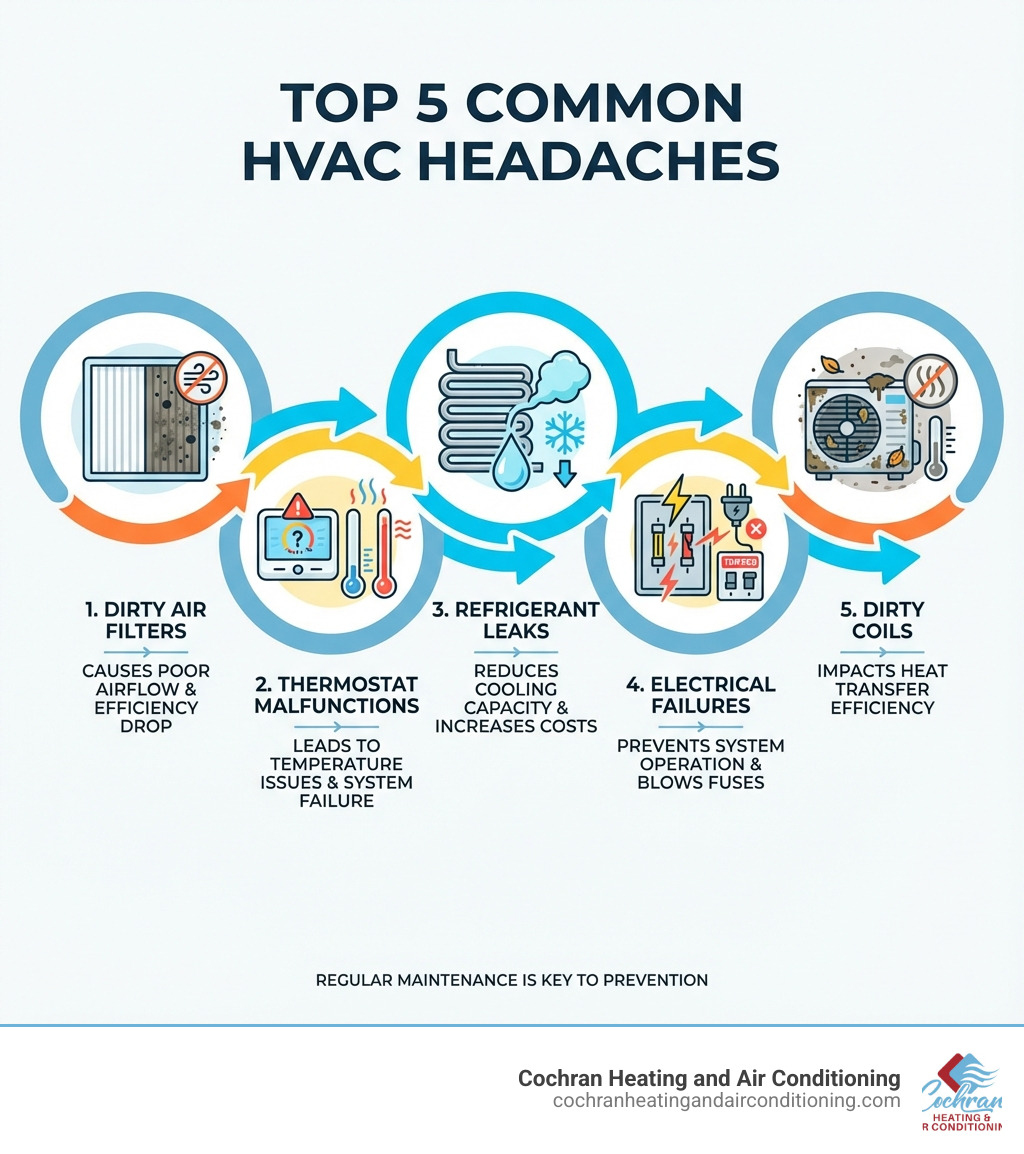
The most common HVAC problems homeowners face include:
- Dirty or clogged air filters – Restricting airflow and reducing efficiency
- Thermostat malfunctions – Causing inconsistent temperatures or system failures
- Refrigerant leaks – Leading to poor cooling and potential health risks
- Electrical failures – Including blown fuses and tripped breakers
- Dirty coils – Reducing heat transfer and system performance
- Water leaks – Often from clogged drain lines
- Strange noises – Indicating loose parts or mechanical wear
- Poor airflow – From blocked vents or damaged ductwork
Here’s a sobering fact: heating and cooling accounts for approximately 40% of the energy usage in an average building. When your HVAC system isn’t working right, you’re wasting a significant chunk of your energy dollars.
The good news? Most HVAC issues are preventable with regular maintenance. The average air conditioner repair costs around $300, while maintenance plans can start as low as $100. That’s a clear case for prevention over cure.
Whether your AC is blowing warm air or your furnace is making strange noises, understanding the problem is the first step. Some issues are simple DIY checks, while others require a licensed professional to diagnose and repair safely.
This guide breaks down the most common HVAC headaches, explains their causes, and shows you when to handle it yourself versus when it’s time to call in the experts.
Airflow & Temperature Troubles: Why Isn’t My Home Comfortable?
When your Joplin home has inconsistent temperatures or your system runs constantly, it often points to airflow and efficiency issues. Proper airflow is the lifeblood of your HVAC system; when it’s compromised, comfort suffers and energy bills climb. Let’s explore the most frequent culprits.
Dirty or Clogged Air Filters
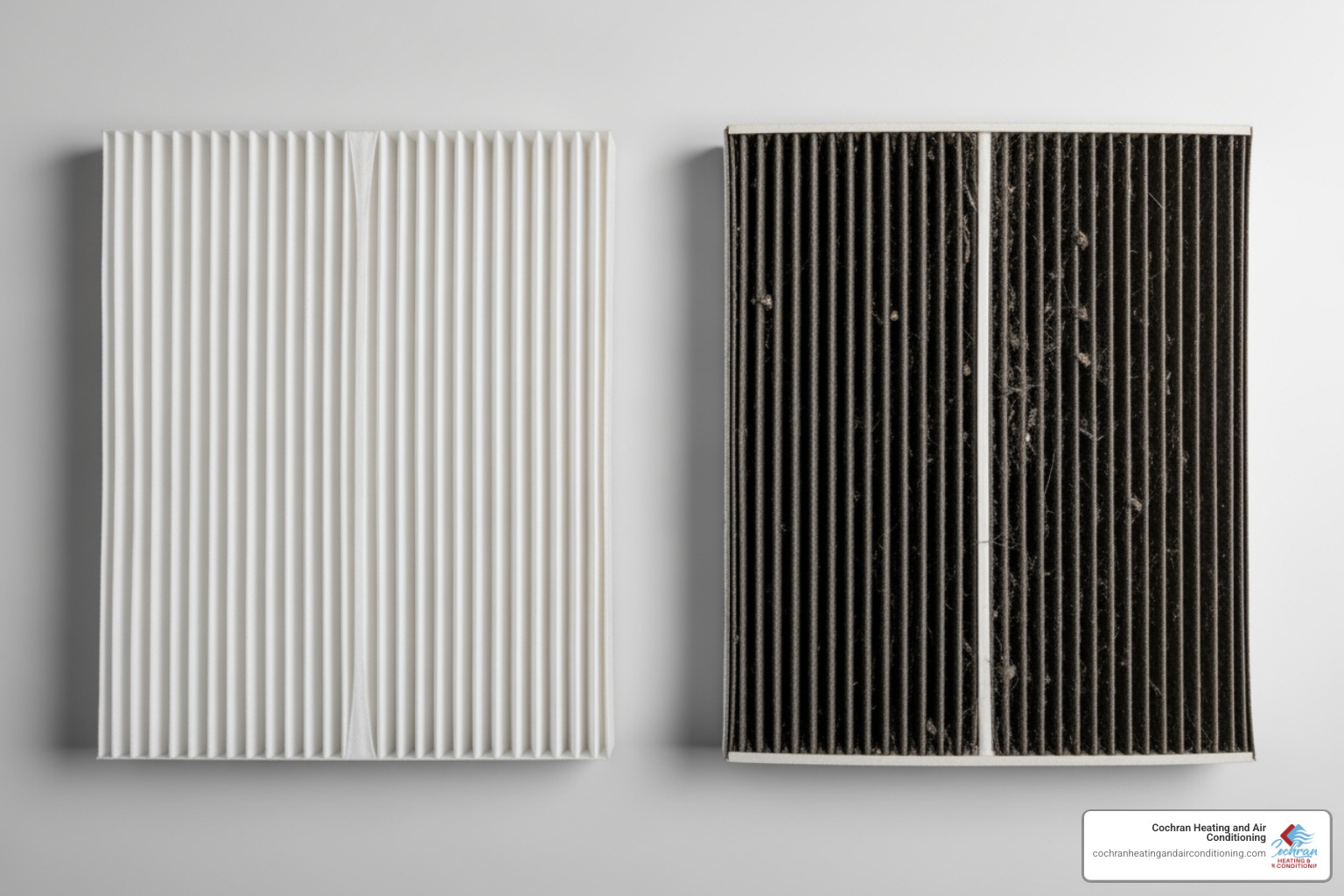
A dirty air filter is like trying to breathe through a thick blanket; it’s one of the most common and easily preventable common problems with HVAC systems.
Symptoms:
- Reduced efficiency: Your system struggles to pull air, making it work harder and longer.
- Poor indoor air quality: Clogged filters can’t trap dust and allergens, leading to more airborne irritants. For more about improving your home’s air quality, see our Indoor Air Quality Service Joplin page.
- Higher energy bills: A system working overtime consumes more energy.
- Uneven heating or cooling: Some rooms might be comfortable while others are too hot or cold.
- System overheating: Restricted airflow can cause the furnace to overheat and shut down.
Replacement Frequency:
Change your air filter every 1-3 months, or monthly if you have pets or allergies. It’s an easy fix that makes a huge difference.
Thermostat Troubles: A Common Problem with HVAC Systems
Your thermostat is the brain of your HVAC system. When it malfunctions, the entire system can go haywire, making it a common source of HVAC headaches.
Symptoms:
- Inconsistent temperatures: Your home feels too hot or too cold, despite your settings.
- System won’t start or stop: The unit might run continuously or refuse to turn on.
- Short cycling: The system turns on and off too frequently.
- Incorrect temperature readings: The thermostat display doesn’t match the actual room temperature.
- Unresponsive or blank screen: Indicating a power issue or internal malfunction.
Troubleshooting Steps:
- Check the batteries: Replace batteries if the screen is blank or unresponsive.
- Verify settings: Ensure your thermostat is set to the correct mode (heat/cool) and temperature. Set the fan to “auto” for normal operation.
- Clean it up: Remove the cover and gently clean any dust from inside.
- Check connections: Check wiring connections, but call a professional HVAC technician if you’re uncomfortable with wiring.
- Look for overrides: Check programmable thermostats for forgotten schedules or overrides.
AC Not Cooling or Furnace Not Heating
It’s frustrating when your system is running, but you’re still sweating indoors or shivering under blankets. This is one of the most common problems with HVAC systems.
Signs of Ineffective Cooling (AC):
- Warm air from vents
- System runs constantly
- Ice on evaporator coils
- Increased indoor humidity
- High energy bills
Signs of Poor Heating (Furnace):
- Cold spots
- Furnace runs but no heat
- Pilot light issues
- System short cycles
Likely Causes:
- Incorrect thermostat settings
- Dirty air filter
- Refrigerant leak (AC)
- Dirty coils
- Pilot light or ignition problems (furnace)
- Blocked vents or ductwork issues
If your system isn’t delivering the comfort you expect, our team is ready to help with Residential Heating & Cooling Joplin needs.
Dirty Condenser and Evaporator Coils
The coils in your HVAC system are essential for transferring heat.
Function of Coils:
- Evaporator Coil (indoor unit): Absorbs heat from your indoor air.
- Condenser Coil (outdoor unit): Releases the absorbed heat outside.
How They Get Dirty:
Over time, coils accumulate dust and debris. The outdoor coil collects leaves and grime, while the indoor coil gets coated with dust and moisture.
Impact on Heat Transfer:
A layer of dirt on the coils acts as an insulator, preventing efficient heat exchange.
- Reduced performance: Your system can’t absorb or release heat effectively.
- Higher energy bills: The system has to work much harder and longer.
- System overheating or short cycling: Strain on components can lead to breakdowns.
- Frozen evaporator coil: A dirty coil can freeze over, hindering cooling and causing water leaks.
Professional Cleaning:
You can rinse the outdoor coil with a hose (power off), but the indoor coil needs professional cleaning. Our AC Maintenance tune-ups include thorough coil cleaning for optimal performance.
Alarming Sounds and Electrical Scares: Mechanical & Power Issues

Your HVAC system communicates its health through sounds and power usage. Unusual noises often signal mechanical wear, while electrical issues can halt the system. Understanding these signs is key to preventing minor issues from becoming major repairs.
Unusual Noises (Banging, Squealing, Clicking)
When your HVAC system starts making unusual noises, it’s usually trying to tell you something’s wrong. These unexpected sounds are among the more alarming common problems with HVAC systems.
Interpreting Sounds:
- Banging or Rattling: Often indicates a loose part, like a fan blade, motor mount, or debris inside the unit.
- Squealing: A high-pitched squeal typically suggests a problem with a belt or motor bearings that need lubrication.
- Clicking: Continuous clicking can signal an electrical problem, like a failing relay or a compressor struggling to start.
- Hissing or Bubbling: These sounds often point to a refrigerant leak.
Ignoring these noises can lead to more significant damage. If you hear anything out of the ordinary, have a professional diagnose the issue. Our team offers comprehensive HVAC Repair & Maintenance services to get your system running quietly again.
Blown Fuses and Tripped Breakers
If your HVAC system has no power, check your electrical panel. Blown fuses and tripped breakers are common, but their cause can range from simple to serious.
Symptoms:
- Your HVAC system, or part of it, suddenly stops working.
- The system won’t turn on at all.
What It Indicates:
- Overworked system: A system drawing too much current can trip a breaker, often due to a clogged filter, dirty coils, or a failing motor.
- Electrical short: A short circuit within the wiring or components can cause a surge, tripping the breaker.
- Failing components: A failing motor can draw excessive current, leading to tripped breakers.
How to Check Your Breaker:
- Locate your home’s electrical panel.
- Look for a breaker switch that is in the “off” or middle (tripped) position.
- Flip the switch completely “off” and then firmly back to “on.”
Safety Warning:
If your breaker trips repeatedly, do not keep resetting it. This indicates a persistent electrical issue that needs professional attention. Ignoring it can damage components or pose a fire hazard. For more information on home electrical safety, consult the Electrical safety in the Home guidelines.
Pilot Light or Ignition Control Failure
For furnaces, problems with the pilot light or electronic ignition mean no heat. This is a critical heating-related common problem with HVAC systems.
Identifying Issues:
- No flame: The pilot light isn’t lit, or the electronic igniter isn’t sparking.
- Yellow or flickering flame: A healthy pilot light should be blue. A yellow flame indicates incomplete combustion, a serious safety concern.
Safety Risks: Carbon Monoxide (CO) Leaks:
Incomplete combustion can produce carbon monoxide (CO), an odorless, colorless, and highly toxic gas. It’s crucial to have working CO detectors in your home.
What to Do:
- Check CO detectors: If you suspect a CO leak or your detector goes off, evacuate your home immediately and call emergency services.
- Shut off power and gas: Turn off the electricity and gas supply to your furnace before troubleshooting.
- Consult your manual: Your owner’s manual has instructions for relighting the pilot light.
- Call a professional: If you’re uncomfortable or the flame remains yellow, call a professional. Issues with the thermocouple, gas valve, or igniter require expert repair. Our team specializes in Furnace Repair & Installation in Joplin and can safely address these concerns.
Decoding the Most Common Problems with HVAC Systems: Leaks
Leaks, whether of refrigerant or water, are among the most damaging and frustrating common problems with HVAC systems. They hinder performance and can lead to costly property damage and health risks. Understanding the difference between these leaks is crucial.
Refrigerant Leaks
Refrigerant is the lifeblood of your air conditioning system. When it leaks, your AC can’t do its job.
Signs of a Refrigerant Leak:
- Hissing or whistling sounds: Indicating refrigerant escaping under pressure.
- Ice on evaporator coils: A strong indicator of low refrigerant levels.
- Reduced cooling: Your AC runs, but the air isn’t cold.
- Warm air from vents: A clear sign the cooling process is failing.
- Increased indoor humidity: Your AC isn’t removing moisture effectively.
- Higher energy bills: The system works harder to compensate for the leak.
Why Professional Repair is Necessary:
- EPA Regulations: The Environmental Protection Agency mandates that only certified technicians handle refrigerant. DIY repairs are illegal and dangerous.
- Environmental Impact: Refrigerants are potent greenhouse gases that harm the environment.
- System Damage: Running an AC with low refrigerant can severely damage the compressor. A proper repair involves finding and fixing the leak before recharging the system—not just topping it off.
Water Leaks
Finding a puddle around your indoor HVAC unit can be alarming. Water leaks are often less severe than refrigerant leaks but still require prompt attention to prevent damage.
Common Causes:
- Clogged condensate drain line: Algae, mold, and debris can clog this line, causing water to back up and overflow.
- Overflowing drain pan: A completely blocked drain line can cause the pan to overflow.
- Frozen evaporator coil: Melting ice from a frozen coil can overwhelm the drain pan.
- Cracked or rusted drain pan: Older units can develop cracks or rust in the pan itself.
Potential Consequences:
- Water damage: To ceilings, walls, and flooring.
- Mold growth: Standing water creates a perfect environment for mold and mildew.
- System shutdown: Safety switches often shut off the unit if the drain pan overflows.
DIY Solution for Clogs:
You can often clear a clogged condensate drain line yourself.
- Turn off power: Turn off your HVAC system at the thermostat and breaker.
- Locate the drain line: It’s usually a PVC pipe exiting your indoor unit.
- Clear the clog: Use a wet/dry vacuum to suction the clog from the pipe’s outdoor exit. Alternatively, pour a cup of distilled vinegar down the line’s access point to kill algae, wait 30 minutes, then flush with water.
- Inspect for cracks: Check the drain pan for visible cracks or rust.
If the leak persists, call a professional to diagnose more complex issues.
Proactive Care: Preventing Problems and Knowing When to Replace
While troubleshooting HVAC problems is helpful, proactive care is the best approach. Regular maintenance saves money, extends your system’s life, and provides peace of mind. Eventually, all systems need replacement, and knowing when is just as important.
Why Regular HVAC Maintenance is Crucial
Think of HVAC maintenance as a routine check-up for your car. Neglecting your home’s most expensive appliance can lead to costly problems.
Benefits of Regular Maintenance:
- Improved efficiency: A well-maintained system runs more efficiently, lowering your utility bills.
- Extended lifespan: Regular tune-ups can significantly prolong the life of your HVAC unit.
- Fewer repairs: Technicians can catch minor issues before they become major breakdowns.
- Better indoor air quality: Cleaning and filter changes ensure your system circulates clean air.
- Maintained warranty: Many manufacturers require annual maintenance to keep your warranty valid.
What a Tune-Up Includes:
A typical tune-up involves inspecting coils, checking refrigerant levels, changing filters, tightening electrical connections, lubricating parts, calibrating the thermostat, and testing safety controls.
Investing in regular maintenance, ideally twice a year, is the smartest move a Joplin homeowner can make.
Poor Airflow: Another Common Problem with HVAC Systems
Besides dirty filters, other issues can cause poor airflow, impacting your comfort and energy bills.
Causes:
- Blocked vents and registers: Furniture or rugs can block supply or return air vents.
- Leaky or crushed ductwork: Ducts can develop holes or get crushed, allowing conditioned air to escape.
- Damaged blower fan: A damaged fan or failing motor leads to weak airflow.
- Undersized ducts: Improperly designed ductwork may be too small to deliver adequate airflow.
How to Fix:
- Check and clear vents: Ensure all vents are open and unobstructed.
- Inspect ductwork: Visually check accessible ducts for leaks or damage. Small leaks can be sealed with mastic sealant.
- Professional diagnosis: For significant ductwork issues, a professional can perform an inspection and sealing. Our Ductwork & Ventilation Joplin team can help.
- Blower fan issues: Blower fan problems generally require professional repair.
Signs Your HVAC System Needs Replacement
Eventually, replacement becomes more sensible than repair. Knowing the signs can help you make an informed decision for your Joplin home.
Key Indicators:
- Age: AC units last 10-12 years; furnaces last 15-20 years. An older system is nearing the end of its life.
- Frequent and costly repairs: If repairs are annual or cost over 50% of a new unit’s price, replacement is more economical.
- Rising energy bills: An aging system loses efficiency, leading to higher utility bills.
- Inconsistent comfort: The system struggles to maintain temperature, leaving hot and cold spots.
- Unusual noises or smells: Persistent strange noises or smells can indicate serious internal problems.
Here’s a quick comparison to help you weigh your options:
| Feature | Repair | Replacement |
|---|---|---|
| Initial Cost | Lower | Higher |
| Efficiency | Stays the same (often low for older units) | Significantly higher (new units are much more efficient) |
| Lifespan | Extends current system’s life for a short period | New lifespan (10-20 years, depending on unit) |
| Comfort | May improve slightly, but underlying issues persist | Improved, consistent comfort |
| Warranty | Limited or no warranty on old system | New warranty on unit and parts |
| Energy Bills | Likely remain high | Lower due to increased efficiency |
| Peace of Mind | Temporary | Long-term |
Basic Troubleshooting Before You Call for Help
Before calling for help, perform these simple checks to potentially resolve minor issues and save a service call fee.
Here’s a list of simple DIY checks:
- Check thermostat settings: Ensure it’s on the right mode and temperature, and replace batteries if needed.
- Inspect air filter: Replace it if it’s dirty or clogged.
- Check circuit breakers: Look for tripped breakers and reset them once.
- Ensure vents are open: Make sure all vents are open and unblocked.
- Check outdoor unit: Clear debris, leaves, and vegetation from around the unit.
- Verify power switches: Ensure external power switches are on.
When to Stop and Call a Professional:
If these checks don’t work, or if you encounter the following, call an expert:
- Repeatedly tripping breakers.
- Suspected refrigerant leaks.
- Any gas-related issues.
- Loud, persistent noises.
- Electrical issues beyond a tripped breaker.
- Persistent water leaks.
- Any situation where you feel unsafe.
For more signs your system needs professional attention, refer to our Signs Your Home HVAC System Needs Repair in Joplin, MO guide.
Conclusion: Keep Your Joplin Home Comfortable
We’ve explored many common problems with HVAC systems, from dirty filters and thermostat troubles to refrigerant leaks and electrical scares. While some issues allow for DIY troubleshooting, others demand the expertise and specialized tools of a certified professional.
The vast majority of HVAC headaches can be prevented with regular, professional maintenance. It’s an investment that pays dividends in comfort, lower energy bills, and a longer lifespan for your heating and cooling equipment. Don’t wait until your system completely breaks down to address minor issues. Timely repairs and proactive care are the keys to a comfortable and efficient home.
At Cochran Heating and Air Conditioning, we understand the importance of a reliable HVAC system for your Joplin home. Whether you need routine maintenance, a complex repair, or are considering a system replacement, our team is here to provide honest advice and expert service. For urgent issues, trust our team for reliable service—we’re here when you need us most.