When Winter’s Chill Invades Your Home: Understanding the Cold Air Problem
When your furnace blowing cold air happens on a freezing day, it’s more than just uncomfortable—it’s a problem that demands immediate attention. Instead of the warm, cozy air you expect, you’re getting a blast of cold from your vents, and you need answers fast.
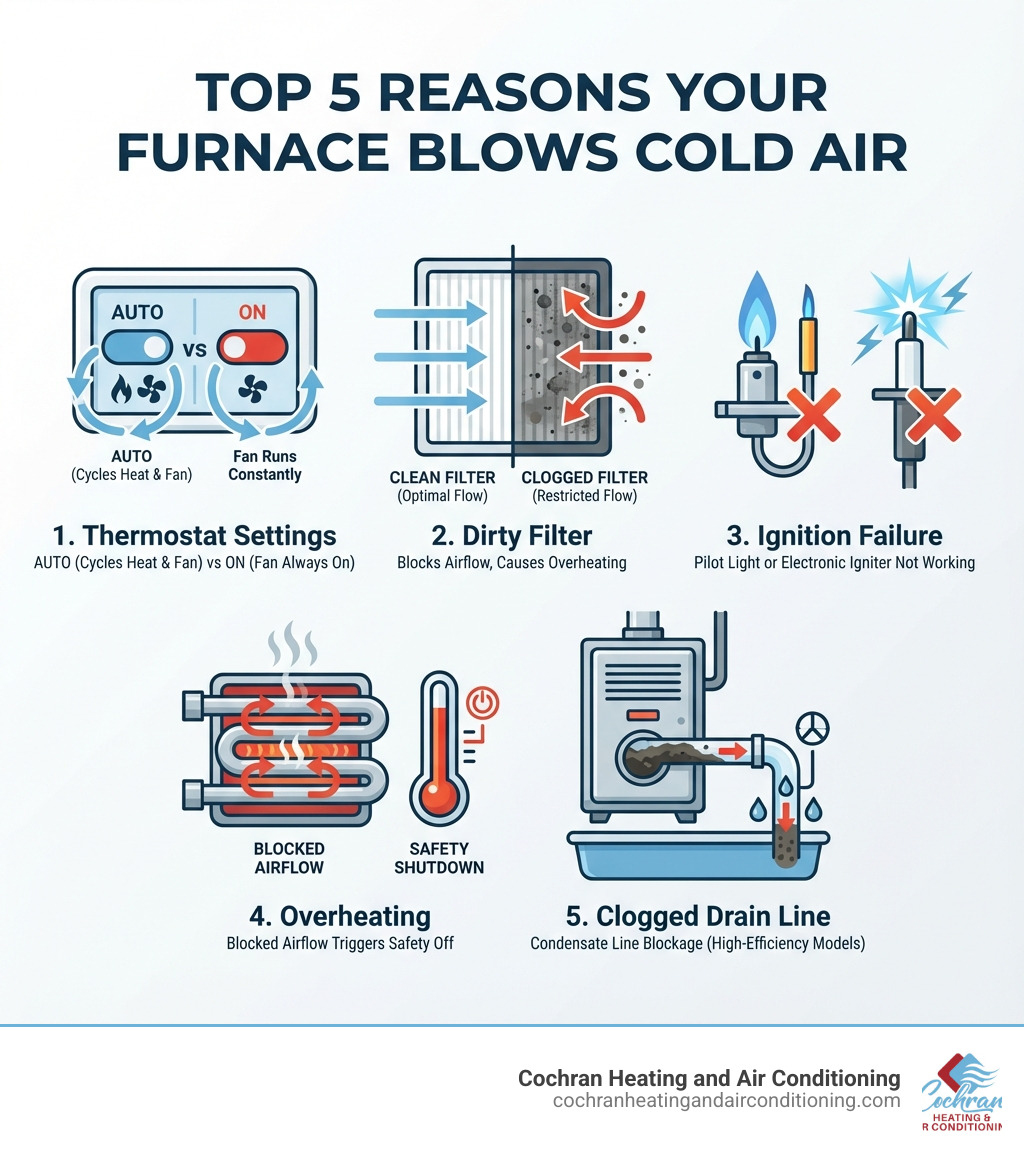
Quick Answer: Top Reasons Your Furnace Blows Cold Air
- Thermostat set to “ON” instead of “AUTO” (fan runs constantly, even when not heating)
- Dirty air filter blocking airflow and causing overheating shutdowns
- Pilot light or ignition failure preventing burners from lighting
- Dirty flame sensor shutting off burners prematurely
- Clogged condensate line (high-efficiency furnaces) triggering safety shutdown
Most furnace cold air problems fall into two categories: simple fixes you can do yourself in minutes (like adjusting your thermostat or changing a filter), and complex issues requiring professional help (like gas valve problems or cracked heat exchangers).
The good news? Many homeowners can resolve this issue without calling for service. The research shows that thermostat settings and dirty air filters are the most common culprits—both easy to check and fix on your own.
But knowing when to stop troubleshooting and call an expert is equally important. Some furnace problems involve safety risks like gas leaks or carbon monoxide exposure that require immediate professional intervention.
This guide will walk you through the diagnostic process step-by-step, starting with the simplest checks and progressing to more complex issues. You’ll learn what you can safely fix yourself, what requires a technician, and how to prevent the problem from happening again.
Start Here: Simple DIY Fixes You Can Do in 5 Minutes
Before you panic and imagine bundling up indoors, let’s tackle the easy stuff. Many issues that lead to a furnace blowing cold air are surprisingly simple to fix, often taking just a few minutes of your time. Our goal is to empower you to solve these common problems yourself, saving you both discomfort and a potential service call.
Check Your Thermostat Settings
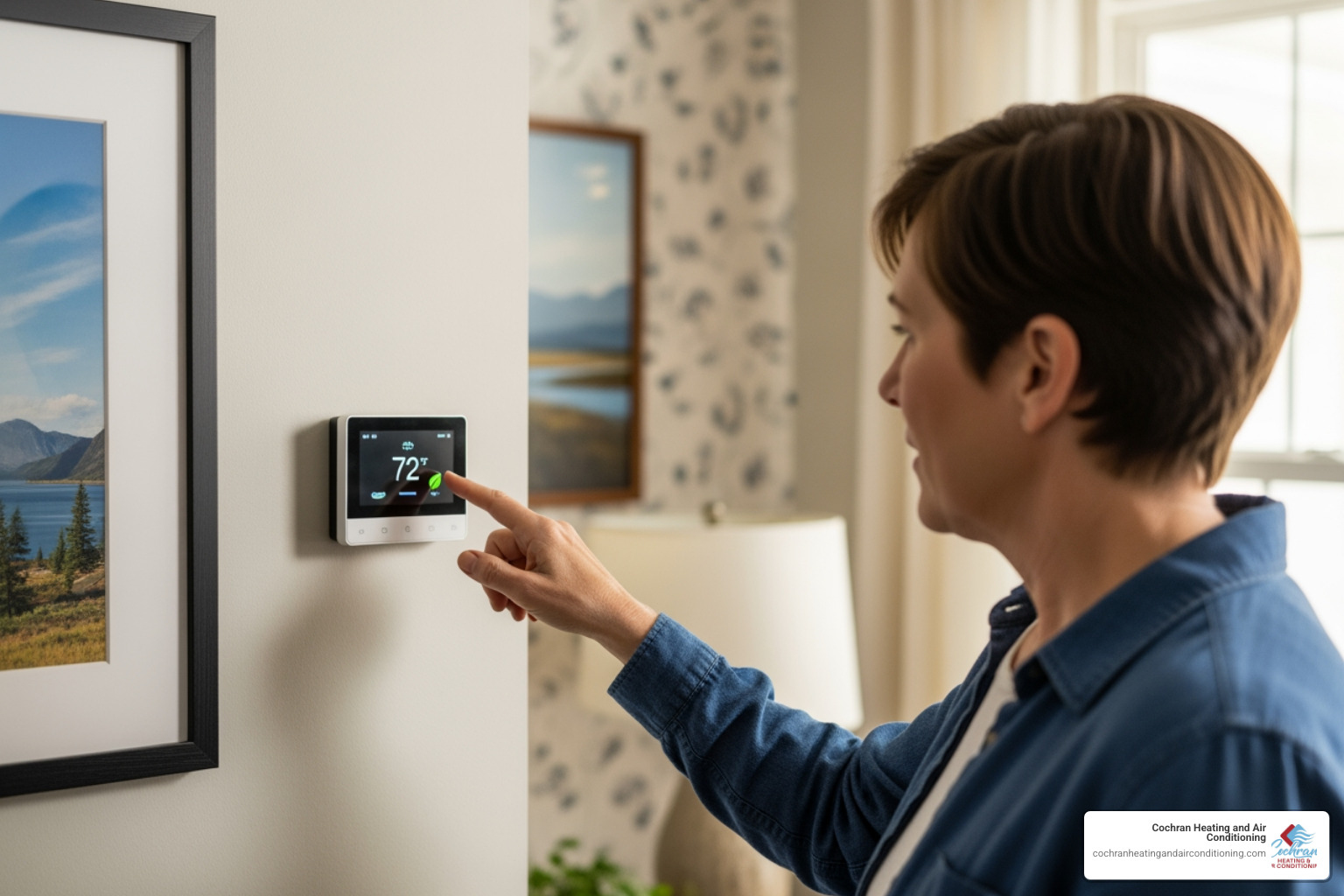
Your thermostat is the brain of your heating system, and sometimes, it just needs a little nudge in the right direction. The role the thermostat plays when a furnace blows cold air can be surprisingly direct.
- Fan setting “ON” vs “AUTO”: This is a classic culprit. If your thermostat’s fan setting is on “ON” instead of “AUTO,” your furnace’s blower will run continuously, 24/7, even between heating cycles. This means it will push unheated, cold air through your vents, making you think your furnace is broken when it’s simply doing what it’s told. Switching it to “AUTO” ensures the fan only operates when the furnace is actively heating.
- Incorrect temperature setting: Is your desired temperature higher than the current room temperature? It sounds obvious, but sometimes we forget to adjust it, or a mischievous little hand might have changed it!
- Dead batteries: For battery-powered thermostats, weak or dead batteries can cause all sorts of erratic behavior, including failing to signal the furnace to heat. A quick battery swap might be all you need.
- Programmable schedule errors: With daylight saving time changes or seasonal adjustments, a programmable thermostat might be running an outdated schedule. Double-check your programming to ensure it’s set to heat when you need it.
- Smart thermostat issues: If you have a smart thermostat, check its app for any error messages or connectivity issues. Sometimes, a simple reboot of the thermostat or your home Wi-Fi can resolve minor glitches.
Inspect the Furnace Air Filter
This might be the single most common reason for a furnace blowing cold air, and thankfully, it’s an easy fix! The most common problems with HVAC systems failing to heat or cool properly are related to the air filter.
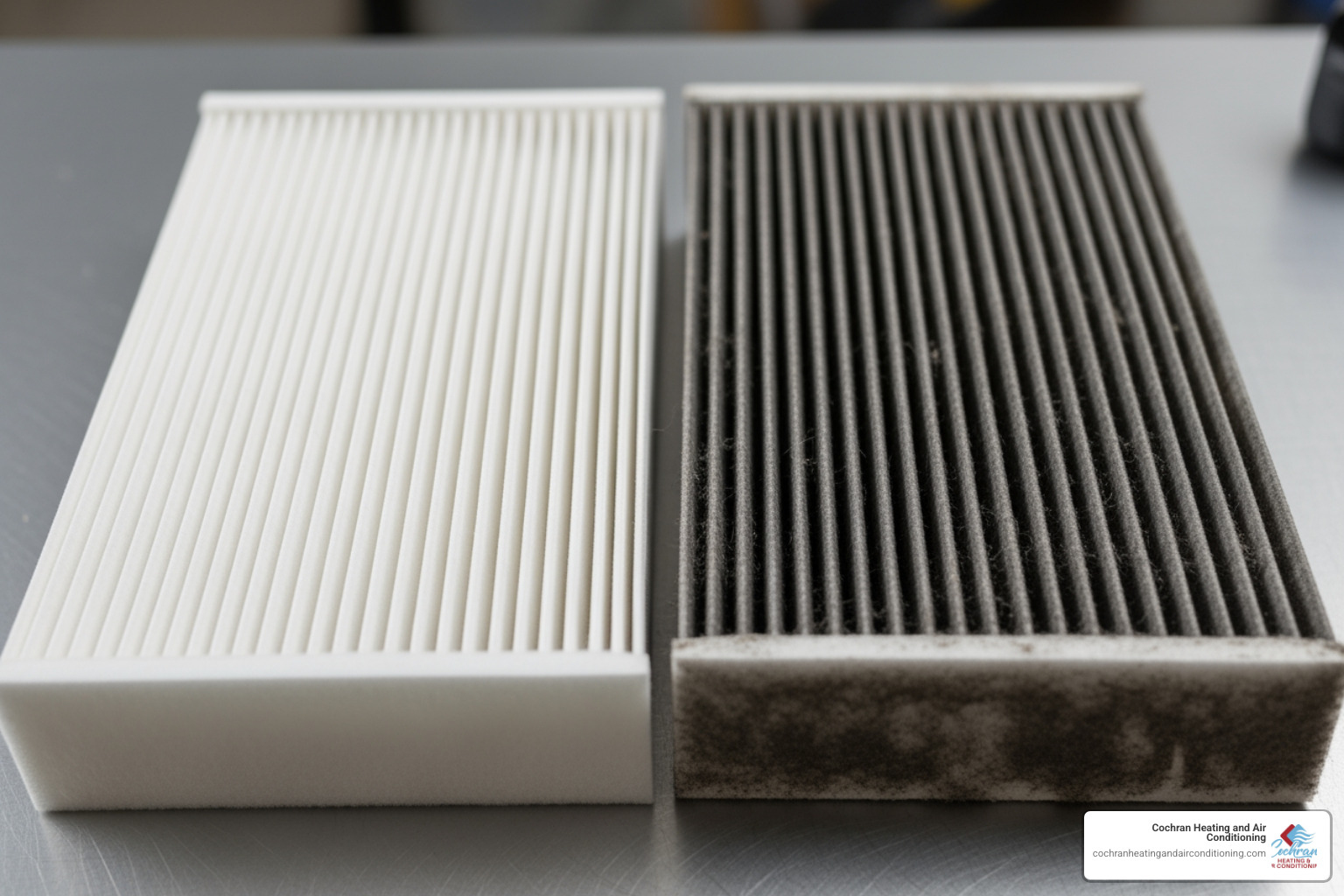
A dirty air filter restricts airflow to your furnace. Imagine trying to breathe through a pillow—it’s tough! Your furnace experiences a similar struggle. This restricted airflow causes the heat exchanger (the part that gets hot) to overheat. To prevent damage, your furnace has a safety mechanism called a high limit switch. When the heat exchanger gets too hot, this switch triggers a safety shutdown of the burners. However, the blower fan often continues to run to try and dissipate the excess heat, resulting in your furnace blowing cold air.
- Check it: Slide out your air filter. Hold it up to a light. If you can’t see light through it, or if it’s caked with dust and debris, it’s time for a change.
- Replace it: Always turn off your furnace unit before replacing the air filter. We recommend using filters with a MERV rating of 8-12 for optimal system performance.
- Schedule it: Furnace filters should be changed every 1-3 months, depending on usage, pets, and household conditions. This simple act of regular maintenance is your first line of defense against many furnace woes.
For more information on keeping your home comfortable and your HVAC system running smoothly, explore our residential heating & cooling services.
Check Furnace Power and Fuel Supply
Sometimes the problem isn’t with the furnace itself, but with its lifeline: power and fuel.
- Tripped circuit breaker: Head to your electrical panel. Look for a tripped breaker labeled “Furnace” or “HVAC.” If it’s in the “OFF” position or between “ON” and “OFF,” simply flip it completely “OFF” and then back to “ON.”
- Furnace shut-off switch: Most furnaces have a light switch-like toggle on the unit or on a nearby wall. Ensure it’s in the “ON” position. It’s often mistaken for a light switch, so someone might have accidentally flipped it.
- Gas supply valve: For natural gas furnaces, locate the gas shut-off valve on the gas line leading to the furnace. Make sure it’s open (the handle should be parallel with the gas pipe). If your furnace doesn’t get enough gas, it might shut down for safety purposes, leading to cold air. You can also check other gas appliances in your home, like your gas stove or water heater, to ensure your general gas supply is active.
- Oil or propane tank levels: If you have an oil or propane furnace, ensure your tank isn’t empty. It’s an easy oversight when the weather turns unexpectedly cold!
Why Is My Furnace Blowing Cold Air? Common Culprits
Once you’ve ruled out the quick and easy fixes, it’s time to dig a little deeper into the common reasons your furnace blowing cold air. These issues might require a bit more investigation or even a professional eye, but understanding them can help you diagnose the problem.
Pilot Light & Ignition System Failures
The way your furnace ignites its fuel is crucial for producing heat. Issues here are a frequent cause of cold air.
- Older furnaces (with standing pilot lights): Many furnaces manufactured before the 1990s rely on a continuously burning pilot light. If this small flame goes out, the main burners won’t ignite, and your furnace will be blowing cold air. Pilot light issues are a common reason for older furnaces to blow cold air. To relight it:
- Locate the pilot light assembly (usually at the bottom of the furnace).
- Follow the instructions printed on your furnace (they vary by model!).
- Typically, you’ll turn a knob to “PILOT,” hold it down, light the pilot with a match or lighter, and then continue holding for about 30-60 seconds before releasing and turning the knob to “ON.”
- Thermocouple failure: If your pilot light keeps going out shortly after you relight it, the problem is likely a faulty thermocouple. This small sensor detects the pilot flame and signals the gas valve to stay open. If it’s dirty or worn out, it won’t detect the flame, and the gas valve will shut off as a safety measure. A faulty thermocouple can cause the pilot light to keep going out.
- Newer furnaces (with electronic ignition systems): Most modern furnaces manufactured since 2010 do not use pilot lights. Instead, they use an electronic ignition system, either a hot surface igniter (which glows red hot to ignite the gas) or a spark igniter (which creates a spark). If this igniter fails, the burners won’t light. This is a more complex issue and typically requires a professional to diagnose and replace.
A Dirty Flame Sensor or Faulty Limit Switch
These are crucial safety components that can prevent your furnace from heating if they malfunction.
Signs of a malfunctioning flame sensor:
- The furnace tries to ignite, clicks, but no flame appears, and then blows cold air.
- The furnace lights briefly, but the burners shut off prematurely (this is called short cycling), and then it blows cold air.
- Your furnace displays a diagnostic error code, such as 8 red blinks on certain brands like York/Evcon, which can indicate a bad flame sensor.
The flame sensor is a small rod that confirms a flame is present in the burner assembly. If it’s covered in soot, dirt, or grime, it can’t “see” the flame, even if one is present. This causes the furnace’s control board to shut off the gas valve as a safety precaution, leading to your furnace blowing cold air. A dirty or malfunctioning flame sensor can cause the furnace to lose heat and start blowing cold air.
- Cleaning the flame sensor: Always turn off the power to your furnace first! Locate the flame sensor (it’s usually a single rod sticking into the burner flame path). Carefully remove it and gently clean the metal rod with fine steel wool or an emery cloth. Avoid touching it with your bare hands, as oils can cause new carbon buildup. Reinstall it and restore power.
The high limit switch is another vital safety device. Its function is to shut down the gas if the heat box is too hot and force the blower to continue to clear excess heat. If your furnace is running but blowing cold air, and you suspect it’s overheating, the high limit switch might be the culprit. It’s designed to protect your furnace’s heat exchanger from damage (like cracking) due to excessive temperatures. This often happens due to restricted airflow (dirty filter, blocked vents). When the limit switch trips, the burners shut off, but the blower keeps running to cool down the furnace, resulting in cold air being distributed throughout your home.
Clogged Condensate Line in High-Efficiency Furnaces
If you have a high-efficiency furnace (typically 90% AFUE or higher), it produces condensation as a normal part of its operation. This moisture is collected and drained away through a condensate line.
- Condensation explained: Unlike older, less efficient furnaces, high-efficiency models extract more heat from the combustion gases, cooling them to the point where water vapor condenses. This condensate is acidic and needs to be drained away.
- Drain line blockage: Over time, dirt, debris, or even algae can accumulate and clog this drain line.
- Float switch: Most high-efficiency furnaces have a safety float switch in the condensate pan. If the line clogs and water backs up, this float switch trips, deactivating the burners and preventing the furnace from producing heat. A clogged condensate line can deactivate the burners and cause the furnace to blow cold air.
- Signs: You might see water pooling around the base of your furnace.
- Fix: You can often clear a minor clog yourself using a wet/dry vacuum at the end of the drain line or by carefully pouring a cup of distilled vinegar into the clean-out port (check your manual first!). If the problem persists, it’s best to call a professional.
Old vs. New: Troubleshooting Different Furnace Types
Understanding whether your furnace is an older pilot light model or a newer electronic ignition system is key to effective troubleshooting. The differences in troubleshooting older pilot light furnaces versus newer electronic ignition systems are significant, mainly due to their ignition methods and safety controls.
| Feature / System Type | Pilot Light Furnaces (Pre-1990s) | Electronic Ignition Furnaces (Post-1990s) |
|---|---|---|
| Ignition Method | Small, continuously burning gas flame (pilot light) | Hot surface igniter or spark igniter |
| Common Failure Points | Pilot light goes out, thermocouple failure, gas valve issues | Igniter failure, dirty flame sensor, control board malfunctions |
| Troubleshooting Steps | Relight pilot light, clean/replace thermocouple | Check igniter for glow/spark, clean flame sensor, check error codes |
| Safety Considerations | Gas leak risk if pilot light is unlit and gas valve doesn’t close properly | Electrical hazards, more complex diagnostics, carbon monoxide risk (cracked heat exchanger) |
| Energy Efficiency | Lower (pilot light wastes gas) | Higher (no constant pilot flame) |
For older furnaces, the primary focus for cold air issues often revolves around the pilot light. If it’s out, you can often relight it yourself. If it won’t stay lit, the thermocouple is the usual suspect.
For newer furnaces, you won’t have a pilot light to check. Instead, you’ll be looking at components like the igniter (does it glow or spark?), the flame sensor (is it dirty?), and the control board (are there blinking error codes?). These systems are more complex and often require a professional for diagnosis and repair.
When to Call a Professional: Problems Best Left to the Experts
While we’ve covered many common issues you can tackle yourself, there are definite red flags that indicate it’s time to call in the cavalry. Knowing when to call a professional for furnace issues is crucial, not just for effective repair but for your safety. Attempting complex furnace repairs yourself carries significant risks and can lead to more expensive damage in the long run. If you’re in Joplin, MO, and your furnace is still giving you the cold shoulder after these initial checks, it’s time to reach out to us.
When your furnace is blowing cold air and the simple fixes haven’t worked, it’s often a sign of underlying issues that require specialized knowledge and tools. For a comprehensive overview of when your system might need expert attention, check out our guide on signs your home HVAC system needs repair in Joplin, MO.
Advanced Issues Causing Your Furnace to Blow Cold Air
These problems go beyond a quick DIY fix:
- Leaky ductwork: If your ductwork has holes, gaps, or poorly connected sections, especially in unconditioned spaces like attics or crawl spaces, heated air can escape before it reaches your living areas. Even worse, cold air can be drawn into the ductwork, mixing with or replacing the warm air, making your furnace seem like it’s blowing cold air. Leaky ductwork can cause cold air to enter your home or prevent conditioned air from being delivered effectively. Sealing duct leaks can improve heating efficiency significantly.
- Variable-speed motors: Modern HVAC systems with variable-speed blower motors can mitigate some of the “cold air blow” by precisely controlling airflow, even during off-cycles or when heating demand is low. A variable-speed motor running continuously at a half speed may use up to 75% less power than a single-stage motor moving the same amount of air. To learn more about this technology, explore the Energy Department info on variable-speed motors.
- Faulty gas valve: The gas valve controls the flow of natural gas or propane to your burners. If it’s stuck closed, no fuel reaches the burners, and thus, no heat. This is a critical component and a serious safety concern; never attempt to repair it yourself.
- Malfunctioning control board: Often called the “brain” of your furnace, the control board manages the sequence of operations. A faulty circuit control board might turn on the blower without activating the burner, leading to your furnace blowing cold air. Diagnosing and replacing these complex electronic components is definitely a job for a professional.
- Blinking error codes: Many modern furnaces have diagnostic systems that flash error codes (via LED lights) to indicate specific problems when they are not heating properly. If you see blinking lights on your furnace’s control board, note the pattern and consult your owner’s manual. This information is invaluable for a technician to quickly diagnose the issue.
- Cracked heat exchanger: This is one of the most dangerous furnace problems. A cracked heat exchanger can leak deadly carbon monoxide gas into your home. Signs include a strong, unusual odor, soot buildup, or your carbon monoxide detector going off. If you suspect a cracked heat exchanger, evacuate your home immediately and call for emergency service.
The Risks of Complex DIY Furnace Repair
We understand the desire to save money and fix things yourself, but some tasks are best left to licensed HVAC professionals. The risks of attempting complex furnace repairs yourself are substantial:
- Carbon monoxide risk: Tampering with gas lines or misdiagnosing issues like a cracked heat exchanger can lead to dangerous leaks of odorless, colorless carbon monoxide.
- Electrical shock: Furnaces contain high-voltage electrical components. Incorrect handling can result in severe electrical shocks.
- Gas explosion hazard: Any mistake when working with gas lines or components can lead to a gas leak, which poses a serious fire or explosion risk.
- Voiding warranty: Most furnace manufacturers will void your warranty if unauthorized or DIY repairs are performed on the unit.
- Causing more expensive damage: An incorrect repair attempt can easily turn a minor issue into a major, costly breakdown. Our team has seen it all, and sometimes, trying to save a buck can end up costing you a lot more.
Frequently Asked Questions about Furnace Heating Problems
We hear a lot of questions from homeowners in Joplin and beyond when their furnace isn’t doing its job. Here are some of the most common ones:
Why does my furnace blow warm air then cold air?
This often points to a dirty flame sensor or an overheating issue caused by a clogged filter. The furnace starts, detects a problem, and shuts the burners off while the fan continues to run, pushing out the remaining cool air. It’s a classic sign that a safety limit has been triggered, and while the blower keeps circulating, the heat production has stopped.
Can a furnace blowing cold air be dangerous?
Yes. While a simple settings issue is harmless, the underlying cause could be a cracked heat exchanger leaking carbon monoxide or a faulty gas valve. If you smell gas or your CO detectors go off, evacuate immediately and call for emergency service. Safety should always be your top priority.
How can I prevent my furnace from blowing cold air in the future?
Regular maintenance is key. Change your air filter every 1-3 months, have your system professionally inspected annually, and keep vents clear of obstructions. Regular furnace maintenance prevents issues like blowing cold air by ensuring all components are clean, functioning correctly, and any potential problems are caught early. This not only keeps your home warm but also extends the lifespan and efficiency of your unit. Learn more about our comprehensive HVAC repair & maintenance services.
Keep Your Home Warm with Professional Furnace Service
When your furnace blowing cold air becomes more than a minor annoyance, our team at Cochran Heating and Air Conditioning is here to help. Preventative maintenance, including annual tune-ups, is the best way to avoid unexpected breakdowns and ensure your system runs at peak efficiency. Regular furnace maintenance prevents issues like blowing cold air by addressing common culprits like dirty filters, flame sensors, and potential ignition problems before they leave you in the cold.
We pride ourselves on helping homeowners in Joplin, MO, enjoy reliable home comfort year-round. For reliable and expert help with your heating system, trust our team to diagnose and fix the problem correctly. Don’t let a chilly home get you down this winter. Schedule your furnace repair & installation in Joplin today.