When That Whining Noise Means Your Furnace Needs Help
Furnace inducer motor repair is often necessary when you hear unusual noises from your heating system or when your furnace won’t start. Here’s what you need to know:
Quick Answer: Can You Repair or Must You Replace?
- Most inducer motors must be replaced, not repaired, because they’re sealed units.
- Average cost: $400-$1,100 total ($100-$500 for parts, $300-$600 for labor).
- Replacement time: 30-60 minutes for a professional.
- Common signs: Whining, humming, or tapping sounds; furnace won’t start; furnace starts then stops.
- DIY feasibility: Possible for experienced homeowners, but professional service is recommended for safety.
A loud whining sound when your furnace starts, or a furnace that won’t start at all, often points to a problem with the inducer motor.
The inducer motor is a critical component in modern high-efficiency furnaces. It starts the heating cycle by pulling in fresh air for combustion and pushing dangerous exhaust gases (like carbon monoxide) safely out of your home. If it fails, your furnace shuts down as a safety measure.
While inducer motor problems can seem serious, they are a straightforward repair. These motors typically last 10-20 years, and when they fail, they almost always need a full replacement because they are sealed units.
This guide covers diagnosing, repairing, and replacing your furnace inducer motor. You’ll learn the warning signs, understand your options, and know when to call Cochran Heating and Air Conditioning.
What is a Furnace Inducer Motor & How to Tell It’s Failing?
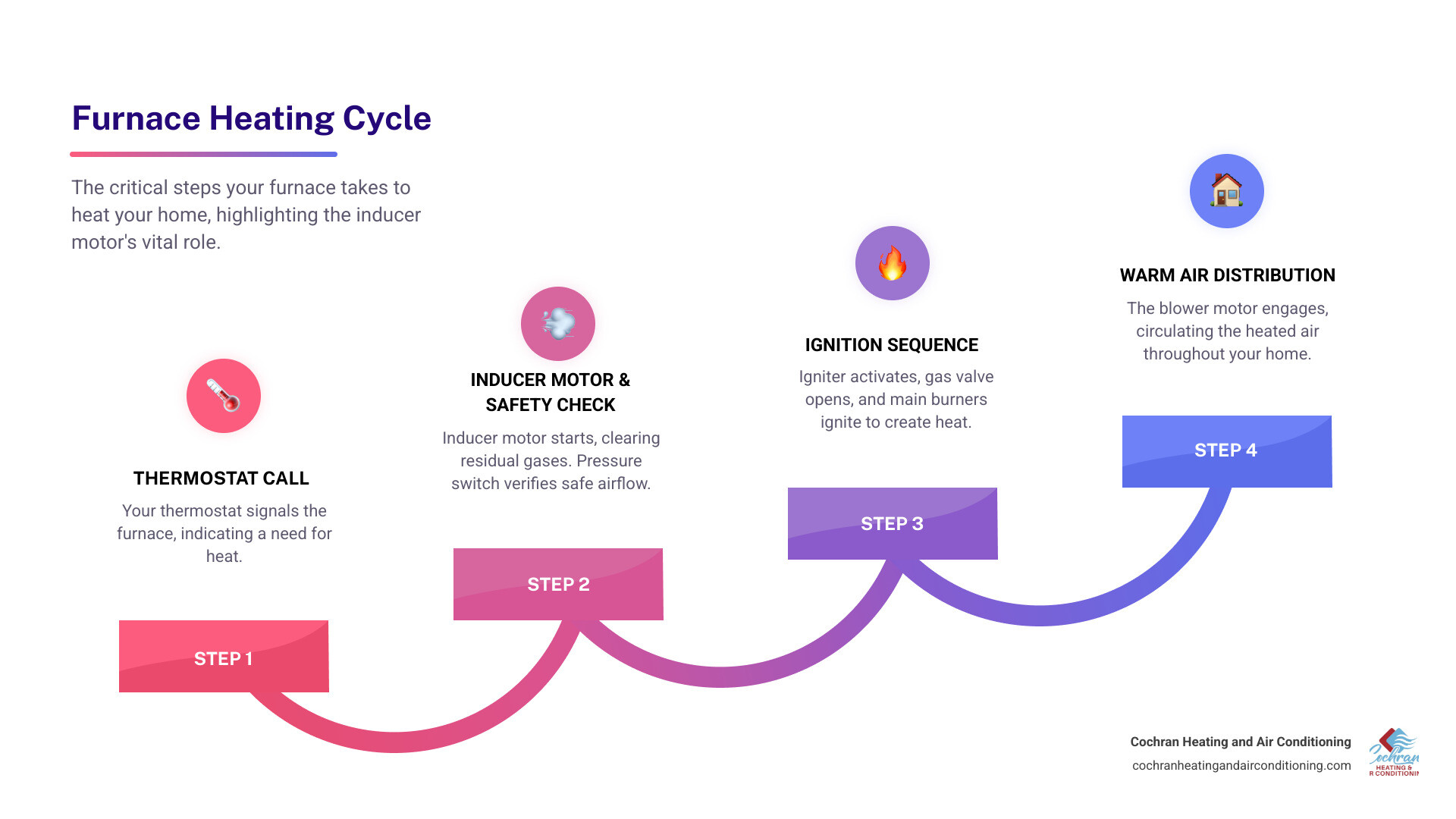
In modern, high-efficiency gas furnaces, the inducer motor is a motor-driven fan that starts when your thermostat calls for heat. Its primary jobs are:
- Clear the Heat Exchanger: Before ignition, it clears residual combustion gases from the heat exchanger for safety.
- Provide Fresh Air and Expel Exhaust: During operation, it draws in fresh air for efficient combustion and pushes hazardous exhaust gases, like carbon monoxide, out of your home through the vent pipe. It’s often called a “draft inducer.”
High-efficiency (condensing) furnaces produce cooler exhaust gases that don’t rise naturally through a chimney like in older models. The inducer motor provides the mechanical push needed to vent these gases safely. Without it, the furnace won’t operate, protecting you from carbon monoxide.
The inducer motor works with the pressure switch, which monitors the airflow created by the motor. If the airflow is insufficient, the pressure switch prevents the furnace from igniting as a vital safety measure.
Signs of a Bad Inducer Motor
The signs of a failing inducer motor are often clear and can help you avoid a complete furnace breakdown.
One of the most common indicators is loud or unusual noises:
- Whining sounds: This classic symptom often signals worn internal bearings.
- Humming or whirring: A persistent hum, especially during startup, can point to a failing motor.
- Tapping or clicking: This could be debris caught in the fan or a loose component.
Your furnace’s behavior can also provide clues:
- Furnace won’t start: If the inducer motor fails to start, the pressure switch won’t close, and the furnace will not ignite.
- Furnace starts and stops abruptly (short cycling): The motor may struggle to maintain proper airflow, causing the furnace to shut down as a safety precaution.
- Error codes on the control board: Many modern furnaces display error codes that can indicate an inducer motor or pressure switch issue. Check your furnace manual for code meanings.
If you’re noticing any of these issues, it’s a good idea to investigate further. For more general signs that your HVAC system needs attention, you can always check out our guide on Signs Your Home HVAC System Needs Repair in Joplin, MO.
Simple Diagnostic Checks
Before calling a professional, you can perform a few simple checks. Always turn off the power to the furnace at the circuit breaker and service switch first.
- Power Off Furnace: Turn off the furnace circuit breaker and the nearby service switch.
- Check Motor Temperature: With the power off, open the furnace access panel. Carefully touch the inducer motor housing. If it’s unusually hot, it may be struggling to operate.
- Spin the Fan Cage: With the power off, try to spin the “squirrel cage” fan by hand. It should spin freely. If it’s stiff or grinds, the bearings are likely worn out.
- Check for Obstructions: Look for debris, nests, or leaves inside or around the fan area that could prevent it from spinning.
- Pressure Switch Hose Inspection: Check the small rubber hose connecting the pressure switch to the inducer motor. Ensure it’s not cracked, disconnected, or clogged, as this can mimic a motor failure.
These checks can help narrow down the issue before you call a technician.
Your Guide to Furnace Inducer Motor Repair: DIY vs. Professional
Many homeowners wonder if they can tackle furnace inducer motor repair themselves. While the DIY spirit is admirable, it’s crucial to understand the risks. HVAC systems involve gas, electricity, and combustion, which require careful handling.

Safety Precautions: Safety is paramount. Always disconnect power at the breaker and the furnace’s service switch before starting work.
- Electrical Hazards: Furnaces use high voltage, and improper handling can lead to severe shock.
- Gas Line Safety: Working near gas lines risks dangerous leaks. This work is best left to professionals.
- Combustion and Venting: Incorrect installation can lead to improper venting of carbon monoxide into your home.
For more on electrical safety, review resources from the National Fire Protection Association’s guide on Electrical safety in the Home.
Here’s a quick comparison to help you weigh your options:
| Feature | DIY Repair | Professional Repair |
|---|---|---|
| Cost | Lower (parts only, ~$100-$500) | Higher (parts + labor, ~$400-$1,100) |
| Time | Variable (learning curve, sourcing parts) | Quick (30-60 minutes typically) |
| Risk | High (electrical, gas, CO, improper installation) | Low (trained, insured, proper tools) |
| Warranty | None (voided furnace warranty possible) | Often includes parts & labor warranty |
| Expertise | Basic mechanical skills, careful research | Years of training, certifications, diagnostic tools |
Can the Motor Be Repaired or Must It Be Replaced?
For most modern inducer motors, the answer is replacement. They are typically sealed units, meaning internal components like bearings aren’t designed to be serviced. The primary cause of failure is worn internal bearings, which cause friction, noise, and eventual seizure.
However, some older models may use accessible ball bearings instead of sealed sleeve bearings. A mechanically inclined DIYer might find that these bearings can be replaced inexpensively. For example, one homeowner found their motor used standard 608-sized ball bearings that cost only a few dollars. For the vast majority of cases, and for warranty purposes, a new motor assembly is the recommended path.
DIY Steps for Furnace Inducer Motor Repair
For those with mechanical aptitude and a commitment to safety, replacing the motor is possible. This is a general guide; always consult your furnace’s manual. This guide is for informational purposes only.
Essential Tools:
- Screwdriver and socket sets
- Pliers and nut drivers
- Wire strippers/cutters
- Penetrating oil (for rusted bolts)
- New inducer motor assembly and gasket (ensure correct part number)
Step-by-Step Guide (General):
- Shut Off Power and Gas: Turn off electricity at the circuit breaker and service switch. Turn off the gas supply valve.
- Locate the Inducer Assembly: It’s usually a metal housing with a fan near the top of the furnace where the exhaust pipe connects.
- Remove Access Panels: Remove the furnace’s outer panels.
- Disconnect Wiring: Label and disconnect all wires to the motor. Take a photo for reference.
- Remove Pressure Switch Hose: Detach the rubber hose from the inducer motor housing.
- Remove Mounting Bolts: Use a socket wrench to remove the bolts securing the assembly.
- Install New Motor and Gasket: Seat the new gasket and mount the new motor assembly, tightening bolts securely. If you are replacing only the motor within the housing, you may need to transfer the fan from the old motor shaft to the new one.
- Reconnect Wiring and Hose: Reattach all electrical wires and the pressure switch hose exactly as they were.
- Reassemble and Test: Replace furnace panels, turn the gas and power back on, and set your thermostat to call for heat. Observe the furnace to ensure it operates correctly.
If you are unsure at any point, stop and call a professional.
When to Call a Pro for Furnace Inducer Motor Repair
Knowing when to call a professional is about safety and reliability. Here are indicators it’s time to call us:
- Lack of Experience: If you’re uncomfortable with electricity, gas lines, or complex systems, call a pro.
- Complex Issues: If diagnostics point to multiple failing parts (like the control board), a professional diagnosis is crucial.
- Damaged Components: If the motor housing or other parts are corroded or cracked, specialized repair is needed.
- Safety Concerns: Any uncertainty about gas leaks or electrical safety warrants a professional call.
- Warranty Concerns: A DIY repair can void your furnace’s warranty.
- It’s an Emergency: If your furnace fails in a cold snap or you suspect a CO leak, do not hesitate. We offer 24/7 Emergency HVAC Repair Services You Can Trust in Joplin.
Our technicians are equipped to handle furnace inducer motor repair safely and efficiently.
Breaking Down the Costs of Inducer Motor & Pressure Switch Replacement
Understanding the potential expenses for furnace inducer motor repair can help you budget and make informed decisions. The total cost breaks down into parts and labor.
Average Cost for Inducer Motor Replacement
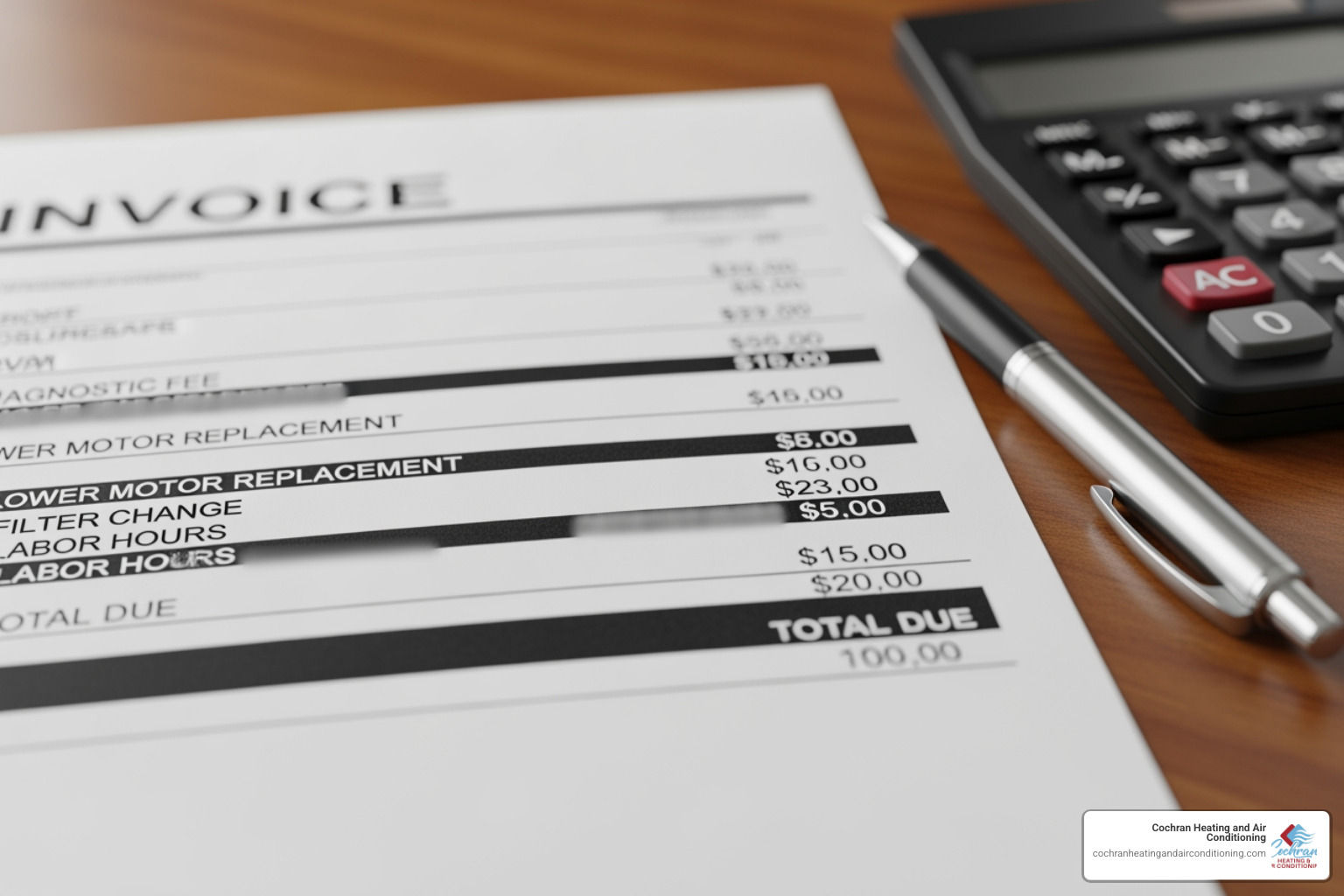
On average, the cost of replacing a furnace inducer motor ranges from $400 to $1,100. This fluctuates based on several factors:
- The Part: The motor assembly itself typically costs $100 to $500. Original manufacturer (OEM) parts can cost up to $600, while generic parts may be cheaper.
- Labor Costs: Professional labor generally costs $300 to $600. Contractors typically charge $75 to $150 per hour, with a minimum service fee of $75 to $200.
- Brand Specifics: Parts for some brands are more expensive. For example, a Carrier or Trane replacement can cost $400 to $1,250, while a Bryant replacement is typically $450 to $1,050.
- Time of Service: Emergency, weekend, or after-hours service will have higher labor rates, often $140 to $210 per hour.
- Warranty: Your furnace’s parts warranty may cover the motor, but not the labor. Check your specific warranty details.
The professional’s fee covers the expertise to diagnose, safely install the new unit, and ensure proper venting and electrical connections.
Related Repair Costs
Sometimes, other components may also need repair. Be aware of these potential related costs:
- Pressure Switch: The part for a new pressure switch typically costs $15 to $80.
- Run Capacitor: If the motor’s capacitor has failed, replacement usually costs no more than $250 (parts and labor).
- Control Board: A malfunctioning control board is a more significant expense, costing $500 to $900 to replace.
Always get a detailed quote that outlines all parts and labor costs and ask about warranty coverage.
Common Causes of Failure and How to Extend Your Motor’s Life
Understanding the common causes of inducer motor failure can help you extend its life and avoid premature furnace inducer motor repair.
What Causes an Inducer Motor to Fail?
Several factors can lead to motor failure:
- Age and Wear: Inducer motors typically last 10 to 20 years. Over time, bearings wear down, lubrication dries up, and electrical parts degrade.
- Worn Bearings: This is the leading cause of whining noises. Worn bearings cause the motor to work harder, overheat, and eventually fail.
- Debris and Blockages: Blocked intake/exhaust vents (from leaves, snow, nests) or a dirty air filter restricts airflow, straining the motor and causing it to overheat.
- Electrical Issues: A faulty capacitor, loose wiring, or power surges can damage the motor.
- Condensate Drain Problems: In high-efficiency furnaces, a clogged condensate line can cause water to back up into the motor housing, leading to corrosion and electrical damage.
- Imbalanced Fan Wheel: Debris or damage can unbalance the fan, causing vibrations that accelerate wear on the motor’s bearings and shaft.
- Overheating: All the issues above can cause the motor to overheat, leading to rapid failure.
How to Prolong Your Inducer Motor’s Lifespan
You can proactively extend your motor’s lifespan and delay repairs with these tips:
- Regular Furnace Maintenance: Annual professional tune-ups are critical for inspecting and cleaning components, catching minor issues before they become major. Consider regular HVAC Repair & Maintenance for your system.
- Change Air Filters Regularly: A clogged filter restricts airflow, forcing the motor to work harder. Replace filters every 1-3 months.
- Keep Vents Clear: Ensure outdoor intake and exhaust vents are free from obstructions like snow, leaves, or nests.
- Ensure Proper Condensate Drainage: Periodically check and clean the condensate drain line on high-efficiency furnaces to prevent clogs.
- Listen to Your Furnace: Pay attention to new or unusual noises to catch problems early.
- Improve Home Insulation: Better insulation means your furnace runs less, reducing wear on all components. For more tips, see this A Guide to Energy-Efficient Heating and Cooling.
Following these practices contributes to the overall health and efficiency of your heating system.
Frequently Asked Questions about Inducer Motor Issues
Here are answers to common questions about furnace inducer motors.
How long does a furnace inducer motor last?
A furnace inducer motor typically lasts 10 to 20 years. This lifespan can vary based on furnace usage, maintenance frequency, environmental factors, and the quality of the part.
What are the risks of a malfunctioning inducer motor?
A malfunctioning inducer motor poses several risks:
- Furnace Shutdown: The most common result is a furnace that won’t start, leaving you with no heat.
- Carbon Monoxide Leaks: This is the most dangerous risk. A faulty motor can fail to vent harmful combustion gases, allowing carbon monoxide (CO) to enter your home. Ensure you have working CO detectors.
- Damage to Other Components: A struggling motor can overheat and damage nearby wiring or stress the furnace’s control board.
- Inefficient Operation: A failing motor can make your furnace less efficient, leading to higher energy bills.
Are there different types of inducer motors?
Yes, inducer motors vary, which impacts efficiency and replacement cost:
- Single-Stage Motors: Operate at one full speed. They are less expensive but also less efficient and noisier.
- Two-Stage or Modulating Motors: Found in high-efficiency furnaces, these motors operate at variable speeds for better temperature control, quieter operation, and greater efficiency. They are more expensive to replace.
- ECM vs. PSC Motors: This refers to the motor technology. PSC (Permanent Split Capacitor) motors are older and less efficient. ECM (Electronically Commutated Motor) motors are highly efficient, can vary their speed, and are found in modern furnaces, but they are more expensive to replace.
Stay Warm and Safe with Professional Furnace Repair
The inducer motor is essential for the safe and efficient operation of your furnace. Ignoring a failing motor risks not only a loss of heat but also serious safety hazards like carbon monoxide poisoning. While DIY repair is possible for some, the risks associated with gas and electricity make professional service the safest choice.
At Cochran Heating and Air Conditioning, we understand the importance of a warm, safe home in Joplin. Our certified technicians can diagnose and perform your furnace inducer motor repair with precision, ensuring your system runs safely and efficiently. Don’t let a faulty motor leave you in the cold or put your family at risk.
If you’re experiencing any furnace issues, from strange noises to a complete shutdown, prioritize safety and expertise. Contact us for reliable Furnace Repair & Installation in Joplin to keep your home comfortable all season long.