
The Heart of Your Heat Pump’s Versatility
Heat pump reversing valve repair is the critical service that restores your system’s ability to switch between heating and cooling modes. If your heat pump is stuck blowing cold air in winter or hot air in summer, a faulty reversing valve is likely the culprit.
Quick Answer: What You Need to Know
- What it is: A four-way valve that reverses refrigerant flow to switch your heat pump between heating and cooling
- Repair cost: $150-$400 for minor repairs (solenoid replacement)
- Replacement cost: $450-$1,500 for full valve replacement
- Is it DIY-friendly?: No—requires refrigerant handling certification and specialized brazing equipment
- Time required: 2-5 hours for professional diagnosis and repair/replacement
The reversing valve is what makes your heat pump a versatile heat pump instead of just an air conditioner. This small but essential component acts as a traffic director for refrigerant inside your outdoor unit. When working correctly, it seamlessly redirects refrigerant flow as you adjust your thermostat, delivering warm or cool air. If the valve fails, you lose that year-round versatility, leaving you stuck with cold air in winter or hot air in summer.
Understanding how this valve works and when it needs professional attention can save you from discomfort and high energy bills.
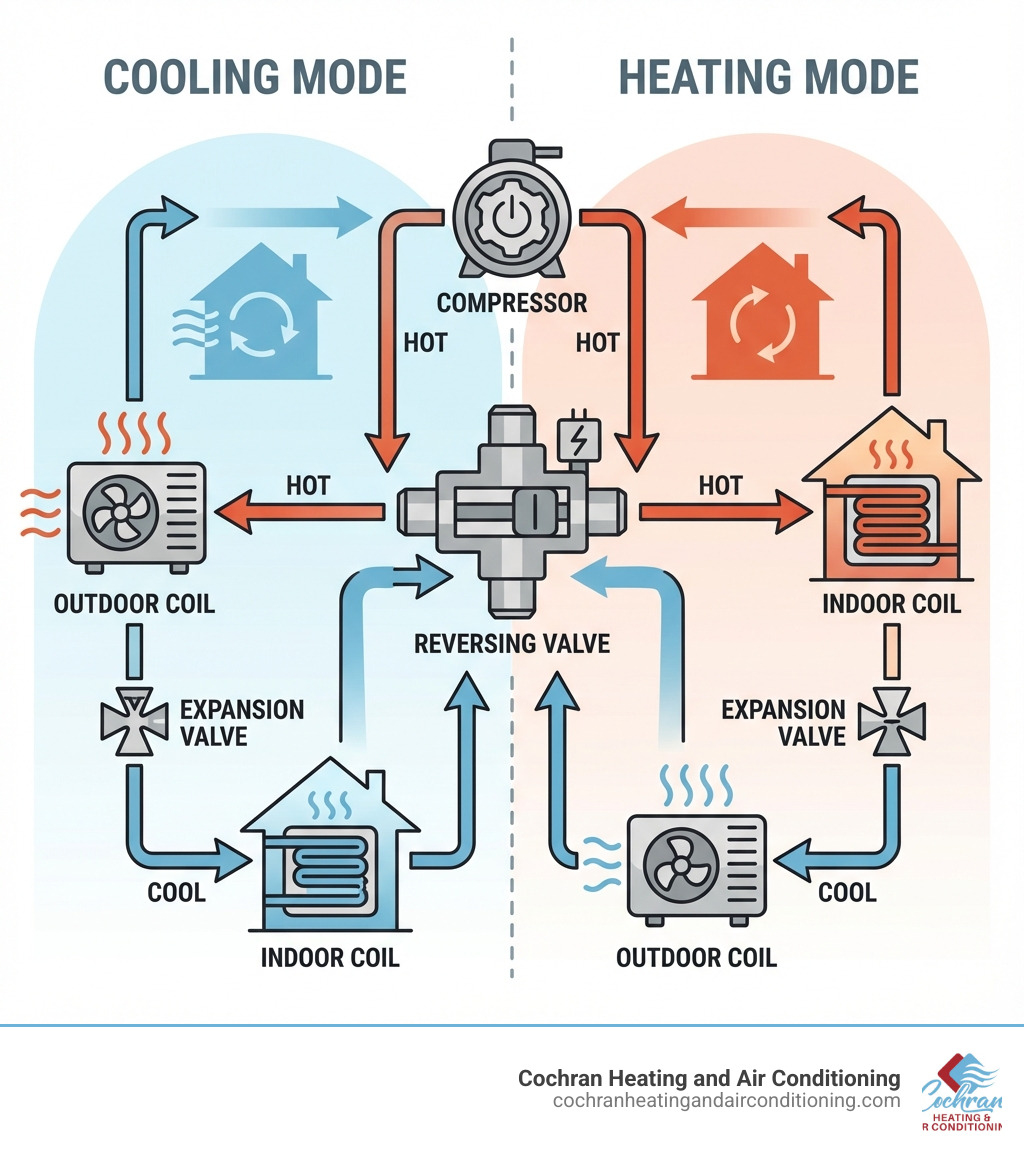
A heat pump provides both heating and cooling from a single unit, and this dual functionality relies entirely on the reversing valve. Also called a four-way valve, it switches the direction of refrigerant flow. In cooling mode, it directs hot refrigerant to the outdoor coil to release heat. In heating mode, it sends hot refrigerant to the indoor coil to warm your home. This clever mechanism makes the heat pump a highly efficient, year-round comfort solution. You can learn more about how these systems function from the Department of Energy’s guide on a heat pump system.
Is Your Reversing Valve Failing? Key Symptoms to Watch For
When your heat pump starts acting up, especially when switching between heating and cooling, a malfunctioning reversing valve is often the prime suspect. Recognizing the signs early can help you address the problem before it escalates.
Here are the common symptoms that suggest your heat pump reversing valve needs attention:
- Stuck in one mode: The most obvious sign is a heat pump blowing warm air in summer or cold air in winter. This means the valve is stuck and not redirecting refrigerant as it should.
- Blowing hot air in summer: If you set your thermostat to cool but get warm air, the valve is likely stuck in heating mode.
- Blowing cold air in winter: If your heat pump delivers lukewarm or cold air when it should be heating, the valve is probably stuck in cooling mode.
- Inconsistent temperatures: If your home struggles to maintain a consistent temperature or you notice significant temperature swings, a partially failing valve could be the cause. It might be struggling to shift fully or bleeding refrigerant between modes.
- Reduced efficiency and high energy bills: A struggling reversing valve makes your heat pump work harder, leading to increased energy consumption and higher utility costs.
- Unusual noises: Listen for strange sounds like hissing, clicking, or gurgling from your outdoor unit. These sounds often indicate disrupted refrigerant flow, a valve struggling to switch, or strain on system components, all of which hurt efficiency.
If you observe any of these symptoms in your Joplin, MO home, it’s a good idea to consider contacting us for a professional inspection. These are often clear signs your HVAC system needs repair in Joplin, MO.
How a Faulty Valve Impacts System Performance
A malfunctioning reversing valve isn’t just an inconvenience; it can negatively affect your entire heat pump system. The core issue is that the heat pump can no longer efficiently transfer heat, which is its primary function.
Firstly, a faulty valve leads to increased strain on components. When refrigerant flow is disrupted, the compressor works much harder to compensate. This excessive strain can shorten the lifespan of your compressor, the most expensive component of your heat pump.
Secondly, it results in inefficient operation. If the reversing valve isn’t directing refrigerant correctly, the system can’t effectively absorb or release heat. This means it will run longer and consume more electricity while providing less comfort, directly translating to higher utility costs. Studies on reversing valve performance show how issues with heat transfer and pressure drops directly impact a heat pump’s efficiency.
This leads to poor home comfort. Your heat pump can’t deliver the heating or cooling you need, leaving you either too hot or too cold, regardless of your thermostat settings.
Common Causes of Reversing Valve Failure
Understanding why a reversing valve might fail helps appreciate the complexity of these systems. Several factors can contribute to a valve getting stuck or malfunctioning.
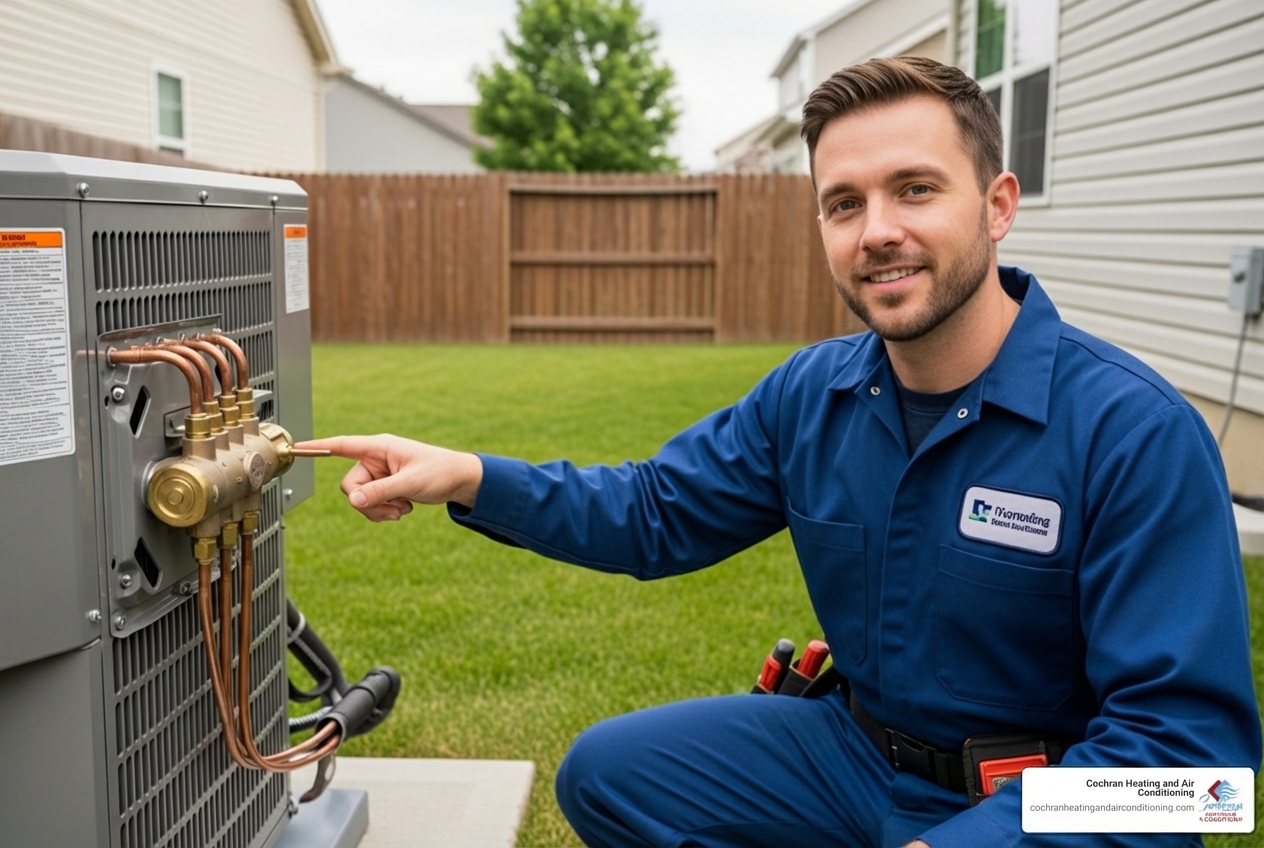
Here are the most common causes:
- Mechanical Failure: The internal components, such as the slide valve or piston, can get stuck due to wear and tear, impurities, or deformation of the valve body.
- Electrical Issues: The valve is controlled by a solenoid coil. If this coil is faulty, has loose wiring, or isn’t receiving the correct signal from the thermostat, it won’t activate the valve.
- Refrigerant Leaks or Contamination: Low refrigerant pressure from leaks can prevent the valve’s piston from moving correctly. Debris or contamination within the refrigerant lines can also physically obstruct the valve.
- Improper Installation: Though rare, an improperly installed system can contribute to premature valve failure, involving issues with brazing, refrigerant charging, or mounting.
- System Age and Wear: Like any mechanical part, reversing valves have a lifespan. Older heat pumps (nearing 15 years) are more prone to failure as years of switching between modes wear out the internal parts.
If you suspect any of these issues, it’s crucial to seek professional help. Our team provides comprehensive heat pump services to diagnose and resolve these complex problems.
The Professional Heat Pump Reversing Valve Repair Process
When it comes to a malfunctioning heat pump reversing valve, we cannot stress this enough: this is not a DIY job. Working with a heat pump’s sealed refrigerant system is complex and dangerous without proper training and equipment.
Here’s why professional help is always necessary:
- Refrigerant Handling Laws: Handling refrigerants requires EPA certification. Improper release harms the environment and can lead to heavy fines.
- Brazing and Soldering Risks: Replacing a valve involves high-heat brazing to create leak-proof connections. This requires specialized tools and skill to avoid refrigerant leaks, contamination, and fire hazards.
- High-Pressure Systems: Heat pumps operate under extremely high pressures. Working on them without proper safety protocols can result in serious injury.
- Specialized Tools: Professionals use tools not found in a typical garage, including a refrigerant recovery machine, vacuum pump, manifold gauges, and diagnostic equipment.
Hiring a skilled technician for a thorough inspection is crucial to pinpoint the root cause accurately. Depending on the problem’s severity, the valve may need repair or replacement. Our technicians are trained and certified to handle these intricate repairs safely and effectively.
Here’s a glimpse at some of the specialized tools required for a professional heat pump reversing valve repair or replacement:
- EPA-certified refrigerant recovery machine
- Vacuum pump
- Manifold gauges
- Brazing torch (oxy-acetylene or similar)
- Nitrogen tank (for purging and pressure testing)
- Digital thermometers and multimeter
- Safety gear (gloves, eye protection, fire extinguisher)
- Specialized leak detectors
Step 1: Professional Diagnosis
Before any repair, a precise diagnosis is paramount. Our technicians systematically rule out other potential culprits before confirming the valve’s failure, ensuring we address the actual problem and avoid unnecessary repairs.

Here’s how we approach diagnosing a reversing valve issue:
- Verifying the Failure: We start by confirming your reported symptoms and checking thermostat settings.
- Checking Thermostat Signals: We verify the thermostat is correctly sending the signal (proper voltage on the O/B wire) to the outdoor unit to switch modes.
- Testing the Solenoid: We use a multimeter to check the solenoid coil’s resistance and listen for a “click” when the system attempts to switch, which indicates if the solenoid is trying to activate.
- Measuring System Pressures: Manifold gauges allow us to read refrigerant pressures. Abnormal pressures can indicate a refrigerant issue or that the valve isn’t directing flow correctly.
- Temperature Differential Check: We measure the temperature difference across the valve. A differential greater than 5 degrees Fahrenheit suggests refrigerant is bleeding across the valve, meaning it’s not fully seated.
- The Magnet Test: For mechanical issues, a technician might use a strong magnet to try and manually shift the valve’s internal slide. If it moves with the magnet but not electrically, it points to an electrical issue. If it doesn’t move, it’s a mechanical failure.
- Ruling Out Other Issues: Before condemning the valve, we check the refrigerant charge, airflow, and compressor operation. This methodical isolation diagnosis ensures we get to the root of the problem.
Step 2: The Replacement Procedure
Once a faulty reversing valve is confirmed, the replacement process begins. This is a highly technical procedure demanding precision and adherence to safety and environmental regulations.
Here’s an overview of the steps involved:
- Power Disconnection: We always begin by disconnecting all power to the outdoor unit at the circuit breaker.
- Refrigerant Recovery: Using a specialized recovery machine, our EPA-certified technicians safely remove and store all refrigerant from the sealed system, per federal law.
- Accessing and Desoldering the Old Valve: We expose the valve and carefully desolder its connections from the refrigerant lines using a brazing torch, protecting nearby components from heat damage.
- Brazing the New Valve: The new valve is carefully brazed into place to create strong, leak-proof joints. We purge the lines with nitrogen during this process to prevent internal oxidation and contamination.
- System Evacuation (Vacuum): We connect a vacuum pump to remove all air and moisture from the system, which is critical for performance and longevity.
- Recharging with Refrigerant: Using gauges and scales for accuracy, we recharge the system with the precise amount and type of refrigerant specified by the manufacturer.
- System Testing: Finally, we power up the unit and test its operation in both heating and cooling modes, monitoring pressures and temperatures to ensure the new valve is working correctly and the system is operating at peak efficiency.
This detailed process highlights why heat pump reversing valve repair is a job best left to the experts.
Repair vs. Replace: Costs and Considerations
When faced with a faulty heat pump reversing valve, a common question arises: should we repair it, or is it better to replace the entire valve? The answer depends on the nature of the fault, the age of your heat pump, and the associated costs.
Here’s a breakdown to help you understand the decision-making process:
| Factor | Repair (e.g., Solenoid) | Replacement (Entire Valve) |
|---|---|---|
| Cost Range | $150 – $400 | $450 – $1500 |
| Labor Time | Typically 1-2 hours | Typically 2-5 hours |
| Complexity | Lower, often involves electrical work | High, involves refrigerant handling and brazing |
| Parts Cost | Relatively low (solenoid coil) | Higher (the entire four-way valve) |
| Long-term Reliability | Good, if the core valve mechanism is sound | Excellent, if the new valve is installed correctly |
| When to Choose | Electrical issue (faulty solenoid), minor fixes | Mechanical failure, internal leaks, system age, repeated issues |
The Cost of Heat Pump Reversing Valve Repair
Minor repairs, like replacing a faulty solenoid coil, are a cost-effective solution if the valve’s main mechanical body is sound.
The average heat pump reversing valve repair cost is between $150 and $400. This range typically covers:
- Solenoid replacement: If the solenoid coil is the only faulty component, replacing it is a relatively straightforward electrical repair.
- Minor electrical fixes: This could involve repairing loose wiring or addressing control board issues.
- Labor costs: These costs include the technician’s time for diagnosis and the repair itself.
This option is viable if our diagnosis confirms the problem is solely with the valve’s electrical activation.
The Cost of Full Valve Replacement
A full valve replacement is recommended for mechanical failures, internal leaks, or on older units prone to further issues. This is a more labor-intensive process, which is reflected in the higher cost.
On average, the replacement cost for a heat pump reversing valve can range from $450 to $1500, including labor and parts. Factors influencing this cost include:
- Part cost: The valve itself varies in price depending on the heat pump’s brand and model.
- Labor intensity: Replacement involves refrigerant recovery, desoldering, brazing, evacuation, and recharging, all requiring significant time and expertise.
- Refrigerant cost: The cost to recharge the system with new refrigerant is also a factor.
- Brand and model impact: Some heat pump brands or models are more complex to work on. For instance, a Trane 5 ton heat pump with a stuck reversing valve might incur costs towards the higher end of the spectrum due to part availability or specific design challenges, with some jobs quoted near $1500.
- Age of the heat pump: If your heat pump is over 10-12 years old, it’s worth discussing if a major repair is the best long-term investment. Heat pumps last 15 years on average, so we may discuss the benefits of a full system replacement.
- Warranty status: If your heat pump is under warranty, the part cost may be covered, significantly reducing your out-of-pocket expense.
We always provide a transparent assessment and discuss all options with you, ensuring you make an informed decision for your home in Joplin, MO.
Frequently Asked Questions about Reversing Valve Issues
We understand that a malfunctioning heat pump can be a source of frustration and many questions. Here are some of the most common inquiries we receive regarding reversing valve problems:
Why is my heat pump stuck in heat mode?
If your heat pump is stuck in heat mode, blowing warm air when you want cooling, it’s a clear sign of a reversing valve issue. The most common reasons for this include:
- Solenoid Failure: The electrical solenoid coil that activates the valve may be faulty or have a bad connection, preventing it from switching modes.
- Electrical Problem: The issue could be with the control wiring from your thermostat or the control board in the outdoor unit.
- Low Refrigerant Pressure: Insufficient refrigerant can prevent the valve’s internal piston from shifting due to a lack of pressure.
- Mechanical Jam: The internal slide valve might be physically stuck due to wear or debris.
These issues prevent the valve from changing the direction of refrigerant flow, locking your system into one mode.
Can you manually unstick a reversing valve?
We strongly advise against homeowners attempting to unstick a valve. It’s part of a high-pressure, sealed system, and DIY attempts can cause more damage, dangerous refrigerant leaks, or personal injury.
- Risk of Damage: Forceful attempts can damage delicate internal components, turning a minor repair into a costly replacement.
- Professional Techniques: A trained technician might use diagnostic steps like gently tapping the valve body or briefly energizing the solenoid to see if it frees up. However, these are professional methods to confirm a diagnosis, not a guaranteed fix. If these steps don’t work, replacement is necessary.
The best way to address a stuck heat pump reverse valve is to contact a reputable HVAC technician who can safely diagnose and resolve the issue.
How long does a reversing valve repair or replacement take?
The duration of a heat pump reversing valve repair or replacement can vary, but you can generally expect it to take a few hours.
- Diagnosis Time: A thorough diagnosis typically takes 30 to 60 minutes, sometimes longer for complex issues.
- Repair vs. Replacement Time:
- A minor repair, like a solenoid replacement, might take 1 to 2 hours.
- A full valve replacement is more intensive and typically takes 2 to 5 hours on average.
- Factors Affecting Duration: The unit’s age, condition, model, and ease of access can all influence the total time required. Our technicians work efficiently while ensuring the highest quality and safety standards.
Keep Your System Running Smoothly with Preventative Maintenance
While a reversing valve failure can be unexpected, consistent preventative maintenance can significantly extend the life of your heat pump and its components. Think of it as a regular check-up for your home’s most important comfort system.
Here’s how you can help keep your heat pump in top shape and potentially avoid the need for heat pump reversing valve repair:
- Regular Maintenance Benefits: Routine tune-ups help identify potential issues early, ensuring all components work efficiently. This reduces strain on the system, which can prolong the life of the reversing valve and other critical parts.
- Extending Component Life: A well-maintained system operates more smoothly, reducing wear and tear on mechanical and electrical parts. This helps prevent the valve’s internal mechanisms from sticking and the solenoid from failing prematurely.
- Change Air Filters Regularly: A clogged filter restricts airflow, forcing your heat pump to work harder and stressing components like the reversing valve. Change filters as recommended by the manufacturer to maintain proper airflow and system pressure.
- Keep Outdoor Unit Clear: Ensure the outdoor unit is free from debris like leaves, grass, and ice. Blocked coils hinder heat transfer, making the system less efficient and potentially causing pressure imbalances that stress the reversing valve.
- Schedule Professional Tune-Ups: The best way to ensure your heat pump runs optimally is to schedule annual professional maintenance. During a tune-up, our technicians will:
- Inspect electrical connections to the reversing valve’s solenoid.
- Check refrigerant levels and pressures.
- Clean coils and inspect for wear.
- Test the reversing valve’s operation to ensure it switches smoothly.
By taking these preventative steps, you’re not just maintaining your heat pump; you’re ensuring efficient year-round comfort for your home in Joplin, MO. Just like our AC Maintenance Tune-Ups in Joplin, regular heat pump care is vital.
Conclusion: Trust the Experts for Your Reversing Valve Needs
A functioning heat pump reversing valve is essential for year-round comfort in your home, allowing your system to seamlessly transition between heating and cooling. As we’ve explored, recognizing the signs of a faulty valve—from being stuck in one season to unusual noises and skyrocketing energy bills—is the first step toward restoring your system’s efficiency and your peace of mind.
While the temptation to tackle DIY projects can be strong, the complexities and potential dangers of heat pump reversing valve repair necessitate professional expertise. Handling refrigerants, intricate brazing, and high-pressure systems are jobs best left to certified technicians who possess the specialized tools and knowledge to ensure a safe, effective, and lasting repair.
Whether your heat pump requires a minor repair or a complete valve replacement, our team at Cochran Heating and Air Conditioning is equipped to diagnose the issue accurately and provide the most appropriate solution. We understand the importance of reliable Residential Heating & Cooling in Joplin and are committed to delivering exceptional service that keeps your home comfortable in every season.
Don’t let a faulty reversing valve leave you stuck in the wrong season. Trust the experts to get your heat pump back on track.