
Why an HVAC Inspection Checklist Excel Template Matters
An hvac inspection checklist excel template is a digital quality control tool that helps homeowners and HVAC technicians systematically inspect heating, cooling, and ventilation systems to ensure every component functions properly, prevent costly breakdowns, and maintain energy efficiency.
Quick Answer: What You Get with an HVAC Inspection Checklist Excel Template
- Pre-formatted inspection categories covering thermostats, filters, coils, electrical connections, and safety controls
- Customizable fields to add your equipment details, service dates, and technician notes
- Digital record-keeping that’s easy to save, share, and reference for future maintenance
- Checklist structure that ensures no critical component gets missed during inspections
- Free download options available from various HVAC service providers and maintenance platforms
Without a structured checklist, HVAC business owners struggle to verify that technicians complete every essential inspection step. The potential consequences are significant: missed problems that turn into expensive repairs, shortened equipment lifespan, lost customers, and damage to your company’s reputation.
Even homeowners performing their own basic maintenance checks benefit from a systematic approach. A well-designed checklist acts as both a to-do list and a safety net, ensuring small tasks don’t get overlooked before they snowball into major system failures.
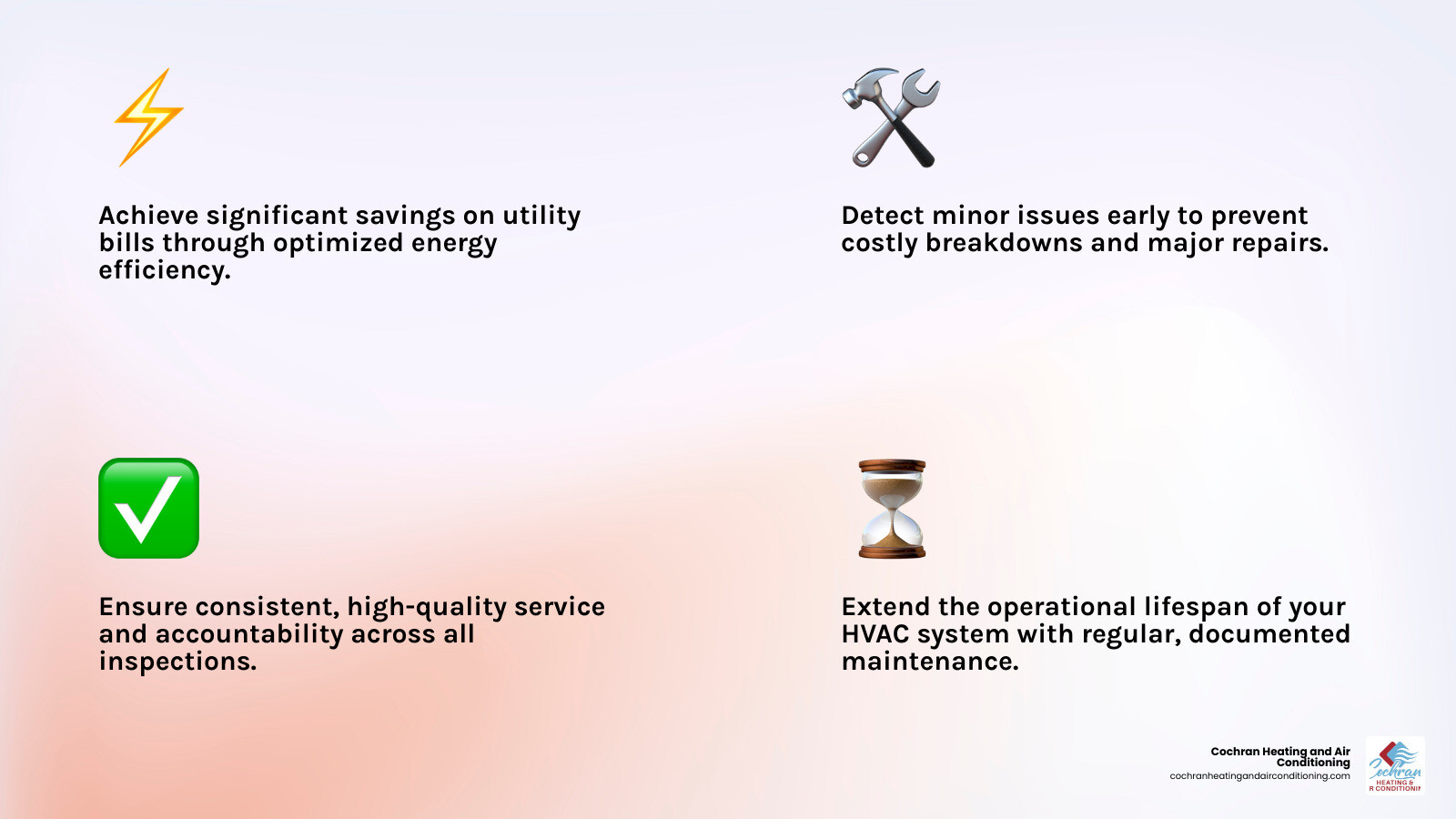
Regular preventive maintenance following a comprehensive checklist protects your HVAC system’s energy efficiency, extends equipment life by years, and prevents the costly downtime that comes with unexpected breakdowns. For HVAC technicians, using a consistent inspection process also helps identify sales opportunities for necessary repairs or system replacements that customers might not realize they need.
What to Include in Your Comprehensive HVAC Inspection Checklist
A well-designed HVAC inspection checklist is among the most useful tools available to ensure that technicians efficiently and consistently provide customers with high-quality maintenance services. It’s a methodical approach, much like what airline pilots use before a flight or surgeons before an operation – leaving no part unchecked. This systematic process is our warranty to you that you’re receiving premier service, building trust and showcasing our competency.

General System & Safety Checks
Before we even dive into the specific components, a comprehensive hvac inspection checklist excel template should start with general system checks and, most importantly, safety protocols. This includes verifying that the disconnection switch is off and removing any potential hazards before maintenance begins.
Key items in this section often include:
- Thermostat Calibration: We check if your thermostat is accurately reading temperatures and communicating correctly with your system. An uncalibrated thermostat can lead to inefficient operation and uncomfortable temperatures.
- Electrical Connections: All electrical connections should be inspected for wear, corrosion, or loose wiring. Frayed wires or poor connections can be a fire hazard and lead to system failures.
- Blower Components: We examine the blower motor and wheel for cleanliness and proper operation. A dirty blower can restrict airflow, making your system work harder and consume more energy.
- Airflow Verification: Ensuring proper airflow throughout the entire system, from return vents to supply registers, is crucial. Obstructions or leaks in ductwork can significantly reduce efficiency. This is vital for maintaining optimal Ductwork & Ventilation in Joplin.
- Safety Controls: We test all safety controls, such as limit switches and pressure switches, to ensure they are functioning correctly and will shut down the system if a dangerous condition arises.
- Overall Equipment Condition: A general visual inspection for excessive noise, vibration, odors, visible leaks, or signs of wear and tear on the unit’s housing and mounts.
Cooling System (AC) Checks
When it comes to keeping your home cool and comfortable, a thorough inspection of your AC unit is paramount. Our checklist for the cooling section ensures every critical component is assessed:
- Condenser Coils: These outdoor coils can accumulate dirt and debris, significantly hindering heat transfer. We clean them to ensure efficient operation. We also check for damage to the fins and obstructions around the unit.
- Evaporator Coils: Located indoors, these coils absorb heat from your home’s air. We inspect them for cleanliness, as they can become caked with dust and mold, impacting air quality and efficiency.
- Refrigerant Levels: We check the system’s refrigerant charge and pressures. Low refrigerant can indicate a leak and will severely reduce cooling capacity and efficiency.
- Condensate Drain Lines: The AC system produces condensation, which needs to drain properly. We inspect drain pans and lines for clogs, standing water, or leaks, which can lead to water damage and mold growth.
- Suction Line Insulation: The larger refrigerant line (suction line) should be well-insulated to prevent heat gain. We check for damaged or missing insulation.
- Support Pad Stability: The outdoor condenser unit should sit on a stable, level support pad. We ensure it’s secure and not prone to shifting.
For more information on keeping your AC running smoothly, check out our insights on AC Maintenance.
Heating System (Furnace/Heat Pump) Checks
As the seasons change, ensuring your heating system is ready for the cold is just as important. Our checklist covers key components for both furnaces and heat pumps:
- Heat Exchanger Inspection (Furnace): We carefully inspect the heat exchanger for any cracks or damage, which could lead to dangerous carbon monoxide leaks.
- Burner Assembly (Furnace): We clean and adjust the burner assembly to ensure efficient combustion and proper flame ignition.
- Ignition System (Furnace): Whether it’s a pilot light or an electronic igniter, we check its functionality to ensure reliable startup.
- Gas Pressure Test (Furnace): We measure the gas pressure to the furnace to ensure it’s within manufacturer specifications for safe and efficient operation.
- Flue Pipe and Venting (Furnace): We inspect the flue pipe for proper connection, blockages, or corrosion to ensure combustion gases are safely vented outside.
- Heat Pump Specific Checks: For heat pumps, we inspect the outdoor coil, reversing valve, and defrost cycle. These components are critical for efficient heating and cooling. You can learn more about these systems on our Heat Pump page.
Get Your Free HVAC Inspection Checklist Excel Template
Using an hvac inspection checklist excel template transforms a routine task into a structured, accountable process. It allows for digital record-keeping, making it easy to save, share, and reference for future maintenance. Plus, it fosters accountability, ensuring every step is followed.

Download and Customize Your HVAC Inspection Checklist Excel File
We believe in empowering our customers and fellow technicians with the best tools. This Excel template provides a solid foundation that you can easily adapt.
Once you’ve downloaded it, consider these customization tips:
- Adding Your Company Logo and Information: Personalize the template by adding your company’s branding, contact details, and technician fields.
- Customizing for Residential vs. Commercial: While the core components are similar, commercial systems often have additional elements like rooftop units or specialized ventilation. You can add specific sections or items relevant to the type of property you’re inspecting.
- Adding Customer Information Fields: Include sections for customer name, address, contact information, and specific notes about their system’s history.
- Tailoring for Specific Equipment Types: If you frequently work with particular brands or types of HVAC systems (e.g., mini-splits, geothermal), you can add specific checks unique to those units.
Best Practices for Using Your Checklist
Having an hvac inspection checklist excel file is only the first step; how you use it makes all the difference.
- Technician Training: Ensure all technicians are thoroughly trained on how to use the checklist consistently and effectively. This standardizes your service quality.
- Ensuring Consistency Across All Jobs: The checklist acts as a guide, ensuring that whether it’s a new hire or a seasoned veteran, the quality of inspection remains high and consistent.
- Storing Completed Checklists for Customer History: Digital checklists are invaluable for creating a comprehensive history of a customer’s HVAC system. This helps us track issues, recommend timely maintenance, and build long-term relationships.
- Identifying Sales Opportunities for Repairs or Replacements: A structured checklist empowers technicians to spot potential issues early. For instance, if the inspection reveals a failing component or an inefficient system, the technician can document it, explain the problem to the customer, and present options for repair or even replacement. This proactive approach helps customers make informed decisions and helps us offer solutions before a minor issue becomes a major breakdown. This is a critical part of our comprehensive HVAC Repair & Maintenance services.
Paper vs. Digital: The Evolution of HVAC Checklists
The journey of the HVAC inspection checklist has evolved significantly, from basic paper forms to sophisticated digital tools. While paper-based checklists certainly represent an improvement over having no checklist at all, they simply can’t solve many of the business process challenges that inevitably arise in a busy HVAC shop.
| Feature | Paper/PDF Checklists | Digital/Excel Checklists |
|---|---|---|
| Accessibility | Limited to physical copies | Accessible on mobile devices, cloud, desktop |
| Accountability | Hard to verify completion | Can be made mandatory, tracked digitally |
| Integration | Minimal, manual transfer | Integrates with CRM, scheduling, invoicing |
| Data Storage | Physical files, prone to damage/loss | Cloud-based, secure, searchable, easy backup |
| Ease of Use | Can be messy, hard to read | Standardized input, often guided |
| Customization | Requires reprinting | Easy to edit, duplicate, and tailor |
| Error Reduction | Prone to manual entry errors | Reduces errors through guided input, automation |
| Reporting | Manual compilation, time-consuming | Automated reports, data analysis |
Limitations of Traditional Paper/PDF Checklists
While useful, paper and PDF checklists come with inherent limitations that can hinder efficiency and accuracy:
- Manual Data Entry Errors: The need to transcribe information from handwritten notes into a digital system is a prime source of errors. Illegible handwriting or simple typos can lead to incorrect customer records or missed maintenance details.
- Risk of Being Lost or Damaged: Paper checklists can be easily misplaced, damaged by spills, or forgotten at a job site. This means losing crucial information about a customer’s system.
- Difficult to Track Completion: Without a centralized digital system, it’s challenging for business owners to verify that employees are completing the prescribed steps for each and every job. This lack of oversight can lead to inconsistencies in service quality.
- No Automation: Paper checklists offer no automation for scheduling follow-ups, generating estimates, or integrating with other business processes. Everything remains a manual effort.
- Inefficient Data Storage and Retrieval: Storing stacks of paper forms is cumbersome and makes it incredibly difficult to quickly find past inspection details for a specific customer or equipment.
Why an HVAC Inspection Checklist in Excel is a Good Start
Moving to an hvac inspection checklist excel template is a significant step forward from paper or static PDFs. It offers several immediate benefits:
- Digital and Customizable: Excel files are inherently digital, making them easy to edit, duplicate, and tailor to specific jobs or equipment types. You can add or subtract fields to perfectly match your needs and preferences.
- Improved Record-Keeping and Accountability: Once completed, an Excel checklist can be saved digitally, creating a clear, searchable record of the inspection. This improves accountability, as there’s a digital trail of the work performed.
- Streamlined Workflows: While not as integrated as dedicated HVAC software, an Excel checklist can still streamline workflows by providing a standardized format for data collection. This is particularly beneficial for managing Commercial Heating & Cooling in Joplin where multiple units might be involved. It reduces the need for manual transcription and helps organize job information more effectively.
How Regular Inspections Boost Efficiency and Prevent Problems
Regular preventive maintenance, guided by a thorough hvac inspection checklist excel template, is the cornerstone of a healthy HVAC system. It’s not just about fixing things when they break; it’s about preventing them from breaking in the first place. This proactive approach significantly contributes to energy efficiency, extends the equipment’s lifespan, and prevents costly downtime.
Think of it this way: a structured HVAC inspection checklist ensures that technicians don’t miss small tasks that could lead to expensive repairs or system failures. Regular preventive maintenance keeps HVAC systems efficient, extends equipment lifespan, and prevents costly downtime. This is key to How to Keep Your Joplin Home Comfortable Year-Round with Efficient HVAC.
Seasonal vs. Annual Inspections: What’s the Difference?
How often should HVAC systems be inspected, and what tasks are involved in seasonal versus annual checks? While an annual inspection is a good baseline, seasonal checks offer even greater benefits, ensuring your system is prepared for the specific demands of changing weather.
Key Tasks for a Spring/Summer AC Tune-Up:
- Inspect and clean condenser and evaporator coils.
- Check refrigerant levels and pressures.
- Inspect and clear condensate drain lines.
- Verify electrical connections and components.
- Check thermostat operation and calibration.
- Clean or replace air filters.
- Inspect outdoor unit for debris and ensure proper airflow.
- Check blower motor and fan.
- Lubricate moving parts as needed.
These checks are crucial for ensuring your system is ready for the Joplin heat. Learn more about our AC Maintenance Tune-Ups: Keeping Joplin Homes Cool All Summer.
Key Tasks for a Fall/Winter Heating System Check:
- Inspect heat exchanger for cracks or corrosion.
- Clean burner assembly and ignition system.
- Check gas pressure (for furnaces).
- Inspect flue pipe and venting for blockages.
- Verify safety controls.
- Check heat pump defrost cycle and reversing valve.
- Clean or replace air filters.
- Inspect electrical connections.
- Test carbon monoxide detectors and safety interlocks.
Ideally, we recommend semi-annual checks – once for cooling in the spring and once for heating in the fall. This ensures your system is always operating at peak efficiency and reliability, helping to catch problems early before they escalate.
The Payoff: Energy Savings and Extended Equipment Lifespan
The benefits of consistent inspections, guided by a detailed checklist, are clear:
- How Clean Coils and Filters Reduce Energy Consumption: Dirty coils and clogged filters restrict airflow and hinder heat exchange, forcing your HVAC system to work harder and consume more electricity to achieve the desired temperature. Regular cleaning and replacement, identified through our checklist, can significantly reduce your energy bills.
- How Catching Small Issues Prevents Major System Failures: A structured inspection allows our technicians to identify minor wear and tear, loose connections, or slight refrigerant leaks before they turn into catastrophic and expensive breakdowns. This proactive approach extends the overall lifespan of your equipment, saving you the significant cost of premature replacement.
- Maintaining Peak Performance: Regular checks ensure your system maintains its designed efficiency and capacity throughout its operational life, providing consistent comfort and reliable heating and cooling.
- Improving Indoor Air Quality: A well-maintained system, with clean filters and coils, also contributes to better Indoor Air Quality in Joplin, reducing allergens and pollutants in your home.
Frequently Asked Questions about HVAC Inspections
We understand you might have questions about HVAC inspections. Here are some common ones we hear:
How often should I have my HVAC system inspected?
For optimal performance, efficiency, and longevity, we recommend having your HVAC system inspected at least annually. Ideally, a semi-annual inspection schedule is best: once in the spring for your cooling system and once in the fall for your heating system. This allows us to prepare your system for the demands of each season, ensuring it’s running efficiently and reliably year-round. This proactive approach helps catch minor issues before they become major problems, saving you money and discomfort in the long run.
Can I perform an HVAC inspection myself?
While there are certainly tasks homeowners can and should perform, a professional HVAC inspection goes far beyond basic maintenance.
Homeowner tasks you can do:
- Filter changes: Regularly changing your air filters (monthly or quarterly, depending on usage and filter type) is crucial for airflow and indoor air quality.
- Clearing debris from outdoor unit: Keep the area around your outdoor condenser unit clear of leaves, grass clippings, and other obstructions to ensure proper airflow.
- Checking vents: Ensure all supply and return vents are open and unobstructed inside your home.
However, for technical components like electrical connections, refrigerant levels, precise mechanical parts, and safety controls, a professional inspection is essential. Our certified technicians have the specialized tools, training, and experience to identify potential issues that aren’t visible to the untrained eye, ensuring your system’s safety and efficiency. Attempting complex repairs yourself could lead to further damage or safety hazards. If you notice any unusual sounds, smells, or performance issues, it’s time to call in the pros. Recognizing Signs Your Home HVAC System Needs Repair in Joplin, MO is key.
What happens if a problem is found during an inspection?
If our technician identifies a problem during an inspection, rest assured, we have a clear process to address it.
- Documentation: The technician will thoroughly document the issue, often with photos, to provide a clear visual record.
- Explanation: They will explain the problem to you in simple terms, detailing what’s wrong and the potential consequences if left unaddressed.
- Options and Estimate: We will provide you with clear options for repair or replacement, along with a transparent, accurate estimate. Our goal is to empower you to make an informed decision that best suits your needs and budget. We can often create and deliver these estimates on the spot, leveraging integrated tools to ensure accuracy and professionalism.
Our aim is always to prevent unexpected breakdowns, but if an issue arises, we’re ready to provide prompt and reliable solutions. For urgent situations, our Emergency HVAC services are available.
Conclusion
The importance of a comprehensive hvac inspection checklist excel template cannot be overstated. It is a fundamental tool that ensures thoroughness, consistency, and quality in every inspection we perform. For homeowners, it means peace of mind, knowing your system is running safely and efficiently. For us, it’s a commitment to excellence and a guarantee that we’re providing the highest standard of service.
Regular maintenance, guided by such a checklist, isn’t just a recommendation; it’s an investment. It saves you money on energy bills, extends the lifespan of your valuable equipment, and helps prevent inconvenient and costly breakdowns. By catching small issues early, we can address them proactively, ensuring your comfort year-round.
For comprehensive and professional HVAC service, trust the experts at Cochran Heating and Air Conditioning. We’re dedicated to keeping your home comfortable and your HVAC system in top shape. Schedule your professional HVAC maintenance today!