Why Monitoring Joplin Air Quality Matters for Your Health
Joplin air quality is rated as Moderate today, with an Air Quality Index (AQI) of 51. This means the air is generally acceptable, but sensitive individuals may experience minor health effects from prolonged outdoor exposure.
Current Joplin Air Quality at a Glance:
| Metric | Current Status |
|---|---|
| Today’s AQI | 51 (Moderate) |
| Primary Pollutant | Ozone (O3) |
| PM2.5 Level | 2.9x WHO guideline |
| EPA Designation | Meets federal standards |
| Weekly Outlook | Alternating Good to Moderate days |
The air you breathe impacts your family’s health every day. While Joplin’s air quality meets EPA standards, PM2.5 concentrations are currently 2.9 times higher than World Health Organization guidelines. This matters especially if you or your family members have asthma, heart conditions, or respiratory issues.
Your home’s indoor air quality is directly connected to what’s happening outside. When the AQI climbs into the Moderate range, outdoor pollutants can infiltrate your home through windows, doors, and your HVAC system. Understanding Joplin’s air quality patterns helps you make smarter decisions, like when to open windows or keep kids indoors.
This guide will help you understand what’s in Joplin’s air, its health effects, and practical steps for a healthier home environment, even on days when outdoor air quality isn’t ideal.
Understanding the Current Joplin Air Quality Report
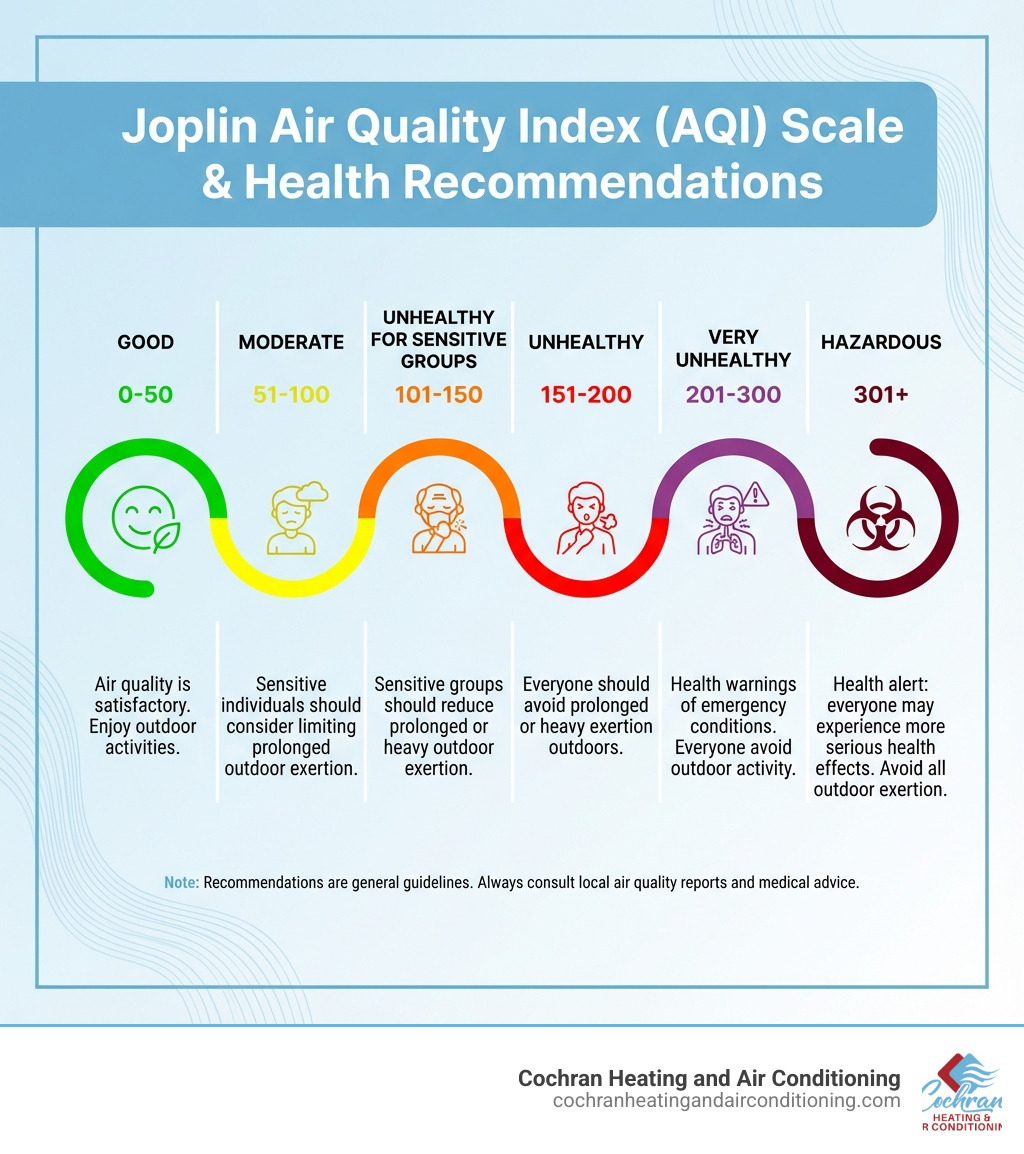
The Air Quality Index (AQI) is a color-coded scale that helps us understand Joplin air quality and potential health effects. Today, Joplin’s AQI is 51, which is in the “Moderate” category. This means the air is generally satisfactory, but there might be a moderate health concern for a very small number of people who are unusually sensitive to air pollution.
The primary pollutants affecting Joplin’s air quality are Ozone (O3) and Particulate Matter (PM2.5). While the EPA designates Joplin as meeting its standards, the PM2.5 concentration is 2.9 times the World Health Organization (WHO) annual guideline. WHO guidelines are stricter than national standards and aim for a higher level of public health protection.
To stay on top of the latest Joplin air quality readings, regularly check official sources like AirNow.gov or more localized data on Joplin Air Quality Index (AQI) and USA Air Pollution | IQAir. These resources provide real-time updates and forecasts.
What are the Primary Pollutants in Joplin?
The two main players in Joplin’s air pollution landscape are Ozone (O3) and Particulate Matter (PM2.5).
- Ozone (O3): This isn’t the “good” ozone layer high in the atmosphere that protects us from UV rays. This is ground-level ozone, a harmful air pollutant that forms when emissions from cars, power plants, industrial boilers, refineries, and other sources react chemically in the presence of sunlight. It’s often referred to as smog. In Joplin, ozone is currently identified as a primary pollutant.
- Particulate Matter (PM2.5): These are microscopic particles, 2.5 micrometers or smaller in diameter, that are suspended in the air. They can come from various sources like vehicle exhaust, industrial emissions, fires, and even natural dust. Because of their tiny size, PM2.5 can penetrate deep into our lungs and even enter the bloodstream.
Both of these pollutants can have significant health effects. Ozone can irritate the airways, and PM2.5 can trigger asthma attacks, contribute to non-fatal heart attacks, and reduce lung function. Over long periods, exposure to these pollutants can lead to more serious cardiovascular and respiratory problems.
We also see seasonal variations in these pollutants. Missouri’s “ozone season” runs from March 1 through October 31. During this period, with warmer temperatures and more sunlight, ozone formation is more prevalent.
How to Read the Daily Forecast
Understanding the daily air quality forecast helps you plan activities and take precautions. Here is a recent forecast for Joplin:
- Today’s AQI: 51 (Moderate) – Generally acceptable, but sensitive groups should be aware.
- Friday’s AQI: 55 (Moderate) – Similar conditions.
- Saturday’s AQI: 35 (Good) – Great for outdoor activities.
- Sunday’s AQI: 50 (Good) – Another good day, just on the cusp of moderate.
- Monday’s AQI: 70 (Moderate)
- Tuesday’s AQI: 74 (Moderate)
- Wednesday’s AQI: 60 (Moderate)
When the forecast shows “Good” air quality (AQI 0-50), the air is considered satisfactory, and air pollution poses little or no risk. When it’s “Moderate” (AQI 51-100), the air quality is acceptable, but there may be a moderate health concern for a very small number of people who are unusually sensitive to air pollution. On these days, it’s wise for sensitive individuals to reduce prolonged or heavy exertion outdoors.
By keeping an eye on these forecasts, you can decide whether it’s a good day for a long bike ride or if you should opt for an indoor workout. The Missouri Department of Natural Resources provides current conditions and forecasts at Current Air Quality | Missouri Department of Natural Resources.
Health Risks and Recommendations for Joplin Residents
When Joplin air quality is “Moderate,” most people can go about their day without significant effects. However, for some, it can cause minor issues. If you feel sensitive or have symptoms like coughing, it’s a good idea to reduce prolonged or heavy exertion outdoors.
A simple, effective step to protect your indoor environment is to close windows and doors on days when outdoor air quality is less than ideal. This helps prevent outdoor pollutants from seeping into your home. If you’re planning strenuous outdoor activities, consider moving them to a “Good” AQI day or opting for an indoor alternative.

Understanding the health implications of the air we breathe is crucial. The American Lung Association offers valuable insights into how air pollution affects our health at Learn more from the American Lung association.
Protecting Vulnerable Populations
Certain groups are much more vulnerable to air pollution, including:
- Children: With developing lungs and higher breathing rates, children are particularly susceptible to air pollution. In Joplin, there are approximately 29,808 children and teens out of the total population of 121,648 who are at higher risk.
- The Elderly: Approximately 19,735 residents in Joplin are 65 and over, and they may experience worsening heart and lung conditions due to poor air quality.
- Individuals with Pre-existing Conditions: People with conditions like asthma, Chronic Obstructive Pulmonary Disease (COPD), or cardiovascular disease are especially at risk. Joplin has about 8,638 residents with asthma, 7,499 with COPD, and 8,458 with cardiovascular disease.
- Pregnant Individuals: Exposure to pollutants has been linked to adverse birth outcomes, so extra caution is warranted.
For these sensitive groups, our recommendations are more stringent:
- Reduce outdoor exercise on moderate or worse days.
- Keep windows closed when pollution levels are liftd.
- Consider a well-fitting N95 or KN95 mask outdoors if air quality worsens.
- Run an air purifier indoors if available.
Long-Term Health Impacts of Joplin Air Quality
The immediate effects of air pollution are concerning, but we also need to consider the long-term impacts, especially from pollutants like PM2.5. Consistent exposure to PM2.5, even at levels considered “moderate,” can accumulate over time and contribute to serious chronic health issues.
Research links long-term PM2.5 exposure to:
- Increased risk of premature birth
- Worsening lung diseases such as asthma and COPD
- Cardiovascular harm, including higher risk of heart attacks and strokes
- Reduced overall life expectancy
Even though the EPA currently designates Joplin as meeting standards for PM2.5 and ozone, the fact that PM2.5 concentrations are nearly three times the WHO annual guideline suggests that minimizing exposure whenever possible is a smart step for long-term health.
Key Factors Influencing Air Quality in Joplin
Joplin’s air is a complex mix influenced by human and environmental factors. Understanding these helps explain why Joplin air quality fluctuates.
Human Factors:
- Transportation Emissions: Cars, trucks, and other vehicles release pollutants like nitrogen oxides, volatile organic compounds, and fine particulate matter. These contribute significantly to ground-level ozone formation, especially during warmer months.
- Industrial Activity: While Joplin isn’t a heavy industrial hub, industrial processes in and around the area can emit pollutants. The EPA sets standards for these emissions, but they remain a factor.
Environmental Factors:
- High Temperatures: Warmer temperatures accelerate the chemical reactions that create ground-level ozone. As climate change brings more hot days, ozone can be a more frequent concern.
- Humidity and Wind Patterns: Wind can either disperse pollutants, improving air quality, or carry them from other regions, worsening it. Humidity can also play a role in how certain pollutants form or dissipate.
- Wildfire Smoke: Even though Risk Factor has found no historic records of wildfire events near Joplin between 1984 and 2022, smoke from distant wildfires can travel hundreds or even thousands of miles. When large fires occur in other states, we might see a hazy sky and increased PM2.5 levels here in Joplin.
Projections suggest a changing climate will bring warmer, drier conditions to Joplin. This increases the likelihood of both wildfire smoke impacting our area and the formation of ozone.
The Impact of Heat and Wildfires
High temperatures are a major culprit in the formation of ground-level ozone, a key component of smog. When the sun bakes down and we have the right mix of pollutants from vehicles and industry, those chemical reactions creating ozone speed up. This is why “ozone season” in Missouri aligns with our warmest months. Data shows that Joplin is expected to experience 7 hot days (above 107ºF “feels like”) this year. Due to a changing climate, this number is projected to jump to 20 days above 107ºF in 30 years.
While Joplin hasn’t historically faced local wildfires, wildfire smoke from elsewhere can still affect us. These fires release massive amounts of fine particulate matter (PM2.5) into the atmosphere. These tiny particles can then be carried by wind currents over vast distances, affecting air quality far from the original fire. You can dig deeper into how environmental factors contribute to air quality changes at Learn more about environmental factors.
How Joplin Compares to Other Missouri Cities
It’s natural to wonder how Joplin air quality stacks up against other cities in our state. Based on the number of poor air quality days (AQI over 100), Joplin has worse air quality than 56% of cities in Missouri. This means that while our air is generally good, there are many places in Missouri with even cleaner air.
Currently, Joplin is expected to experience 1 day this year with an AQI over 100, and this specific projection remains at 1 day in 30 years. However, broader climate changes are expected to increase the overall number of days with liftd ozone and PM2.5.
To explore how Joplin compares and to review air quality data across the state, you can compare air quality across Missouri on the AirNow.gov website.
How to Protect Your Family and Improve Indoor Air
We’ve talked a lot about outdoor Joplin air quality, but what about the air inside our homes, where we spend most of our time? Outdoor air significantly impacts indoor air. When pollution levels are high outside, those pollutants can infiltrate our homes and affect our health and comfort.
Here are some simple steps to reduce exposure to outdoor pollutants and improve indoor air:
- Keep windows and doors closed on days with moderate or poor air quality.
- Use your HVAC system strategically. Your heating and cooling system can be a powerful tool for air purification if maintained correctly.
- Avoid adding to indoor pollution by limiting burning candles, using harsh chemical cleaners, or smoking indoors.
- Monitor indoor air quality with smart sensors if you’re particularly concerned.
Monitoring and Planning Your Day
Staying informed is our first line of defense. There are excellent online tools and apps available that provide real-time air quality data and forecasts for Joplin.
- Use air quality apps that provide instant AQI readings for our area.
- Sign up for air quality alerts. Services like EnviroFlash can send you daily forecasts and notifications directly to your email or phone.
- Plan around “Good” days. If the forecast predicts a “Good” AQI day, prioritize outdoor exercise, gardening, or family outings. On “Moderate” days, consider shifting strenuous activities indoors or rescheduling them.
Improving Your Home’s Indoor Joplin Air Quality
This is where your home’s HVAC system truly shines as a crucial component of your indoor air quality strategy. Your heating, ventilation, and air conditioning system isn’t just for temperature control; it’s also designed to filter the air circulating throughout your home.
- The Role of Your HVAC System: A well-maintained HVAC system continuously circulates and filters the air in your home, removing dust, allergens, and some fine particulate matter that may have entered from outside.
- Importance of High-MERV Filters: Not all air filters are created equal. Using high-MERV (Minimum Efficiency Reporting Value) filters in your HVAC system can improve filtration of smaller particles, including some PM2.5. Consult with us about the best MERV rating for your system, as too high a MERV can restrict airflow in some older units.
- Benefits of Regular HVAC System Cleaning and Tune-Ups: Regular tune-ups ensure your system runs efficiently and that its filtration capabilities are optimized. Dirty coils, clogged vents, or a malfunctioning fan can all reduce your system’s ability to clean the air. Our AC Maintenance Tune-Ups: Keeping Joplin Homes Cool All Summer service helps keep your system ready to tackle both temperature and air quality challenges.
- Professional Indoor Air Quality Services: For comprehensive solutions, consider professional indoor air quality services. We can assess your home’s specific needs and recommend solutions like advanced air purifiers, UV lights, or ventilation improvements that work with your existing HVAC system. Learn more about our offerings at Indoor Air Quality Service Joplin.
Frequently Asked Questions about Joplin’s Air
We often hear similar questions from our community about Joplin air quality. Here are some of the most common ones, along with our answers, based on the latest data and expert understanding.
What is PM2.5 and why is it a concern in Joplin?
PM2.5 stands for Particulate Matter 2.5: tiny airborne particles 2.5 micrometers or less in diameter (about 30 times smaller than a human hair). Because they are so small, PM2.5 particles can bypass our body’s natural defenses and penetrate deep into our lungs, and even enter our bloodstream.
Once in our bodies, these particles can cause a range of health problems, from short-term irritation to long-term chronic diseases. They can trigger asthma attacks, worsen bronchitis, contribute to heart attacks and strokes, and over time, increase the risk of developing respiratory and cardiovascular diseases.
In Joplin, PM2.5 is a concern because its current concentration is 2.9 times the World Health Organization (WHO) annual guideline value. This means that while Joplin meets EPA standards, the levels are higher than what international health experts recommend for optimal public health.
How does Joplin’s air quality change throughout the year?
Joplin air quality isn’t static; it fluctuates throughout the year, primarily influenced by seasonal weather patterns and specific pollutants.
- Ozone Season (March-October): This is when we typically see higher levels of ground-level ozone. Warmer temperatures, abundant sunlight, and stagnant air conditions create the perfect recipe for ozone formation from vehicle and industrial emissions.
- Summer Heat vs. Winter Conditions: Beyond ozone, summer heat can also exacerbate other pollutants. In winter, inversions (when a layer of warm air traps cooler air below it) can sometimes trap pollutants closer to the ground, leading to temporary spikes in PM2.5.
- Influence of Weather Patterns: Wind direction and speed play a major role. Strong winds can disperse pollutants, improving air quality, while calm conditions can allow them to build up. Wind can also carry pollutants, like wildfire smoke, from distant regions into our area.
Understanding these seasonal and daily variations helps us anticipate when Joplin air quality might be worse and take appropriate precautions.
What can I do to help improve Joplin’s air quality?
Improving Joplin air quality is a shared responsibility, and every action, big or small, makes a difference. Here are practical steps:
- Reduce Vehicle Emissions:
- Drive less by combining errands, walking, biking, or using public transportation when possible.
- Maintain your vehicle with regular tune-ups and proper tire inflation.
- Avoid idling; turn off your engine if you’re going to be stopped for more than 30 seconds.
- Conserve Energy at Home:
- Use energy-efficient appliances.
- Insulate your home to reduce heating and cooling needs.
- Set your thermostat wisely and turn off lights and electronics when not in use.
- Support Local Clean Air Initiatives:
- Stay informed through local environmental groups or the Missouri Department of Natural Resources.
- Support policies that promote renewable energy, stricter emission standards, and green infrastructure.
- Plant trees to help filter pollutants from the air and reduce urban heat.
- Be Mindful of Outdoor Burning: Avoid burning leaves, trash, or other materials, as this releases harmful particulate matter into the air.
- Use Environmentally Friendly Products: Choose low-VOC (volatile organic compound) paints, cleaning supplies, and personal care products to reduce indoor and outdoor air pollutants.
By embracing these practices, we can all contribute to a healthier, cleaner air environment for Joplin.
Taking Control of Your Air Quality in Joplin
As we’ve explored, Joplin air quality presents a nuanced picture. While our region generally meets federal EPA standards, the higher PM2.5 concentrations compared to WHO guidelines and the projected increase in hot days due to climate change remind us that vigilance is key.
Understanding the daily AQI, knowing the primary pollutants like ozone and PM2.5, and recognizing the specific health risks for vulnerable populations are crucial steps. But knowledge is only half the battle. Taking control means actively monitoring air quality, planning outdoor activities wisely, and ensuring our homes are havens of clean air.
Your home’s HVAC system plays a vital role in this. With the right filters, regular maintenance, and potentially additional indoor air quality solutions, your HVAC system can help filter out pollutants and create a healthier living environment for you and your loved ones.
At Cochran Heating and Air Conditioning, we’re your local partner in creating a healthier indoor environment. We understand the unique challenges and needs of our Joplin community. Whether it’s through expert AC maintenance tune-ups to keep your filters working efficiently or by providing comprehensive indoor air quality services, we’re here to help you breathe easier.
To learn more about how we can help you achieve optimal indoor air quality and comfort, we invite you to Explore our residential heating and cooling services in Joplin.