
A thermostat that worked fine in autumn can sit idle all winter, but develop problems by the time spring arrives. Before assuming the worst, most post-winter thermostat failures have simple causes and straightforward fixes.
Why Is My Thermostat Not Working After Winter?
Your thermostat didn’t stop working randomly, months of winter heating demand, temperature fluctuations, and power interruptions create conditions that directly cause spring startup failures in Joplin homes.
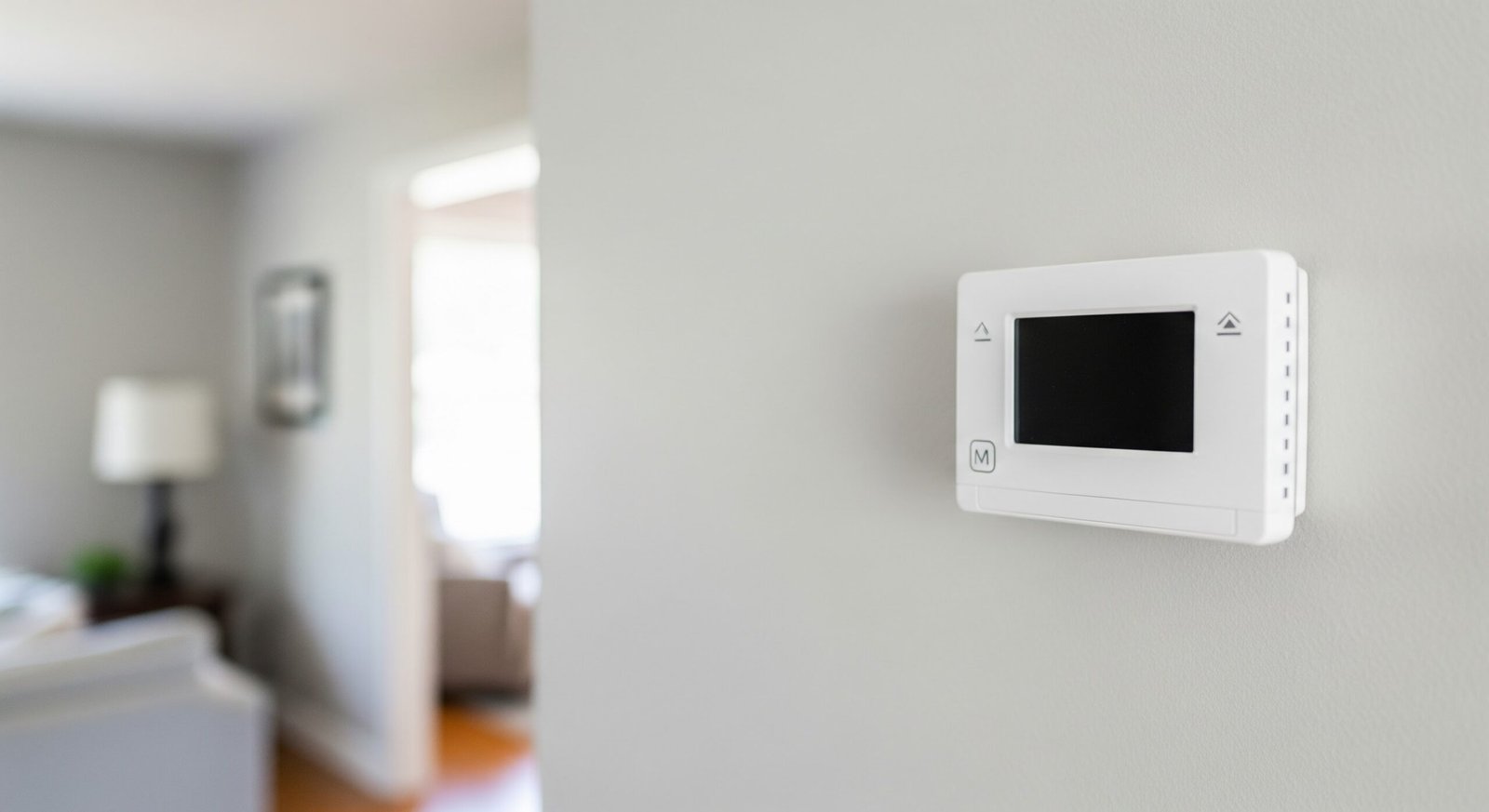
Here’s why it stops working:
- Batteries drain gradually over a long heating season and lose enough charge to cause display or signal failures
- System settings remain locked in heat mode, the cooling cycle simply won’t activate until manually switched
- Dust settles on internal sensors during winter, causing inaccurate temperature readings and incorrect cycling
- Wiring terminals loosen or corrode from months of temperature fluctuations inside the unit
- Smart thermostats lose Wi-Fi connection or saved schedules after winter power interruptions
The good news is that most post-winter thermostat problems are minor and fixable without a service call. Working through a basic checklist resolves the issue in the majority of cases.
Common Causes of Thermostat Failure in Early Spring
Most thermostat failures after winter trace back to one of these five causes.
Dead or Weak Batteries After Months of Use
The most common cause and the easiest fix. Most thermostats run on AA or AAA batteries that last 8 to 12 months. After a full Joplin heating season, batteries are often too weak to power the display or send signals to the system.
Thermostat Still Set to Heat Mode
Switching from heating to cooling season catches many Joplin homeowners off guard. If the thermostat is still set to HEAT or AUTO from winter, the cooling cycle won’t activate regardless of the temperature setting.
Tripped Breaker or Power Supply Issues
A tripped circuit breaker cuts power to the thermostat and the HVAC system simultaneously. This is easy to miss, the thermostat display may appear normal while the system sits completely inactive.
Loose, Damaged, or Corroded Wiring
Wiring connections inside the thermostat can loosen over time from seasonal temperature fluctuations. Older Joplin homes are particularly prone to corroded terminals that disrupt the signal between the thermostat and the HVAC system.
Dust Buildup Inside the Thermostat Unit
Dust accumulation on internal sensors affects temperature readings and causes incorrect cycling, the system turns on or off at the wrong times. This is especially common in older mechanical and non-digital thermostats.
Can a Faulty Thermostat Damage Your AC System?
Yes, and this is a point many Joplin homeowners overlook.
- A thermostat that sends incorrect signals causes the AC system to short cycle, turning on and off rapidly without completing a full cooling cycle.
- Short cycling puts significant stress on the compressor, the most expensive component in the system.
- Prolonged short cycling accelerates compressor wear and can shorten equipment life by years.
- A thermostat that keeps the system running continuously causes a different problem, overworking the compressor and driving up energy costs while delivering inconsistent cooling.
A faulty thermostat is a small problem that becomes an expensive one if left unaddressed through a full Joplin cooling season.
How to Troubleshoot a Thermostat That Stopped Working
Work through these steps in order before calling a Joplin technician, most post-winter thermostat issues resolve here.
Step 1: Check the Power Source
Confirm the thermostat display is on and responsive. A blank or dim screen points directly to a power issue, batteries or breaker.
Step 2: Replace the Batteries
Replace with fresh AA or AAA batteries regardless of how recently they were last changed. Weak batteries cause intermittent issues that are easy to misdiagnose.
Step 3: Verify System Settings
Set the system to COOL, fan to AUTO, and lower the temperature by 5 degrees below the current room temperature. Listen for the outdoor unit to engage within 2 to 3 minutes.
Step 4: Inspect Circuit Breakers
Check the breaker panel for any tripped breakers on the HVAC circuits. Reset if needed and retest the thermostat.
Step 5: Reset the Thermostat
Most thermostats have a reset function, either a pinhole reset button or a menu setting. A full reset clears incorrect settings and restores factory defaults. Refer to your model’s manual for the specific reset process.
If none of these steps resolve the issue, the problem is likely wiring, calibration, or the thermostat itself and needs professional diagnosis.
When to Call an HVAC Professional for Thermostat Issues
Basic troubleshooting is a homeowner’s task, but some thermostat problems require professional diagnosis from a licensed Joplin HVAC technician.
Call a licensed Joplin HVAC technician if:
- The system still doesn’t respond after completing all five troubleshooting steps
- You find visibly burnt, corroded, or damaged wiring inside the thermostat
- The system’s short cycles persist after a thermostat reset
- You’re installing a new smart thermostat, and the wiring configuration is unclear
- Temperature readings remain inaccurate despite battery replacement and reset
Wiring repairs and HVAC system diagnostics always require a licensed technician, incorrect wiring can damage the control board, adding significant repair costs.
Final Thoughts
Most post-winter thermostat problems are simpler than they appear, dead batteries, wrong mode settings, or a tripped breaker resolve the majority of cases in minutes. If basic troubleshooting doesn’t fix it, don’t delay. A faulty thermostat left running through Joplin’s spring and summer puts unnecessary strain on your compressor and drives up energy costs. Address it early and your entire AC system will perform better through the cooling season.
FAQs
Why Is My Thermostat Blank After Winter?
Most likely dead batteries or a tripped circuit breaker. Replace the batteries first, if the display stays blank, check the breaker panel before calling a Joplin technician.
Can I Fix A Thermostat Myself Or Do I Need A Technician?
Basic fixes, batteries, settings, breaker reset, and dust cleaning, are homeowner tasks. Wiring repairs, calibration issues, and system diagnostics require a licensed Joplin HVAC technician.
How Do I Know If My Thermostat Needs Replacing?
If it’s over 10 years old, gives consistently inaccurate readings, or causes short cycling after troubleshooting, replacement is the smarter call. A new programmable or smart thermostat also improves energy efficiency significantly.
How Much Does Thermostat Replacement Cost?
A standard thermostat replacement costs $150 to $500 installed depending on the model. Smart thermostats run $200 to $500 installed and can reduce annual energy costs by 10 to 15%.
Can A Bad Thermostat Cause High Energy Bills?
Yes. A miscalibrated thermostat causes the system to run longer than needed or short cycle, both drive up energy costs and accelerate wear on the compressor.
Why Does My Smart Thermostat Lose Its Schedule After Winter?
Power interruptions or battery drain over winter can wipe saved schedules and Wi-Fi settings on smart thermostats. Reconnect to Wi-Fi, re-enter your schedule, and check for any firmware updates through the manufacturer’s app.
Why Is My Thermostat Reading The Wrong Temperature After Winter?
Dust buildup on internal sensors is the most common cause, carefully clean the inside of the thermostat unit. If readings remain inaccurate after cleaning and a full reset, the sensor may be faulty and the unit needs replacing.
How Long Should A Thermostat Last Before Replacing It?
Most thermostats last 10 to 15 years with normal use. If yours is approaching that range and showing recurring issues, replacing it with a modern programmable or smart thermostat is a better investment than repeated repairs.